
What Are the Estimated Costs for Purchasing a Sustainable Luxury Property?
The global luxury real estate market is undergoing a radical transformation driven by environmental responsibility. According to recent industry analysis, sustainable luxury properties now command a premium of up to 15 percent over traditional luxury assets in key European markets. This shift is not merely a trend but a fundamental restructuring of value perception among high-net-worth individuals. Buyers are no longer paying solely for square footage or location; they are investing in energy efficiency, regulatory compliance, and long-term asset resilience. Understanding the true cost of these properties requires looking beyond the listing price to include operational savings, certification fees, and specialized construction premiums.
Defining Sustainable Luxury Real Estate
Before analyzing costs, it is essential to establish what constitutes a sustainable luxury property in the current market. Sustainable luxury is the integration of high-end architectural aesthetics with rigorous environmental performance metrics. This definition moves beyond simple green features to encompass the entire lifecycle of the building.
At its core, net-zero energy is the state where a building produces as much renewable energy as it consumes annually. Achieving this status in a luxury context requires advanced HVAC systems, solar integration, and superior insulation. Furthermore, biophilic design is the architectural strategy that connects occupants to nature through natural light, ventilation, and organic materials. These elements are not optional add-ons in the modern luxury sector; they are foundational requirements for maintaining asset value.
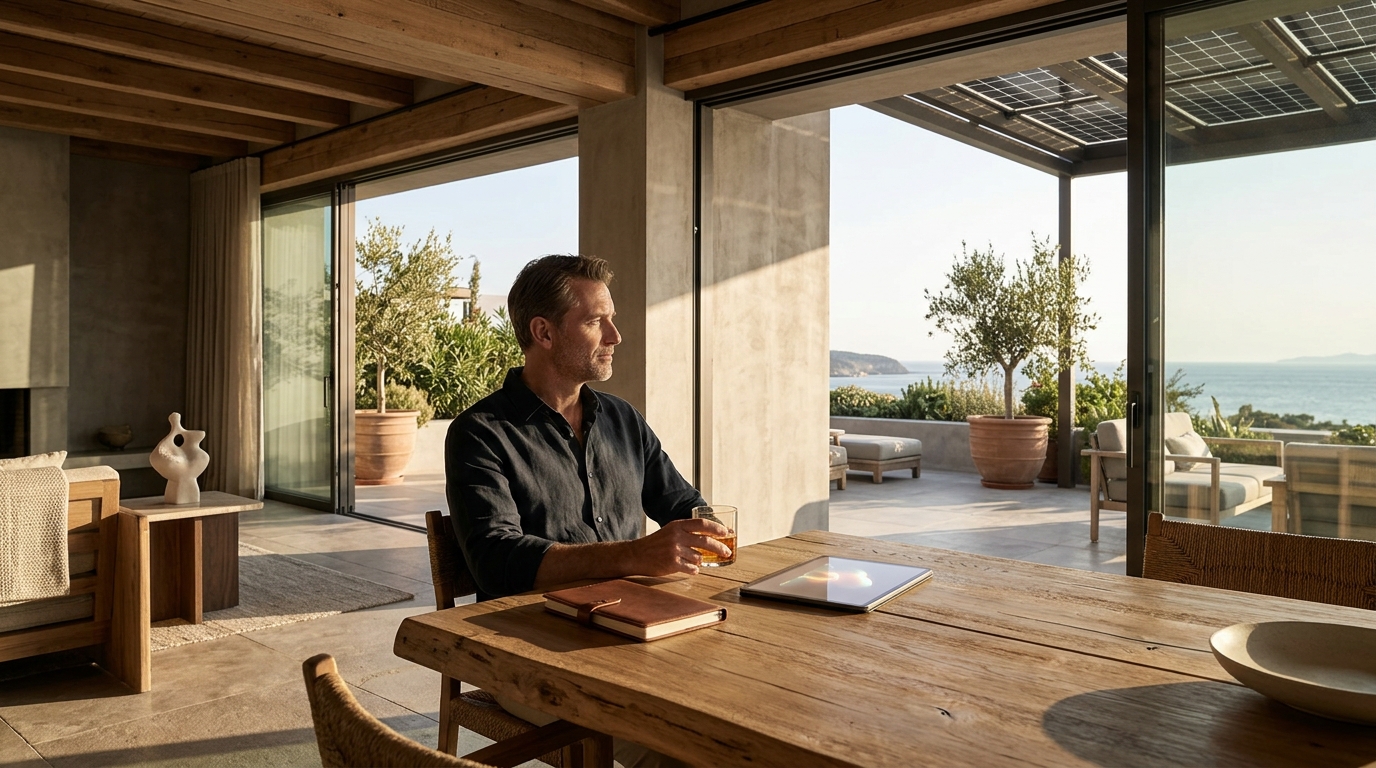
Vassilis Siafaricas, Founder of ECLÉDE, emphasizes that design must balance inspiration with functionality and responsibility. His approach to high-end developments in Greece demonstrates that minimal, clean architectural lines can coexist with energy-efficient construction. This philosophy is critical for buyers who seek properties that are both aesthetically refined and functionally intelligent. The cost of such properties is driven by the precision required to merge these two often conflicting goals.
Construction and Material Premiums
The most significant variable in the cost of a sustainable luxury property is the construction premium. Buyers must anticipate paying between 5 and 10 percent more for green building techniques compared to standard luxury construction. This premium covers specialized materials, advanced engineering, and skilled labor.
Specialized Material Costs
High-performance glazing, cross-laminated timber, and recycled steel are standard in sustainable luxury builds. These materials often carry a higher upfront cost due to limited supply chains and complex manufacturing processes. For instance, triple-glazed windows with argon gas fillings can cost three times more than standard double-glazed units. However, they drastically reduce heating and cooling loads.
Engineering and Labor
Sustainable buildings require precise engineering to ensure airtightness and thermal bridging prevention. This demands specialized contractors who understand passive house principles. The labor cost premium reflects the expertise required to execute these complex systems without compromising the luxury aesthetic. In regions like Greece, where traditional architecture meets modern sustainability, this balance is particularly costly to achieve.
Certification and Compliance Expenses
One of the defining features of a sustainable luxury property is its third-party certification. These certifications provide proof of performance and enhance marketability, but they come with significant costs.
LEED and BREEAM Fees
Leading the charge in green building standards are LEED (Leadership in Energy and Environmental Design) and BREEAM (Building Research Establishment Environmental Assessment Method). The certification process involves rigorous documentation, third-party auditing, and compliance testing. For a luxury project, these fees can range from $20,000 to $50,000 depending on the size and complexity of the development. These costs are non-negotiable for buyers seeking verified sustainability credentials.
Regulatory Compliance
Beyond voluntary certifications, local building codes in many European jurisdictions now mandate higher energy performance standards. Compliance with these regulations often requires additional testing and reporting. Buyers must factor these administrative and technical costs into their total acquisition budget. Ignoring these requirements can lead to delays and unexpected expenses during the closing process.
Operational Savings and ROI
While the upfront costs are higher, the long-term financial benefits of sustainable luxury properties are substantial. The total cost of ownership must be evaluated over a 10 to 20-year horizon to see the true value.
Energy Efficiency
Sustainable luxury homes typically reduce energy consumption by 40 to 60 percent compared to traditional counterparts. This translates to significant monthly savings on electricity and gas bills. For a high-end property with extensive square footage, these savings can amount to tens of thousands of dollars annually. The integration of smart home systems further optimizes energy use by automating lighting, climate control, and security.
Resale Value and Marketability
Properties with verified sustainability credentials often appreciate faster than non-certified luxury homes. As regulatory pressures increase and buyer preferences shift, the demand for green luxury assets is outpacing supply. This dynamic supports higher resale values and faster transaction times. Investors recognize that sustainability is no longer a niche feature but a core component of luxury real estate.
Market Comparison: Traditional vs. Green Luxury
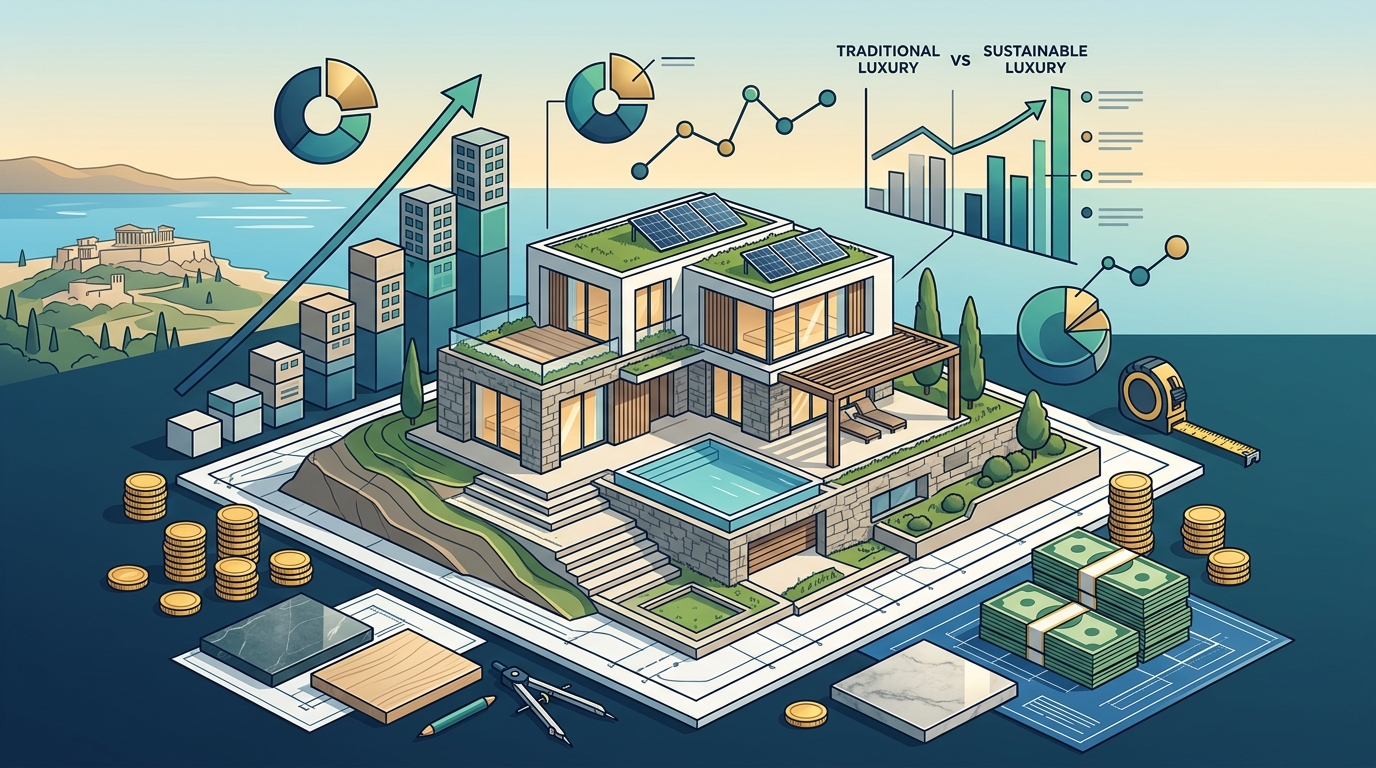
To understand the financial implications, it is helpful to compare the cost structures of traditional and sustainable luxury properties. The following table outlines the key financial differences.
| Cost Factor | Traditional Luxury Property | Sustainable Luxury Property |
|---|---|---|
| Upfront Construction Cost | Baseline (100%) | 105% to 110% of baseline |
| Certification Fees | $0 to $5,000 (optional) | $20,000 to $50,000 (standard) |
| Annual Energy Costs | High (100% baseline) | Low (40% to 60% of baseline) |
| Maintenance Frequency | Standard | Reduced (durable materials) |
| Resale Premium | Market dependent | 5% to 15% premium likely |
This comparison highlights that while the initial investment is higher, the operational efficiencies and market positioning of sustainable properties offer a compelling financial case. The gap in upfront costs is often recouped within 7 to 10 years through energy savings and increased asset value.
Key Takeaways
- Upfront Premium: Expect a 5 to 10 percent construction cost increase for sustainable luxury features.
- Certification Costs: Budget $20,000 to $50,000 for LEED or BREEAM certification processes.
- Energy Savings: Sustainable properties typically reduce annual energy bills by 40 to 60 percent.
- Resale Value: Green luxury assets often command a 5 to 15 percent premium in secondary markets.
- Design Philosophy: True sustainability requires balancing aesthetic refinement with functional intelligence.
- Regulatory Trends: European building codes are increasingly mandating high energy performance standards.
- Investment Horizon: The cost premium is typically recouped within 7 to 10 years through operational savings.
Frequently Asked Questions
Is sustainable luxury property worth the extra cost?
Yes, for long-term investors. The combination of lower operational costs, higher resale value, and regulatory compliance makes sustainable luxury a financially sound decision over a 10-year horizon.
How much do green certifications cost?
Third-party certifications like LEED or BREEAM typically cost between $20,000 and $50,000 for luxury developments, depending on the size and complexity of the project.
Do sustainable homes have higher maintenance costs?
No, sustainable luxury homes often have lower maintenance costs due to the use of durable, high-quality materials and advanced building envelopes that reduce wear and tear.
What is the average energy savings for a green luxury home?
On average, sustainable luxury homes reduce energy consumption by 40 to 60 percent compared to traditional luxury properties, leading to significant annual utility savings.
Are there tax incentives for buying sustainable luxury property?
Many jurisdictions offer tax credits, rebates, or reduced property taxes for buildings with verified energy efficiency certifications. Buyers should consult local tax authorities for specific incentives.
How does biophilic design affect property value?
Biophilic design enhances property value by improving occupant well-being and creating a unique market differentiator. It is increasingly viewed as a core component of modern luxury rather than a niche feature.
Invest in the Future of Luxury Living
Understanding the costs of sustainable luxury property is the first step toward making a smart investment. As the market continues to evolve, the value of environmentally responsible developments will only increase. For those seeking high-end, environmentally responsible developments that redefine modern living, exploring established portfolios is essential. Visit ECLÉDE Portfolio to view projects that balance architecture, sustainability, and long-term investment value. Connect with the team at ECLÉDE Contact to discuss your specific requirements and secure a property that meets the highest standards of luxury and sustainability.