
How Does a Sustainable and Eco-Friendly Property Investment Benefit Me Long-Term?
The global real estate market is undergoing a fundamental shift. According to recent industry analyses, sustainable buildings now command a significant premium in both rental and resale markets compared to traditional structures. This is not merely a trend but a structural change in how value is perceived by institutional investors and private buyers alike. The integration of energy-efficient systems, sustainable materials, and smart home technologies has transformed eco-friendly properties from niche alternatives into primary assets for wealth preservation. Investors who prioritize these features are positioning themselves ahead of regulatory curves and shifting consumer preferences.
Financial Performance and Asset Value
One of the most compelling arguments for sustainable property investment is the tangible increase in asset value. Green-certified buildings consistently outperform conventional properties in terms of capital appreciation. This premium is driven by lower operating costs, which make the property more attractive to high-quality tenants and buyers. The concept of green premium refers to the additional value assigned to a property due to its environmental performance.
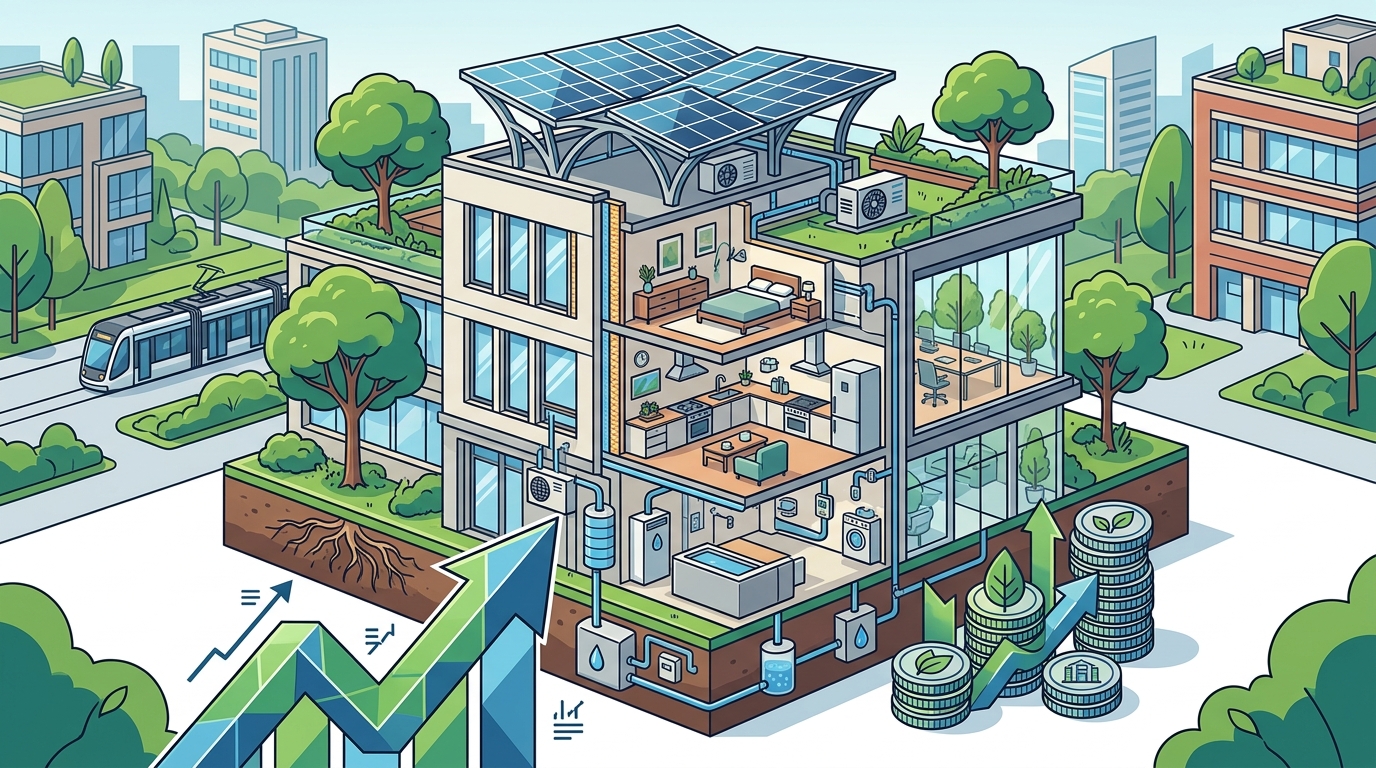
Energy efficiency is a primary driver of this value. Properties equipped with advanced insulation, solar panels, and high-performance HVAC systems reduce utility expenses significantly. This reduction in operational expenditure directly translates to higher net operating income (NOI). In commercial and high-end residential sectors, NOI is a critical metric for valuation. A higher NOI justifies a higher purchase price, thereby increasing the overall return on investment for the owner.
Furthermore, sustainable properties often enjoy lower insurance premiums. Insurers recognize that energy-efficient buildings are less susceptible to damage from extreme weather events, such as flooding or power surges. This risk mitigation strategy provides a direct financial benefit that accumulates over the long term. The intersection of inspiration, functionality, and responsibility, as championed by modern developers, ensures that these assets remain desirable in a competitive market.
Operational Efficiency and Cost Reduction
Long-term sustainability is not just about initial construction; it is about ongoing operational efficiency. Eco-friendly properties are designed to minimize waste and maximize resource utilization. This is achieved through the integration of smart building technologies that monitor and adjust energy usage in real time. For instance, automated lighting and climate control systems ensure that energy is only consumed when and where it is needed.
The use of durable, sustainable materials also plays a crucial role in cost reduction. Materials such as reclaimed wood, recycled steel, and low-VOC paints have longer lifespans and require less maintenance than traditional alternatives. This durability reduces the frequency of repairs and replacements, lowering the total cost of ownership over decades. The philosophy of minimal, clean architectural lines not only enhances aesthetic appeal but also simplifies maintenance protocols.
Water conservation is another critical component of operational efficiency. Low-flow fixtures, rainwater harvesting systems, and drought-resistant landscaping significantly reduce water consumption. In regions facing water scarcity, this efficiency is not just a cost-saving measure but a necessity for business continuity. Investors who prioritize these systems are future-proofing their assets against resource volatility.
Regulatory Compliance and Future-Proofing
Governments worldwide are implementing stricter building codes and carbon emission standards. Properties that fail to meet these new regulations may face significant retrofitting costs or even become obsolete. Sustainable properties are inherently compliant with current and emerging environmental laws. This compliance reduces the risk of legal penalties and the need for costly upgrades in the near future.
For example, many jurisdictions are introducing carbon taxes on high-emission buildings. Eco-friendly properties, with their low carbon footprints, are exempt from or pay significantly lower taxes. This financial incentive makes sustainable investments more attractive to risk-averse investors. The ability to navigate complex regulatory landscapes is a key advantage for developers and owners who prioritize environmental responsibility.
Additionally, sustainable buildings often qualify for government incentives, such as tax credits, grants, and expedited permitting processes. These incentives can substantially offset initial construction costs, improving the overall financial viability of the project. Investors who stay ahead of regulatory trends are better positioned to capitalize on these opportunities.
Health, Wellbeing, and Tenant Retention
The health and wellbeing of occupants are increasingly recognized as critical factors in property value. Sustainable buildings prioritize indoor air quality, natural lighting, and thermal comfort. These factors contribute to a healthier living and working environment, which in turn enhances tenant satisfaction and retention. High tenant retention rates reduce vacancy periods and turnover costs, providing a stable income stream for investors.
Research indicates that employees in green-certified offices report higher productivity and lower sick leave rates. This correlation between environmental quality and human performance is driving demand for sustainable commercial spaces. Similarly, in residential markets, buyers are willing to pay more for homes that promote health and wellbeing. The holistic approach to design ensures that these properties enhance both human experience and environmental harmony.
Furthermore, sustainable properties often feature communal spaces and amenities that foster community engagement. Green roofs, gardens, and shared recreational areas encourage social interaction and improve the overall quality of life for residents. This sense of community adds intangible value to the property, making it more desirable in the long run.
Comparative Analysis of Investment Models
Understanding the differences between traditional and sustainable investment models is essential for making informed decisions. The table below outlines the key distinctions across several critical dimensions.
| Feature | Traditional Property | Sustainable Property |
|---|---|---|
| Initial Construction Cost | Lower | Higher (offset by incentives) |
| Operational Costs | Higher | Significantly Lower |
| Asset Value Growth | Market Dependent | Consistent Premium |
| Regulatory Risk | High | Low |
| Tenant Appeal | Standard | High (Health & Efficiency) |
As shown in the comparison, sustainable properties offer a more robust financial profile over time. While the initial investment may be higher, the long-term savings and value appreciation outweigh the upfront costs. This makes eco-friendly properties a superior choice for long-term wealth generation.
Key Takeaways
- Sustainable buildings command a measurable premium in resale and rental markets.
- Energy efficiency directly increases Net Operating Income (NOI) and asset valuation.
- Regulatory compliance reduces future retrofitting costs and legal risks.
- Health-focused design improves tenant retention and productivity.
- Durable materials lower total cost of ownership over decades.
- Government incentives can offset initial green construction premiums.
- Water conservation systems protect against resource scarcity and price volatility.
Frequently Asked Questions
Is sustainable construction more expensive than traditional methods?
While initial costs can be higher, sustainable construction often qualifies for tax incentives and grants. Over the long term, operational savings and increased asset value typically result in a lower total cost of ownership.
How does green certification affect property value?
Green certification, such as LEED or BREEAM, provides third-party verification of a building's environmental performance. This verification builds trust with buyers and tenants, leading to higher demand and increased market value.
What are the primary health benefits of eco-friendly homes?
Eco-friendly homes prioritize indoor air quality, natural lighting, and non-toxic materials. These factors reduce allergens and improve respiratory health, creating a safer living environment for occupants.
Are there financial incentives for investing in sustainable real estate?
Yes, many governments offer tax credits, rebates, and expedited permitting for green buildings. These incentives can significantly improve the financial viability of sustainable projects.
How do sustainable properties handle extreme weather events?
Sustainable designs often incorporate resilient materials and systems, such as flood-resistant foundations and backup power sources. This resilience reduces damage risks and insurance premiums.
What is the impact of sustainable properties on tenant satisfaction?
Tenants in sustainable properties report higher satisfaction due to improved comfort, lower utility bills, and healthier living conditions. This leads to longer lease terms and reduced vacancy rates.
Can older buildings be retrofitted to be sustainable?
Yes, many older buildings can be retrofitted with energy-efficient systems, improved insulation, and smart technologies. While the process requires investment, it can significantly enhance the building's performance and value.
Start Your Sustainable Investment Journey
Investing in sustainable property is not just a financial decision; it is a commitment to a better future. By prioritizing environmental responsibility, you secure long-term value, regulatory compliance, and enhanced wellbeing for occupants. The expertise required to navigate this complex landscape is best handled by experienced professionals who understand the intersection of design, technology, and sustainability.
Explore the portfolio of high-end, environmentally responsible developments that redefine modern living. Discover how architectural precision and sustainable innovation can work together to create exceptional investment opportunities. Visit the portfolio page to view current projects and learn more about the founder's vision. For personalized guidance on your next investment, contact the team directly to schedule a consultation.