
What Are the Estimated Costs for Purchasing a Sustainable Luxury Property?
Investing in high-end real estate has fundamentally shifted from purely aesthetic appreciation to performance-driven asset acquisition. According to recent market analyses, sustainable luxury properties in prime European locations command a premium of 10 to 20 percent over conventional luxury assets. This price differential reflects the integration of advanced energy systems, premium eco-materials, and rigorous architectural standards. For discerning buyers, the initial capital outlay is merely the entry point to a portfolio of long-term operational savings and enhanced asset resilience.
The Founder's Vision on Sustainable Design
Understanding the cost structure of sustainable luxury requires looking beyond square footage. It demands an appreciation for the philosophy behind the build. Vassilis Siafaricas, the founder of ECLÉDE, approaches development through a lens that balances technical precision with creative vision. His work bridges civil engineering rigor with minimalist architectural lines.
This holistic approach ensures that every project enhances human experience while maintaining environmental harmony. The cost of such developments is not arbitrary. It is derived from a commitment to energy-efficient, future-focused construction. Buyers are paying for a legacy of design that stands the test of time. This philosophy is recognized globally, with features in Architectizers TOP 100 Vision Creators for 2026.
When you invest in a property guided by this vision, you are acquiring more than a home. You are securing a piece of architectural history that prioritizes longevity and ecological responsibility. The initial investment reflects the depth of research, material sourcing, and engineering expertise required to achieve these standards.
Breakdown of Sustainable Luxury Costs
The financial architecture of a sustainable luxury property is complex. It involves multiple layers of investment that extend far beyond the land acquisition cost. To understand the true price tag, one must dissect the specific components that drive value in this niche market.
1. Land Acquisition and Location Premium
Location remains the primary driver of real estate value. In Greece and other prestigious European regions, land in prime areas commands significant premiums. However, sustainable developments often require specific topographical conditions to maximize natural light and ventilation. This can limit available plots, further driving up land costs. The scarcity of suitable land in eco-conscious zones creates a high barrier to entry.
2. Advanced Energy Systems
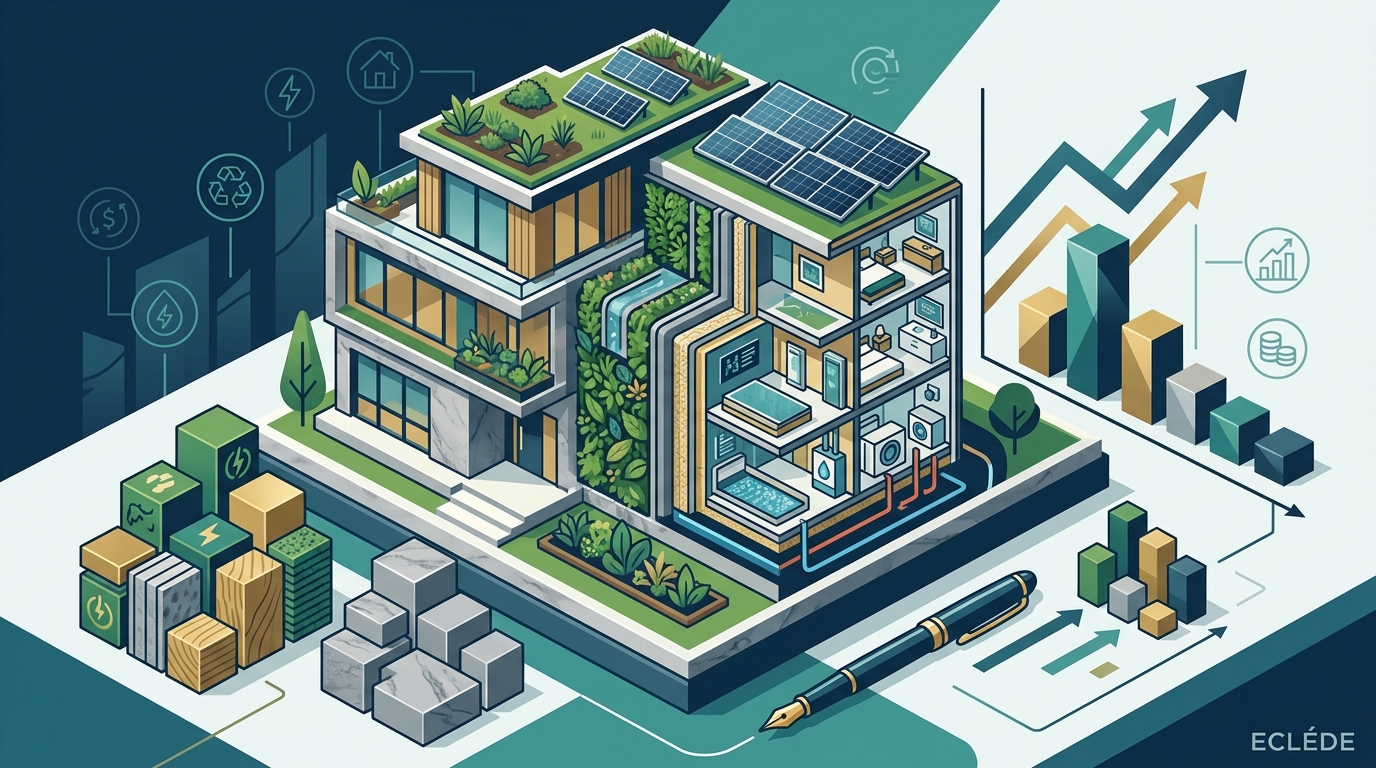
A core component of sustainable luxury is energy independence. This includes solar photovoltaic arrays, geothermal heating and cooling systems, and advanced battery storage solutions. These systems are not add-ons. They are integrated into the structural design from day one. The cost for these installations can range from $50,000 to $150,000 depending on the scale and technology used. However, they drastically reduce long-term operational expenses.
3. Premium Eco-Materials
Sustainable luxury relies on materials that are both durable and environmentally benign. This includes reclaimed wood, low-carbon concrete, natural stone, and high-performance glass. These materials often cost 15 to 30 percent more than conventional alternatives. Yet, they offer superior insulation, durability, and aesthetic depth. The craftsmanship required to install these materials also adds to the labor costs.
4. Architectural and Engineering Expertise
Hiring architects and engineers who specialize in sustainable design is non-negotiable. Their expertise ensures compliance with strict environmental standards while maintaining aesthetic integrity. This specialized knowledge commands higher professional fees. However, it prevents costly mistakes and ensures the building performs as intended over decades.
Premium Features Driving Value
What exactly are you getting for your investment? Sustainable luxury properties are defined by specific features that distinguish them from standard high-end homes. These features are not just luxuries. They are essential components of a resilient living environment.
Smart Home Integration is a critical element. This includes automated climate control, lighting, and security systems that optimize energy use. These systems learn from user behavior to reduce waste. The installation and customization of such technology require specialized technicians and software integration.
Water Management Systems are another key feature. This includes rainwater harvesting, greywater recycling, and advanced filtration. In regions with water scarcity, these systems provide independence from municipal supplies. They also reduce the environmental footprint of the property significantly.
Biophilic Design Elements connect the interior with the natural surroundings. This includes large windows, indoor gardens, and natural ventilation pathways. These elements improve mental well-being and reduce the need for artificial lighting and cooling. The design complexity required to achieve this seamlessly adds to the architectural costs.
ROI and Long-Term Financial Benefits
While the upfront costs are higher, the return on investment for sustainable luxury properties is compelling. The financial benefits extend beyond simple appreciation. They include operational savings, tax incentives, and enhanced marketability.
Operational Savings are immediate. Energy-efficient homes consume significantly less electricity and gas. Studies show that net-zero homes can reduce utility bills by 50 to 90 percent. Over a 20-year period, these savings can offset a substantial portion of the initial premium paid for sustainable features.
Asset Appreciation is another critical factor. Sustainable homes are increasingly in demand among environmentally conscious buyers. This growing market segment drives up resale values. Properties with green certifications often sell faster and at higher prices than conventional homes.
Tax Incentives vary by region but can include rebates for solar installation, tax credits for energy-efficient upgrades, and reduced property taxes for green buildings. These incentives can significantly lower the net cost of ownership. Buyers should consult with local tax professionals to maximize these benefits.
Comparing Traditional vs. Sustainable Luxury
To make an informed decision, it is helpful to compare traditional luxury properties with sustainable ones across key financial and performance metrics.
| Feature | Traditional Luxury Property | Sustainable Luxury Property |
|---|---|---|
| Initial Cost Premium | Baseline | 10-20% Higher |
| Energy Efficiency | Standard | Net-Zero or Near Net-Zero |
| Utility Bills | High | Minimal to Zero |
| Maintenance Costs | Standard | Lower (Durable Materials) |
| Resale Value Trend | Stable | Appreciating |
| Environmental Impact | High | Minimal |
This comparison highlights that while the initial investment is higher, the long-term financial and environmental benefits are substantial. The trend is moving decisively towards sustainability as a standard for luxury, not an exception.
Key Takeaways
- Initial Premium: Expect to pay 10-20% more for sustainable luxury features compared to traditional high-end properties.
- Energy Independence: Advanced systems like geothermal and solar can reduce utility bills by up to 90%.
- Material Quality: Eco-materials cost more upfront but offer superior durability and aesthetic depth.
- Expertise Matters: Specialized architects and engineers are crucial for achieving true sustainability.
- Market Demand: Green-certified homes are appreciating faster due to growing buyer preference.
- Regulatory Future: Future building codes will likely mandate many of these sustainable features.
- Brand Value: Properties developed by visionary leaders like Vassilis Siafaricas carry distinct prestige.
Frequently Asked Questions
How much does it cost to build a net-zero luxury home?
Building a net-zero luxury home typically costs 10-20% more than a conventional luxury home. This includes the cost of advanced insulation, solar panels, and energy recovery ventilation systems.
Are sustainable luxury homes harder to sell?
No, they are often easier to sell. There is a growing market of environmentally conscious buyers who prioritize energy efficiency and health. These properties often command higher resale values.
What certifications should I look for?
Look for certifications like LEED, BREEAM, or Passive House. These indicate that the property meets rigorous standards for energy efficiency and environmental performance.
Do tax incentives apply to existing sustainable homes?
In some regions, yes. Buyers may qualify for rebates or tax credits for purchasing homes with specific green features. Consult a local tax advisor for details.
How does biophilic design affect property value?
Biophilic design enhances well-being and connects residents with nature. This increases the desirability of the property, leading to higher demand and value.
What is the lifespan of sustainable building materials?
Sustainable materials like natural stone and reclaimed wood often have longer lifespans than conventional materials. They are more durable and resistant to wear and tear.
Can I retrofit an existing luxury home to be sustainable?
Yes, but it is more cost-effective to integrate these features during construction. Retrofitting can still yield significant energy savings and improved comfort.
Contact for Exclusive Listings
Investing in sustainable luxury is a decision that requires expert guidance. Vassilis Siafaricas and the team at ECLÉDE offer unparalleled insight into the world of high-end, environmentally responsible developments. With over two decades of experience, they understand the nuances of this market.
Whether you are looking for a new build or a renovation, their expertise ensures that your investment aligns with your values and financial goals. Explore their portfolio to see how design and sustainability converge. For personalized consultations and exclusive listings, please visit the contact page to connect directly with the founder.