
Subterranean Construction: Engineering Underground Infrastructure
Modern urban expansion requires precise subterranean engineering to support growing transit networks and utility demands. According to the Federal Highway Administration, global tunneling projects exceeded 4,200 kilometers in 2023, representing a 12 percent year-over-year increase in capital allocation. Municipal planners prioritize these deep-excavation methods to preserve surface ecosystems and reduce traffic congestion. Engineers now deploy automated boring machines and real-time ground-penetrating radar to mitigate settlement risks. This guide outlines the complete operational framework for executing complex underground projects safely and efficiently.
Geotechnical Foundation and Site Assessment
Successful subterranean projects begin with rigorous subsurface investigation. Geotechnical engineering is the branch of civil engineering that analyzes soil mechanics, rock strata, and groundwater behavior to predict ground response. Engineers deploy rotary drilling rigs and cone penetration tests to map geological layers before mobilizing heavy machinery. These surveys identify fault lines, aquifers, and unstable sediment zones that could compromise structural stability. Contractors then calculate overburden pressure and lateral earth loads to design appropriate support systems. Early data collection prevents costly redesigns and minimizes surface disruption for adjacent properties.
Subsurface Mapping Protocols
Modern survey teams utilize three-dimensional laser scanning to create digital twin models of the proposed excavation zone. These models integrate historical drilling logs and seismic refraction data to predict rock mass rating values. Project managers use these metrics to select the optimal tunneling approach. Accurate mapping reduces unexpected ground conditions by approximately 35 percent during active excavation phases.
Excavation Methodologies and Equipment
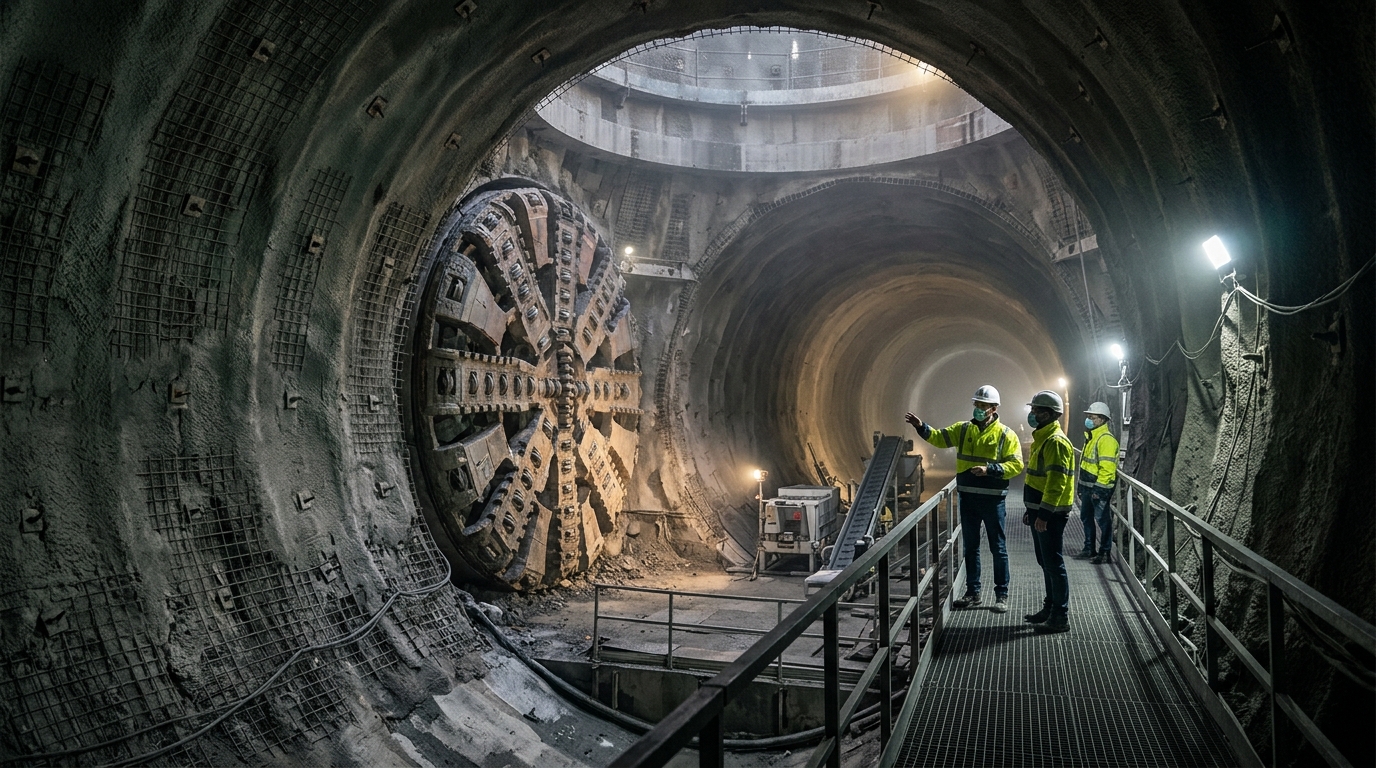
Subterranean construction relies on specialized excavation techniques tailored to specific geological conditions. Tunneling is the process of excavating underground passages using mechanical or manual methods to create transportation, utility, or storage corridors. Engineers select between cut-and-cover methods and deep-bore techniques based on depth, diameter, and surrounding infrastructure. Cut-and-cover projects require surface trenching and temporary shoring, while deep-bore operations utilize tunnel boring machines that advance continuously without surface disruption. Each methodology demands precise alignment monitoring and real-time settlement tracking to protect adjacent foundations.
Mechanical vs. Drill-and-Blast Operations
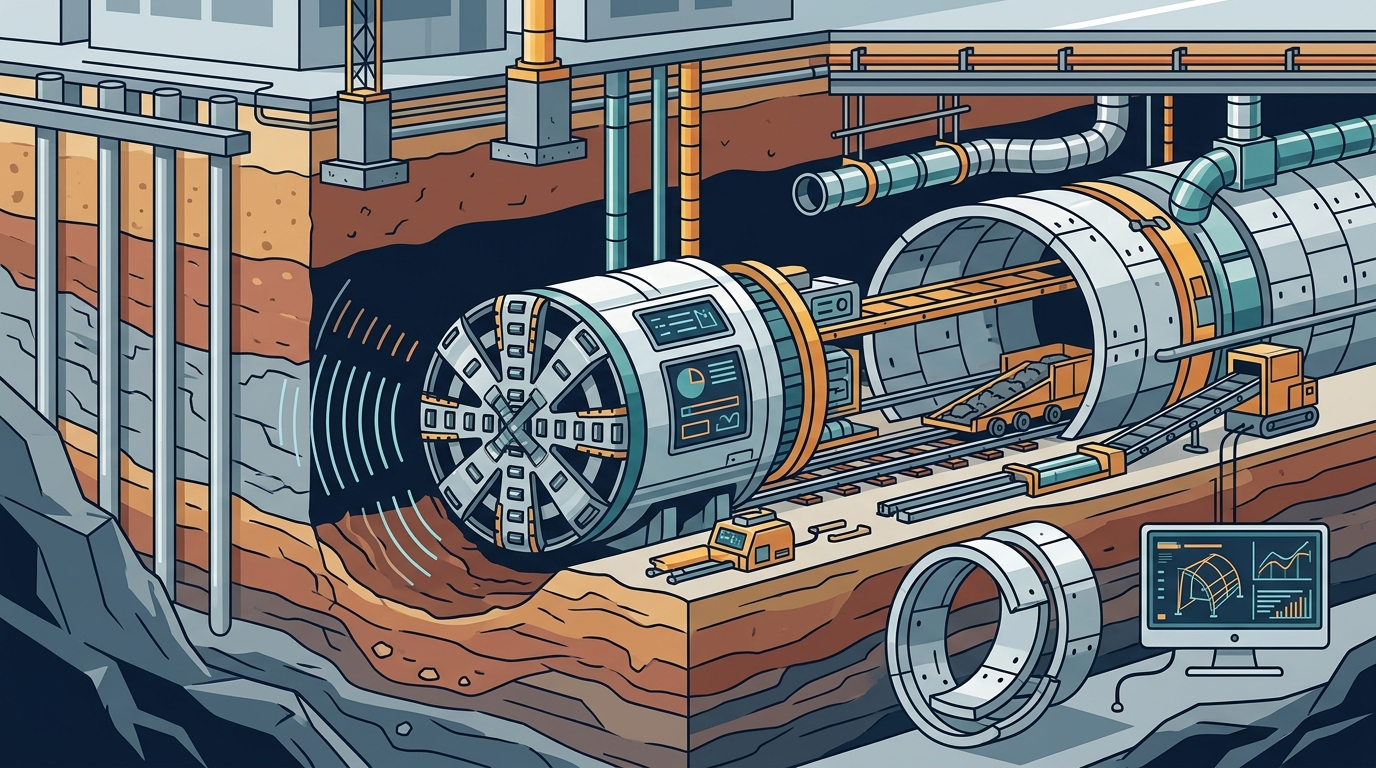
Mechanical excavation dominates urban environments due to reduced vibration and noise profiles. Tunnel boring machines feature rotating cutter heads that fracture rock while simultaneously installing precast concrete segments. Drill-and-blast operations remain necessary for hard rock formations where mechanical cutters experience excessive wear. Contractors control blast intensity through precise charge calculations and delay timing to prevent shockwave propagation. Both approaches require continuous ventilation and dust suppression systems to maintain safe working conditions.
Structural Integrity and Support Systems
Underground voids require immediate stabilization to prevent collapse and groundwater infiltration. Shotcrete application and rock bolting provide immediate face support during active excavation. Engineers install steel ribs and lattice girders to distribute lateral earth pressures across the tunnel perimeter. Grouting programs seal fracture zones and reduce hydrostatic loads on the final lining. These reinforcement strategies ensure long-term durability under dynamic traffic and seismic loading conditions.
Segmental Lining and Waterproofing
Precast concrete segments form the permanent structural shell for most modern transit tunnels. Each segment interlocks with adjacent pieces to create a continuous ring that resists external soil and water pressure. Waterproofing membranes and drainage galleries manage groundwater seepage to prevent long-term concrete degradation. Quality control protocols verify segment tolerances and joint compression to maintain structural continuity. These systems extend facility lifespan beyond 100 years with minimal maintenance requirements.
Environmental Compliance and Ventilation
Subterranean operations must address air quality, noise pollution, and ecological impact to secure regulatory approval. Ventilation shafts and booster fans maintain breathable air quality and remove exhaust particulates from active work zones. Engineers calculate airflow requirements based on equipment emissions and personnel occupancy limits. Dust suppression systems utilize water misting and chemical binders to control airborne particulate matter. Compliance with environmental protection standards prevents project delays and avoids substantial penalty assessments.
Waste Management and Recycling
Excavated soil and rock require careful classification and disposal planning. Contractors separate contaminated material from clean fill to optimize recycling rates. Processed aggregate often serves as backfill material for adjacent construction sites. This circular approach reduces transportation costs and minimizes landfill dependency. Environmental impact assessments document baseline conditions and verify post-construction restoration metrics.
Project Delivery and Risk Management
Large-scale subterranean projects demand integrated delivery methods to align engineering, procurement, and construction schedules. Design-build contracts transfer performance risk to the primary contractor, encouraging innovation and schedule compression. Risk registers track geological uncertainties, equipment failures, and supply chain disruptions throughout the project lifecycle. Contingency reserves and schedule buffers absorb unexpected delays without compromising final handover dates. Transparent communication protocols keep stakeholders informed of progress and emerging challenges.
| Method | Optimal Depth | Surface Disruption | Primary Application | Cost Profile |
|---|---|---|---|---|
| Cut-and-Cover | 0 to 15 meters | High | Utility corridors and shallow transit | Moderate to High |
| Tunnel Boring Machine | 15 to 100 meters | Minimal | Long-distance transit and water conveyance | High Capital |
| Drill-and-Blast | Variable | Moderate | Hard rock mining and mountain passages | Variable |
| Shield Tunneling | 10 to 60 meters | Low | Urban utility and pedestrian tunnels | Premium |
Key Takeaways
- Global tunneling infrastructure exceeded 4,200 kilometers in 2023, driving sustained capital investment.
- Geotechnical surveys reduce unexpected ground conditions by approximately 35 percent during active excavation.
- Tunnel boring machines minimize surface disruption while maintaining continuous advance rates.
- Precast segmental lining extends facility lifespan beyond 100 years with minimal maintenance.
- Ventilation and dust suppression systems ensure regulatory compliance and worker safety.
- Design-build delivery models transfer performance risk and accelerate project completion.
- Integrated risk registers and contingency buffers protect against geological and supply chain disruptions.
Frequently Asked Questions
What determines the choice between cut-and-cover and deep-bore methods?
Project managers evaluate depth, diameter, surface infrastructure density, and budget constraints to select the optimal excavation strategy. Shallow projects with accessible surface rights typically utilize cut-and-cover techniques, while deeper corridors require continuous boring operations to minimize community disruption.
How do engineers manage groundwater infiltration during excavation?
Groundwater control relies on dewatering wells, chemical grouting, and impermeable segmental linings to prevent hydrostatic pressure buildup. Engineers monitor piezometer readings continuously to adjust pumping rates and seal fracture zones before water ingress occurs.
What safety protocols govern underground ventilation requirements?
Regulatory agencies mandate minimum airflow velocities to dilute diesel exhaust and remove particulate matter. Engineers calculate fan capacity based on equipment horsepower and tunnel cross-section to maintain breathable air quality throughout active shifts.
How long do modern subterranean facilities typically last?
What role does digital twin technology play in modern projects?
Digital twin models integrate real-time sensor data, geological surveys, and construction progress to simulate structural behavior. Engineers use these simulations to predict settlement patterns and optimize support placement before physical excavation begins.
How are excavated materials processed and disposed of responsibly?
Contractors classify spoil material to separate contaminated soil from clean aggregate. Processed rock often serves as backfill for adjacent developments, reducing transportation costs and landfill dependency while supporting circular construction practices.
Next Steps
Executing complex subterranean projects requires experienced engineers, advanced equipment, and rigorous quality control. Our team delivers comprehensive planning, design, and construction management services tailored to your specific geological and operational requirements. Schedule a technical consultation to review your project parameters and secure a customized execution roadmap. Contact our engineering division today to begin your underground infrastructure initiative.