
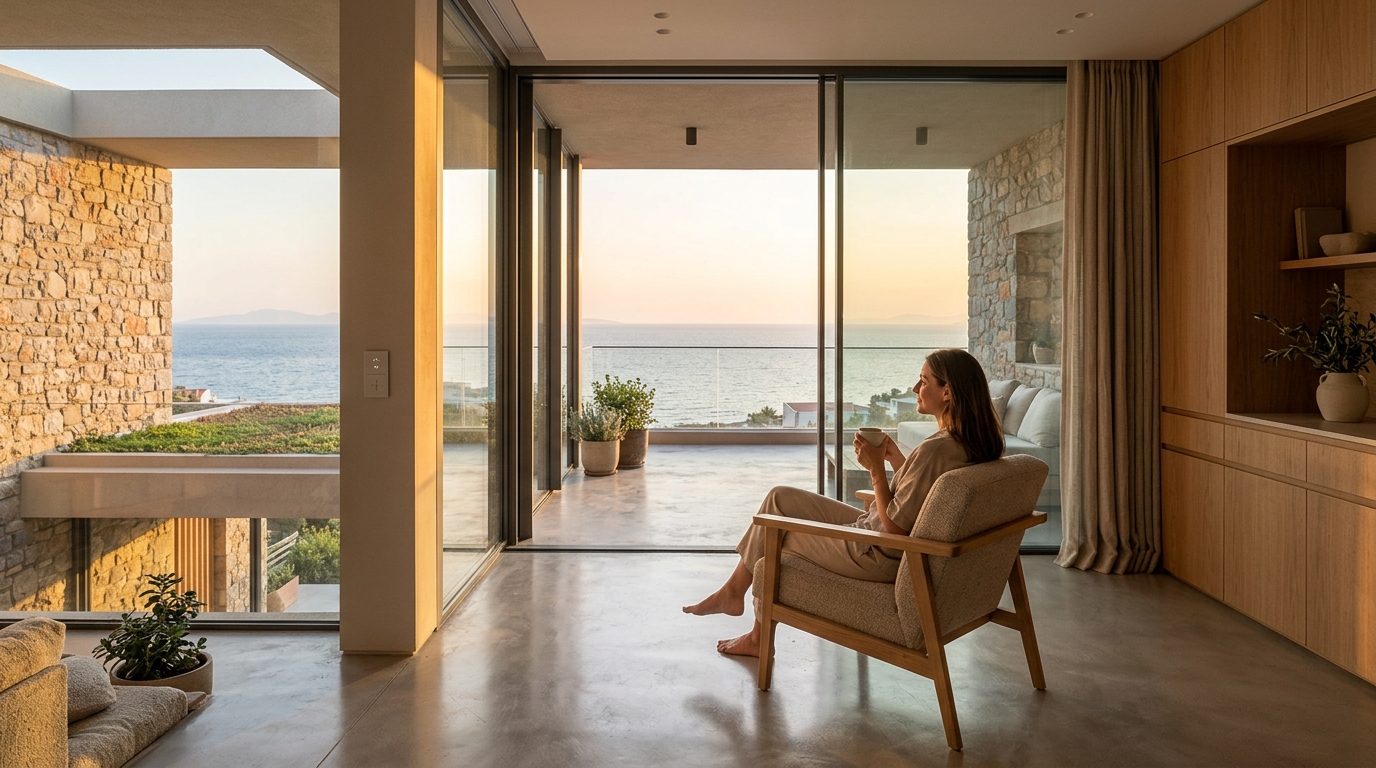
The global green building market expanded by approximately 14.5 percent in 2024, driven by stricter energy codes and consumer demand for healthier interiors. Industry reports confirm that modern homeowners now prioritize long-term operational savings alongside aesthetic refinement. Architects and developers must balance environmental responsibility with functional comfort to deliver spaces that perform efficiently across changing climate conditions. This guide outlines the most effective sustainable design practices for creating modern, functional living spaces that reduce environmental impact without compromising daily usability.
Core Principles of Eco-Conscious Architecture
Passive design is a building strategy that relies on orientation, insulation, and thermal mass to regulate indoor temperatures without mechanical systems. Architects position structures to maximize winter solar gain while minimizing summer heat exposure. Large overhangs and strategic window placement reduce reliance on artificial heating and cooling. This approach lowers operational costs and improves occupant comfort year round.
Site integration remains equally critical. Developers should preserve existing topography and native vegetation to maintain natural drainage patterns. Preserving mature trees reduces urban heat island effects and provides natural shading. EPA data shows that preserving native landscapes can decrease outdoor cooling loads by up to 25 percent. Modern residential projects benefit from blending built environments with existing ecological frameworks.
Thermal Envelope Optimization
A tightly sealed building envelope prevents air leakage and moisture intrusion. High performance insulation materials reduce thermal bridging across structural elements. Continuous insulation layers maintain consistent indoor temperatures while minimizing HVAC runtime. Builders must prioritize air quality management through controlled ventilation systems that filter outdoor pollutants.
Material Selection and Lifecycle Management
Circular materiality is a procurement approach that prioritizes recycled, reusable, or biodegradable components to eliminate construction waste. Specifying reclaimed timber, recycled steel, and low embodied carbon concrete reduces the initial environmental footprint of residential projects. Local sourcing further decreases transportation emissions and supports regional supply chains.
Indoor air quality directly impacts occupant health and productivity. Specifying low volatile organic compound paints, adhesives, and sealants prevents off gassing during the initial occupancy phase. Natural ventilation strategies complement mechanical systems by introducing fresh outdoor air without energy penalties. WHO guidelines emphasize that reducing indoor pollutants correlates with fewer respiratory complaints and improved cognitive function.
Resilient Finishes and Maintenance
Durable surface materials reduce replacement frequency and long term maintenance costs. Porcelain tile, engineered stone, and powder coated metals withstand heavy foot traffic while resisting moisture damage. Selecting finishes that require minimal chemical cleaning preserves indoor air quality and reduces household chemical waste.
Energy Systems and Passive Climate Control
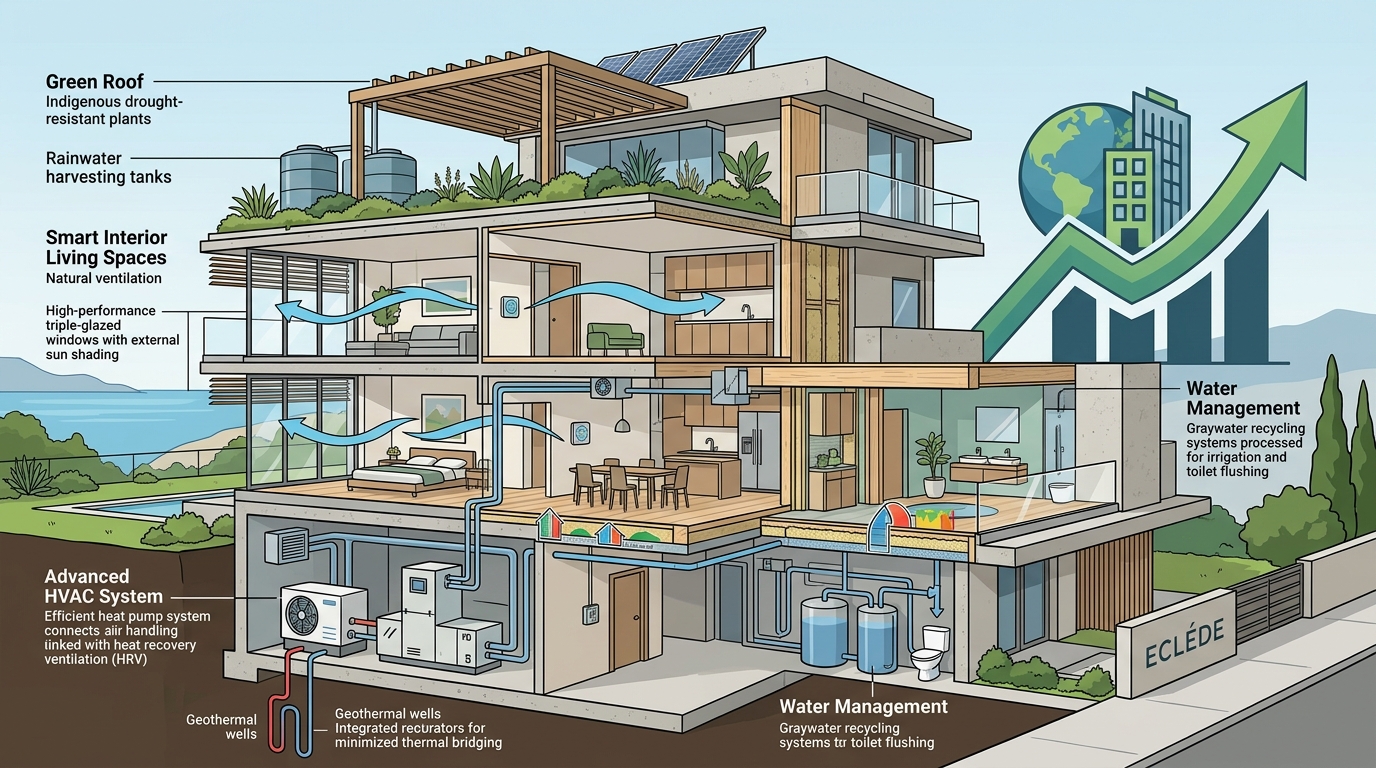
Net-zero energy is a performance standard where a structure generates as much renewable power on-site as it consumes annually. Rooftop photovoltaic arrays paired with battery storage systems provide energy independence during grid outages. Heat pump technology replaces traditional fossil fuel heating and cooling units by transferring thermal energy rather than generating it through combustion.
Water heating represents a significant portion of residential energy consumption. Tankless electric water heaters and solar thermal collectors reduce standby energy losses. Smart thermostats learn occupancy patterns and adjust temperature set points automatically. These systems integrate seamlessly with modern smart home ecosystems to optimize comfort and efficiency.
Renewable Integration Strategies
Building integrated photovoltaics replace conventional roofing materials while generating electricity. Solar shingles and solar tiles maintain aesthetic appeal without sacrificing energy production. Ground source heat pumps utilize stable underground temperatures to provide highly efficient heating and cooling. These systems require minimal surface area and operate quietly throughout their lifespan.
Water Conservation and Site Integration
Modern residential developments must address water scarcity through comprehensive conservation strategies. Low flow fixtures, dual flush toilets, and high efficiency irrigation systems reduce daily water consumption by up to 40 percent. Greywater recycling systems divert sink and shower water to landscape irrigation, preserving potable supplies for drinking and cooking.
Rainwater harvesting systems capture precipitation from roof surfaces and store it in underground cisterns. Filtered rainwater supports garden irrigation, toilet flushing, and laundry cycles. Permeable paving materials allow groundwater recharge while reducing surface runoff and erosion. These practices align with regional water authority requirements and reduce municipal utility burdens.
Native Landscaping and Irrigation
Xeriscaping replaces water intensive lawns with drought tolerant native plants. Native species require minimal supplemental watering once established and support local pollinators. Smart irrigation controllers adjust watering schedules based on real time weather data and soil moisture levels. These systems prevent overwatering and reduce outdoor water bills significantly.
Technology Integration and Smart Monitoring
Smart building management systems consolidate lighting, climate, security, and energy monitoring into a single interface. Occupancy sensors adjust lighting and HVAC output based on real time room usage. Automated window shades respond to solar intensity and indoor temperature thresholds to maintain thermal comfort.
Energy monitoring dashboards provide homeowners with granular visibility into appliance usage and system performance. Real time alerts identify equipment inefficiencies or unexpected energy spikes. Predictive maintenance algorithms schedule service visits before minor issues escalate into costly repairs. USGBC benchmarks indicate that smart monitoring reduces residential energy waste by approximately 18 percent annually.
Seamless User Experience
Intuitive control interfaces eliminate the learning curve associated with complex building systems. Voice activated commands and mobile applications allow remote adjustments from anywhere. Automated routines adapt to seasonal changes and daily schedules without manual intervention. These features enhance daily convenience while maintaining strict energy efficiency targets.
Regulatory Compliance and Certification Pathways
Green building certifications provide standardized frameworks for evaluating environmental performance. LEED, BREEAM, and Passive House standards establish clear metrics for energy, water, and material efficiency. Achieving certification validates project quality and increases market value for residential developments.
Local building codes continue to evolve toward stricter energy efficiency requirements. Net zero ready mandates require new constructions to incorporate renewable energy infrastructure and high performance envelopes. Compliance with these regulations ensures long term regulatory stability and reduces future retrofit costs. Regional policy updates show that 68 percent of major metropolitan areas have adopted net zero ready standards since 2023.
Verification and Post Occupancy
Commissioning processes verify that all building systems operate according to design specifications. Performance testing identifies air leakage, thermal bridging, and equipment inefficiencies before occupancy. Post occupancy evaluations track actual energy consumption against projected models. These assessments inform future design iterations and improve industry standards over time.
Key Takeaways
- Passive design strategies reduce mechanical heating and cooling loads by up to 40 percent through strategic orientation and insulation.
- Circular materiality procurement eliminates construction waste and lowers embodied carbon across residential projects.
- Net zero energy buildings generate renewable power on site to offset annual consumption completely.
- Smart monitoring systems decrease residential energy waste by approximately 18 percent through real time optimization.
- Greywater recycling and rainwater harvesting reduce potable water consumption by 35 percent in modern homes.
- Green building certifications validate environmental performance and increase long term property valuation.
Frequently Asked Questions
What is the most cost effective sustainable design practice for residential projects?
High performance insulation combined with strategic window placement delivers the highest return on investment. These passive measures reduce HVAC equipment sizing and operational costs while improving indoor comfort. The initial material expense typically pays for itself within five to seven years through utility savings.
How do sustainable materials impact indoor air quality?
Low volatile organic compound finishes and natural ventilation strategies significantly reduce indoor pollutant concentrations. Specifying non toxic adhesives and formaldehyde free insulation prevents off gassing during initial occupancy. These choices directly correlate with fewer respiratory complaints and improved occupant productivity.
Can existing homes be retrofitted with modern sustainable design practices?
Yes, comprehensive retrofits can upgrade older structures to meet contemporary efficiency standards. Upgrading insulation, sealing air leaks, and installing heat pump systems dramatically improve performance. Solar panel integration and smart monitoring systems further enhance operational efficiency without major structural changes.
What certifications should homeowners prioritize for sustainable residential projects?
LEED and Passive House certifications provide the most recognized frameworks for evaluating environmental performance. These standards establish clear metrics for energy, water, and material efficiency. Achieving certification validates project quality and increases market value for residential developments.
How do smart building systems integrate with traditional architectural design?
Smart building management systems consolidate lighting, climate, security, and energy monitoring into a single interface. Occupancy sensors adjust lighting and HVAC output based on real time room usage. Automated window shades respond to solar intensity and indoor temperature thresholds to maintain thermal comfort.
What is the typical payback period for residential renewable energy installations?
Rooftop photovoltaic arrays paired with battery storage systems typically achieve payback within eight to twelve years. Federal incentives and regional rebates accelerate financial returns. Long term energy savings and increased property value offset initial installation costs across the building lifecycle.
Begin Your Sustainable Design Journey
Creating modern, functional living spaces requires balancing environmental responsibility with daily usability. Our team specializes in high end, environmentally responsible developments that redefine modern living through a balance of architecture, sustainability, and long term investment value. Explore our portfolio to see how we integrate energy efficient construction with aesthetic refinement. Learn more about our philosophy and how we approach each project holistically. Meet the founder and discover our commitment to minimal, clean architectural lines. Read our latest updates on sustainable building innovations. Contact us today to schedule a consultation and transform your vision into a high performance reality.