
Sustainable Luxury Property Costs: What to Expect in 2026
Purchasing a sustainable luxury property is one of the most significant investments a discerning buyer can make. Prices vary widely depending on location, certification level, and the scope of bespoke design involved. In 2026, the luxury real estate market continues to outperform the general market, and sustainability has shifted from a bonus feature to a baseline expectation. Whether you are exploring the Athens Riviera or the Mediterranean coast, understanding the true costs of eco-conscious luxury development helps you make a confident, well-informed decision. This guide breaks down estimated costs, green building premiums, long-term returns, and what drives pricing in this evolving sector.
Defining Sustainable Luxury Real Estate
A sustainable luxury property is a high-end residence designed to minimize environmental impact while delivering exceptional comfort, aesthetics, and long-term value. This goes far beyond adding solar panels to a rooftop. It encompasses bioclimatic architecture, ethical material sourcing, advanced energy systems, and intelligent water management.
Sustainable luxury real estate is a strategic asset class that grows in value over time. As ECLEDE's design philosophy demonstrates, true luxury today means harmonizing architectural beauty with environmental responsibility. The firm's founder, Vassilis Siafaricas, has championed this ethos across two decades of development work in Greece.
Estimated Price Ranges by Tier
Luxury property pricing depends heavily on market and tier. According to Sotheby's 2026 Luxury Outlook, the threshold for a luxury home in the U.S. reached approximately $1.3 million in 2025, while ultra-luxury properties (top 1%) started near $5.4 million.
| Property Tier | Estimated Starting Price (2025-2026) | Sustainable Premium |
|---|---|---|
| Entry Luxury | $1.3M - $2M | +2% to 5% |
| High-End Luxury (Top 5%) | $2M - $5.4M | +5% to 8% |
| Ultra-Luxury (Top 1%) | $5.4M+ | +6% to 12% |
| Bespoke Sustainable (e.g., LEED Platinum) | $8M+ | Integrated into design budget |
In Mediterranean markets like Greece, where ECLEDE's portfolio is concentrated, bespoke sustainable villas can command prices well above regional averages due to unique site integration and award-winning architectural design.
The Green Building Premium Explained
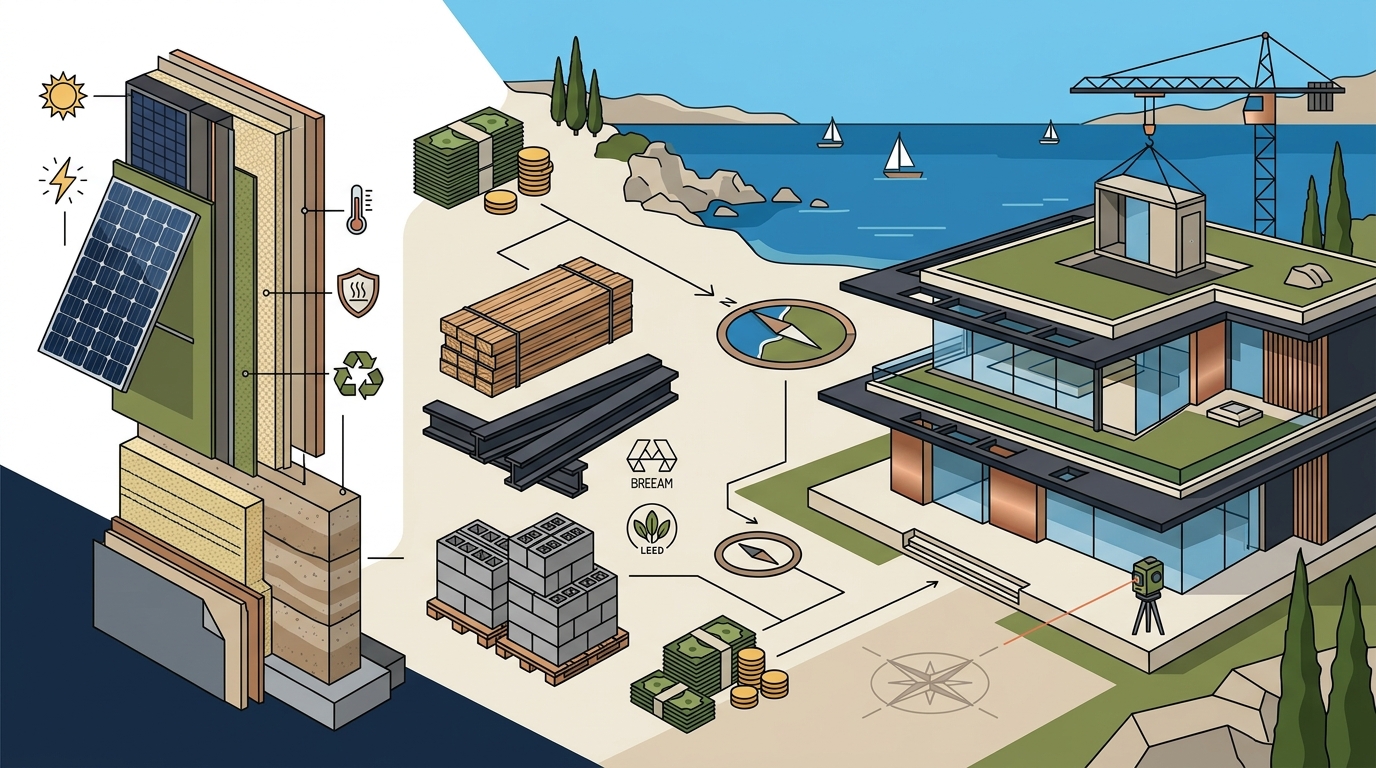
The green building premium is the additional capital cost associated with sustainable features and practices compared to conventional construction. According to research compiled by the Association of Collegiate Schools of Architecture, the median green cost surcharge is approximately 7% globally.
However, that figure varies significantly. Studies show that many LEED-certified buildings at the Silver level are built for barely more than traditional structures. At the luxury end, pursuing LEED Platinum certification typically adds a 6-8% cost premium, though this investment is recovered through energy savings and increased asset value.
Why the Premium Is Shrinking
As sustainable materials and technologies mature, the premium continues to narrow. Many dedicated green builders now report added costs of 10% or less. In competitive markets, regulatory support and supply chain improvements are driving premiums as low as 1-3%.
Key Factors That Influence Cost
Location and Land
Coastal and island sites in the Mediterranean carry higher land costs but offer natural advantages for passive design, including consistent solar exposure and natural ventilation. Regions with stable climates and natural beauty are exceptionally well positioned for sustainable design, as noted in the 2026 Global Luxury Property Outlook.
Design Complexity
Bespoke architecture costs more than standardized builds. Projects like Boomerang Athens, the first LEED Platinum certified residence in Greece, represent the pinnacle of integrated sustainable design, where every element is custom-engineered for performance and beauty.
Technology and Systems
Smart home automation, geothermal heating, solar integration, EV-ready infrastructure, and advanced HVAC systems all add to upfront costs. These features typically deliver 20-30% savings in energy use over the life of the property.
Long-Term ROI and Operating Savings
The financial case for sustainable luxury is compelling. Green buildings consistently outperform conventional properties in both operating costs and resale value.
- New green buildings report an average asset value increase of over 9%, according to green building industry data.
- Average first-year operating cost savings for new green buildings reach 10.5%.
- Over five years, operating cost reductions average 16.9%.
- LEED-certified buildings can see value increases of up to 10% over non-certified buildings.
For high-net-worth buyers, sustainable properties also provide a strategic hedge. The luxury market is driven by lifestyle, mobility, and long-term wealth strategy rather than short-term interest rate fluctuations.
Certification Costs: LEED, BREEAM, and Beyond
LEED (Leadership in Energy and Environmental Design) is the most widely used green building rating system globally, with over 100,000 projects certified worldwide. BREEAM (Building Research Establishment Environmental Assessment Method) is primarily used in Europe and has assessed over 2.3 million buildings.
| Certification | Typical Cost Premium | Average Energy Savings |
|---|---|---|
| LEED Certified/Silver | 2-4% | 25-30% |
| LEED Gold | 4-6% | 25-30% |
| LEED Platinum | 6-8% | 30%+ |
| BREEAM Standard | 3-5% | 20-25% |
The award-winning projects by ECLEDE illustrate how pursuing the highest certification levels delivers both environmental leadership and market distinction.
Key Takeaways
- Sustainable luxury properties typically cost 2-12% more upfront than conventional luxury builds, depending on certification level.
- The green premium is narrowing as materials and technologies mature.
- LEED Platinum certification adds roughly 6-8% to construction costs but can increase asset value by up to 10%.
- Operating cost savings of 10-17% over five years offset the initial premium.
- Mediterranean locations like Greece offer natural advantages for passive, sustainable design.
- Ultra-luxury sustainable homes (top 1%) start above $5.4 million globally.
- Sustainability has moved from a desirable feature to an expected standard in luxury real estate for 2026.
Frequently Asked Questions
How much more does a sustainable luxury home cost compared to a conventional one?
On average, green building adds 2-12% to construction costs. For luxury residences pursuing LEED Platinum, expect a premium of 6-8%. However, many projects at LEED Silver level are built at little to no additional cost.
What is the minimum price for a luxury property in 2026?
According to Sotheby's International Realty, the luxury home threshold in the U.S. was approximately $1.3 million in 2025. High-end luxury (top 5%) starts at $2 million, while ultra-luxury (top 1%) begins near $5.4 million.
Do sustainable features increase resale value?
Yes. Green-certified buildings have been shown to increase asset value by approximately 9-10% compared to non-certified properties. Well-maintained sustainable landscaping alone can boost property value by up to 10%.
What certifications should I look for?
LEED and BREEAM are the two most recognized global certifications. LEED is widely used in the Americas and Asia, while BREEAM is more common across Europe. Both validate energy efficiency, material sourcing, and environmental performance.
How long does it take to recoup the green building premium?
Most builders estimate the additional cost is recovered within 3-4 years through reduced energy, water, and maintenance expenses. Over five years, average operating cost reductions reach nearly 17%.
Are there sustainable luxury properties available in Greece?
Yes. Greece is home to pioneering sustainable luxury developments. ECLEDE's Boomerang Athens is the first LEED Platinum certified residence in the country, setting a new benchmark for eco-conscious luxury in the Mediterranean.
What sustainable technologies add the most cost?
Solar panel systems, geothermal HVAC, triple-glazed windows, green roofs, and smart home automation represent the largest line items. However, these technologies deliver the greatest long-term savings in energy and maintenance.
Is sustainable luxury real estate a good investment?
Sustainable luxury properties are among the most resilient and sought-after asset classes for global investors. They combine lifestyle value with strong financial performance, lower operating costs, and increasing buyer demand.
Explore Sustainable Luxury with ECLEDE
If you are considering a sustainable luxury property that reflects both your values and your vision, connect with the ECLEDE team to explore bespoke development opportunities in Greece and beyond. From LEED Platinum residences to award-winning architectural design, ECLEDE delivers the future of luxury living.