
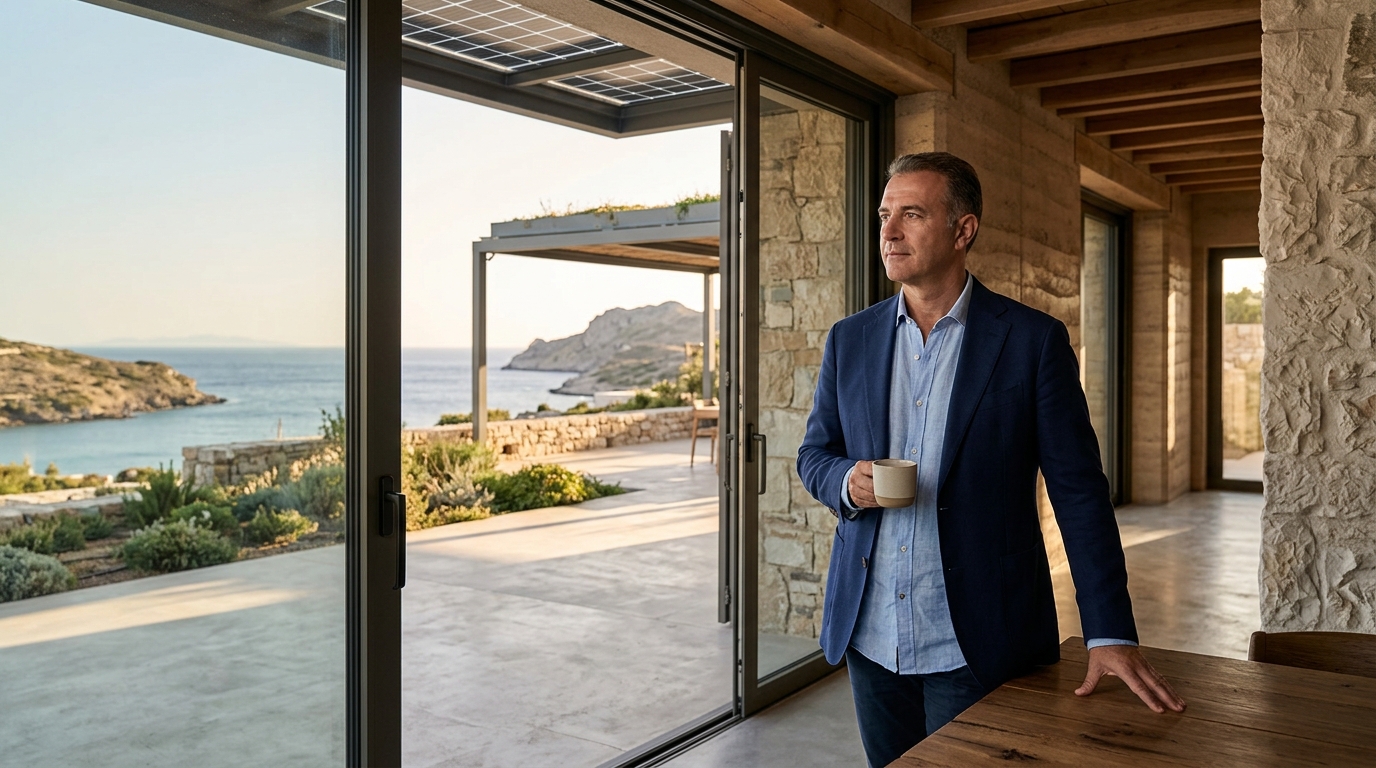
Sustainable Luxury Property Costs: What to Expect in 2026
Sustainable luxury real estate is no longer a niche category. In 2026, eco-conscious design is a baseline expectation among high-net-worth buyers worldwide. But what does it actually cost to purchase a property that combines world-class architecture with genuine environmental responsibility? The answer depends on location, certification level, and design ambition. This guide breaks down the estimated price ranges, the factors that drive costs up or down, and why sustainable luxury properties often outperform conventional ones as long-term investments. Whether you are eyeing coastal Greece or another prime market, understanding these numbers is the first step toward a smarter acquisition.
Defining Sustainable Luxury Real Estate
A sustainable luxury property is a high-end residence designed to minimize environmental impact while delivering premium comfort, materials, and architectural distinction. These homes integrate renewable energy systems, advanced insulation, water conservation, and low-impact materials into a cohesive design vision.
A net-zero energy building is a structure that produces as much energy as it consumes over the course of a year. A passive house is a building standard that minimizes energy needs through thermal insulation, controlled ventilation, and solar shading. Both typologies are increasingly common in the luxury segment, from Scandinavian markets to the Mediterranean.
Companies like ECLÉDE exemplify this approach, creating high-performance, environmentally responsible developments that balance architecture, sustainability, and long-term investment value under the leadership of Vassilis Siafaricas.
Price Tiers for Sustainable Luxury Homes
Understanding where sustainable luxury sits within the broader market requires context. According to Sotheby's International Realty's 2026 Luxury Outlook Report, the average threshold for a luxury home in the United States reached $1.3 million in 2025. High-end luxury (top 5%) started at $2 million, while ultra-luxury (top 1%) required approximately $5.4 million.
| Tier | Typical Entry Price (USD) | Sustainability Level |
|---|---|---|
| Luxury Entry | $1.3M - $2M | Energy-efficient appliances, smart systems |
| High-End Luxury | $2M - $5.5M | LEED Silver/Gold, solar integration, bioclimatic design |
| Ultra-Luxury / Net Zero | $5.5M+ | LEED Platinum, Net Zero, passive house, bespoke materials |
In European markets such as Greece, pricing can differ significantly due to lower land costs, though bespoke sustainable design commands comparable craftsmanship premiums. Explore projects like Boomerang Athens to see how this translates architecturally.
The Green Premium: How Much More Does Sustainability Cost?
One of the most common questions buyers ask is how much extra they will pay for green features. Research from the U.S. Green Building Council suggests that green buildings average only about 1.8 to 2% more than comparable non-green projects, translating to roughly $3 to $5 per square foot for basic certification levels.
For high-end sustainability features such as LEED Platinum certification or full net-zero capability, the premium can reach 10 to 12%. On a $3 million property, that represents an additional $300,000 to $360,000 in construction cost. However, this figure must be weighed against significant operational savings and resale advantages.
Certification Costs by Level
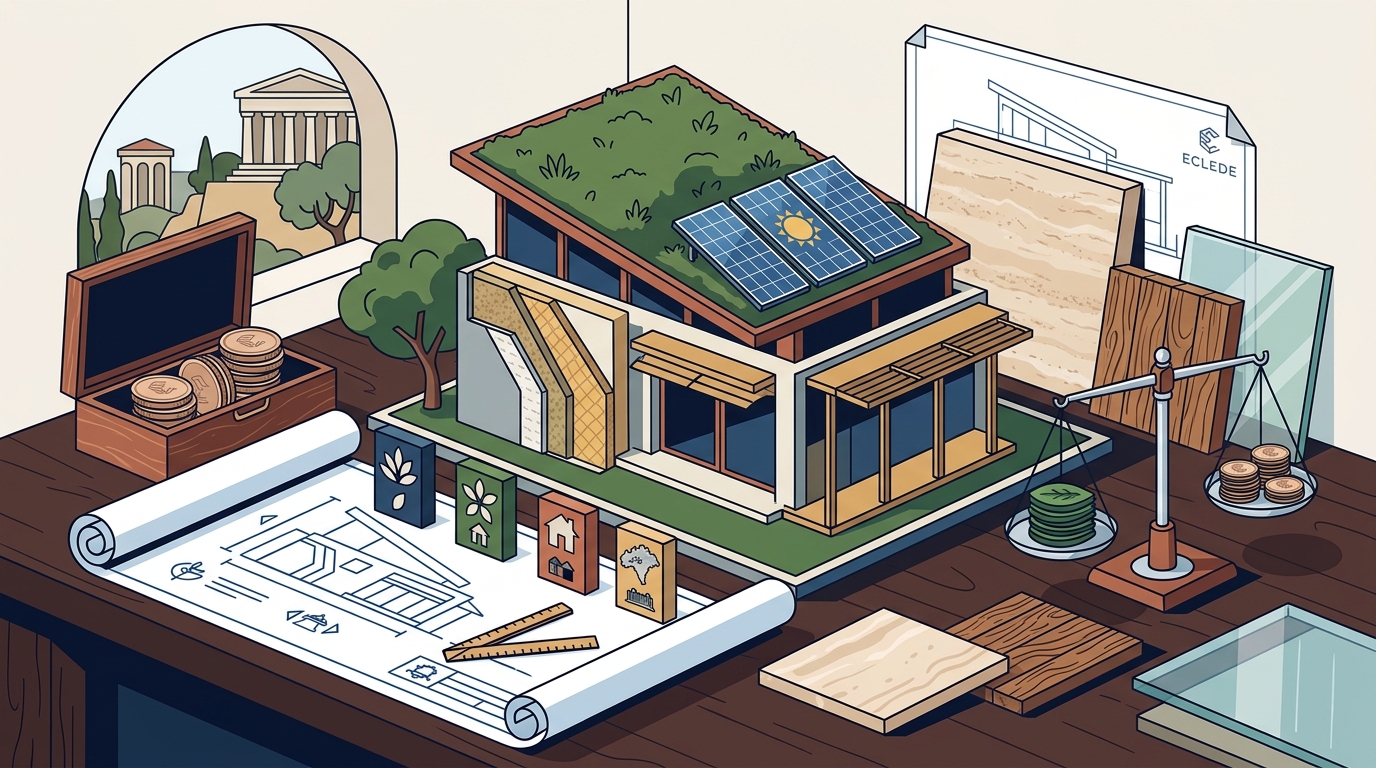
LEED Certified and Silver projects often add negligible cost over conventional builds. Gold-level certification introduces more substantial material and systems upgrades. Platinum-level projects, like the first LEED Platinum residential project in Greece developed by Vassilis Siafaricas, represent the pinnacle of sustainable building and carry the highest upfront investment.
Key Factors That Influence Purchase Price
Location and Land Value
Prime locations in cities like Athens, Los Angeles, or Dubai carry inherent land premiums. In Los Angeles, luxury homes start at $3.9 million, triple the national average. Mediterranean markets often offer better value for equivalent design quality.
Design Complexity and Materials
Bespoke sustainable architecture requires specialized engineering, premium natural materials, and integrated renewable energy systems. Projects like Dynasty Villas demonstrate how sustainable materials and clean architectural lines work together without compromising aesthetics.
Smart Home Integration
A smart home system is an interconnected network of devices that automates lighting, heating, security, and energy management. At the luxury tier, these systems add $50,000 to $250,000 depending on scope and customization.
Long-Term Value and Savings
Sustainable luxury properties deliver measurable financial returns beyond the purchase price. According to industry analysis, green homes deliver 20 to 30% savings in energy use with comparable reductions in water and maintenance costs.
Research also shows that homes with eco-friendly features sell for a mean premium of approximately 3.5% compared to homes without green features. On a $2 million property, that translates to roughly $70,000 in additional resale value.
Additionally, the 2026 global luxury outlook confirms that sustainability has moved from desirable to expected, meaning non-sustainable properties may face depreciation pressure in coming years.
Sustainable Luxury in Greece: A Growing Opportunity
Greece is emerging as a compelling destination for sustainable luxury investment. The combination of stable Mediterranean climate, natural beauty, and comparatively favorable pricing creates strong fundamentals. Athens, in particular, is seeing a wave of architecturally ambitious projects.
ECLÉDE, founded by Vassilis Siafaricas and headquartered in Athens, has pioneered this movement by delivering the first LEED Platinum residential project in the country. Recent developments like Atlas + Pleione continue to push the boundaries of Net Zero Energy design in the Greek market.
For buyers considering Greece, entry points for sustainable luxury start lower than comparable Western European or North American markets, while the design and certification standards match or exceed international benchmarks. Visit the ECLÉDE portfolio for current project examples.
Key Takeaways
- Sustainable luxury homes start at approximately $1.3 million globally, with ultra-luxury net-zero properties exceeding $5.5 million.
- The green building premium ranges from 2% for basic certification to 10-12% for LEED Platinum and net-zero standards.
- Green homes command a 3.5% resale premium and deliver 20-30% energy savings over conventional builds.
- Smart home systems, renewable energy integration, and bespoke materials are the primary cost drivers beyond base construction.
- Greece offers competitive entry pricing for sustainable luxury, with projects like ECLÉDE setting new regional benchmarks.
- Sustainability is now an expected standard among high-net-worth buyers, not an optional upgrade.
- Long-term operational savings and resale value typically offset the higher upfront investment within 10 to 15 years.
Frequently Asked Questions
How much does a sustainable luxury home cost?
Prices vary widely by market. Entry-level luxury with basic green features starts around $1.3 million in the U.S. Ultra-luxury sustainable properties, including LEED Platinum and net-zero homes, typically begin above $5.5 million. In markets like Greece, comparable quality can be found at lower price points.
Is it more expensive to build a sustainable luxury home than a conventional one?
On average, green construction adds 1.8 to 2% to building costs for standard certifications. High-end sustainability features like net-zero energy systems can increase costs by 10 to 12%, but these are offset by long-term energy savings and higher resale value.
What is LEED certification?
LEED (Leadership in Energy and Environmental Design) is the most widely used green building rating system in the world. It evaluates buildings across categories including energy efficiency, water conservation, materials selection, and indoor environmental quality. LEED Platinum is the highest achievable tier.
Do sustainable homes hold their value better?
Yes. Research indicates that homes with green features sell for approximately 3.5% more than comparable non-green properties. Buyer demand for sustainability is increasing, which supports stronger long-term appreciation.
What sustainable features add the most value?
Solar energy systems, high-performance insulation, smart home technology, and water recycling systems consistently add the most value. Homes with solar panels have been shown to sell for approximately 4.1% more than homes without them.
Are there sustainable luxury properties available in Greece?
Yes. Athens-based developer ECLÉDE, led by Vassilis Siafaricas, has delivered multiple award-winning sustainable luxury projects including the first LEED Platinum residential development in Greece. Their portfolio includes Net Zero Energy buildings and bespoke villas.
What is a net-zero energy building?
A net-zero energy building produces as much renewable energy as it consumes annually. These properties use a combination of photovoltaic systems, bioclimatic architecture, advanced insulation, and smart energy management to achieve energy independence.
How long does it take for green features to pay for themselves?
Most sustainable technologies pay for themselves within 10 to 15 years through energy savings, reduced maintenance costs, and tax incentives. When factoring in resale premiums, the return timeline can be even shorter.
Start Your Sustainable Luxury Journey
Ready to explore what bespoke sustainable design looks like in practice? Discover ECLÉDE's award-winning developments and connect with the team behind Greece's first LEED Platinum residence. Contact ECLÉDE today to discuss your vision.