
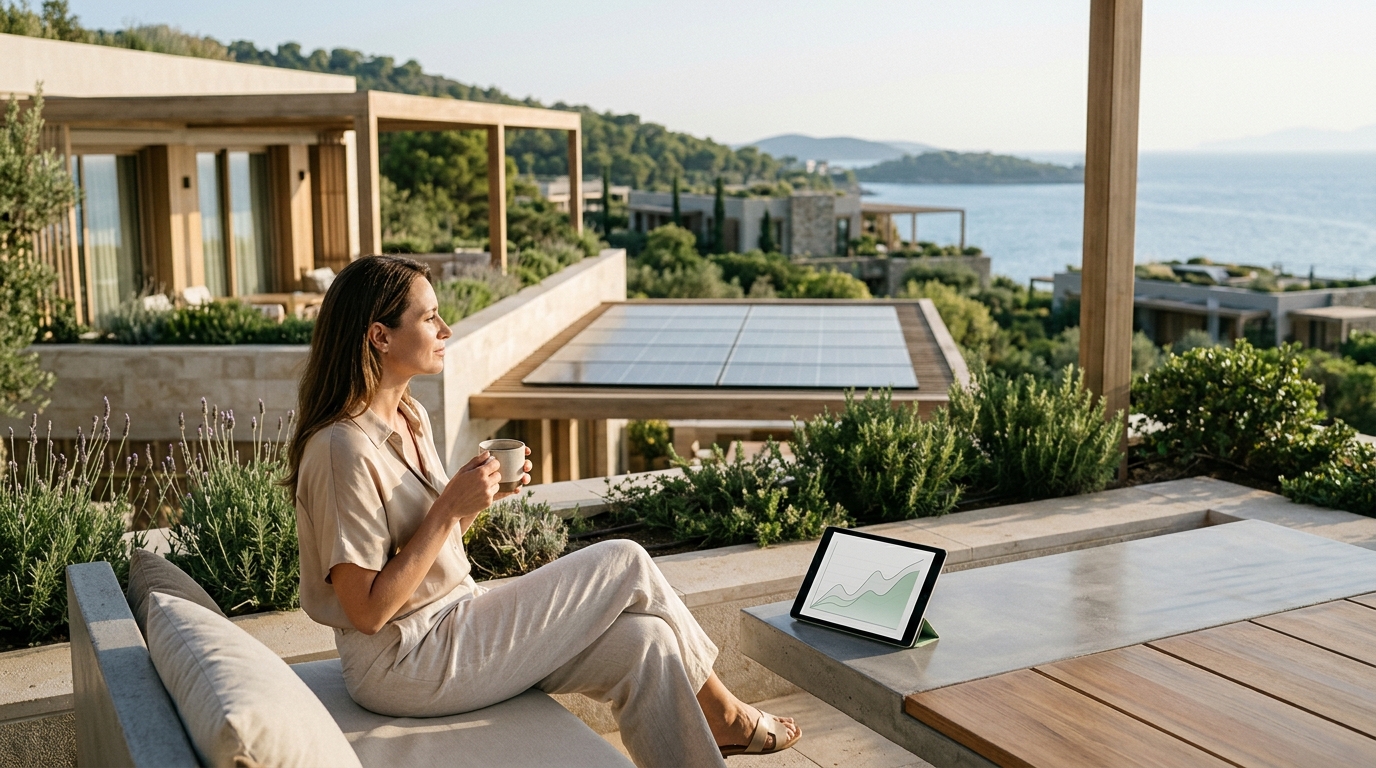
Sustainable Property Investment: How Eco-Friendly Real Estate Benefits You Long-Term
Investing in sustainable real estate is no longer a niche decision reserved for environmental idealists. It is a financially strategic move backed by growing market data, regulatory momentum, and shifting buyer preferences. Whether you are acquiring a luxury villa in the Greek islands or a net-zero residence in Athens, understanding how eco-friendly properties protect and grow your wealth over time is essential. In this guide, we explore the measurable long-term advantages of sustainable property investment and explain why companies like ECLÉDE are leading the charge in luxury green development.
What Is a Sustainable Property Investment?
A sustainable property investment is a real estate asset designed, built, or retrofitted to minimize environmental impact while maximizing energy efficiency and occupant well-being. This includes features such as solar energy systems, high-performance insulation, water recycling, and responsibly sourced building materials.
Net-zero energy building is a structure that produces as much energy as it consumes annually through on-site renewable generation and advanced efficiency measures. ECLÉDE, founded by Vassilis Siafaricas, specializes in creating these cutting-edge, zero-energy-consumption buildings across Greece's most exclusive locations.
Financial Returns: Resale Value, Rent Premiums, and Savings
The financial case for green property is compelling. According to research cited by SolarTech, LEED-certified buildings show rental rates of $2.91 per square foot compared to $2.16 for conventional buildings, plus an 8% higher resale value for residential properties.
A meta-analysis referenced in MIT's sustainable real estate curriculum found an overall sales price premium of 7.6% for green buildings, with commercial properties commanding up to 11.5% more. Meanwhile, NAR's 2025 Residential Sustainability Report found that 86% of home buyers viewed energy-efficient windows, doors, and siding as very or somewhat important.
| Metric | Green/Sustainable Building | Conventional Building |
|---|---|---|
| Average Rental Rate (per sq ft) | $2.91 | $2.16 |
| Resale Value Premium | +7.6% average | Baseline |
| Operating Cost Reduction (5 years) | Up to 16.9% | Baseline |
| Maintenance Cost Savings | 20% lower | Baseline |
| Upfront Cost Premium | 2-7% higher | Baseline |
Energy Cost Savings Over the Property Lifecycle
Green buildings deliver substantial operational savings. According to industry data compiled by REsimpli, LEED-certified buildings have 34% lower CO2 emissions, consume 25% less energy, and use 11% less water than traditional buildings. Operating costs drop by 16.9% over five years, and maintenance costs run 20% lower.
For a luxury property owner, these savings compound dramatically. When you invest in a project like ECLÉDE's Boomerang Athens, one of the pioneering LEED-certified residences in Greece, the reduced utility bills alone can offset the modest upfront premium within a few years.
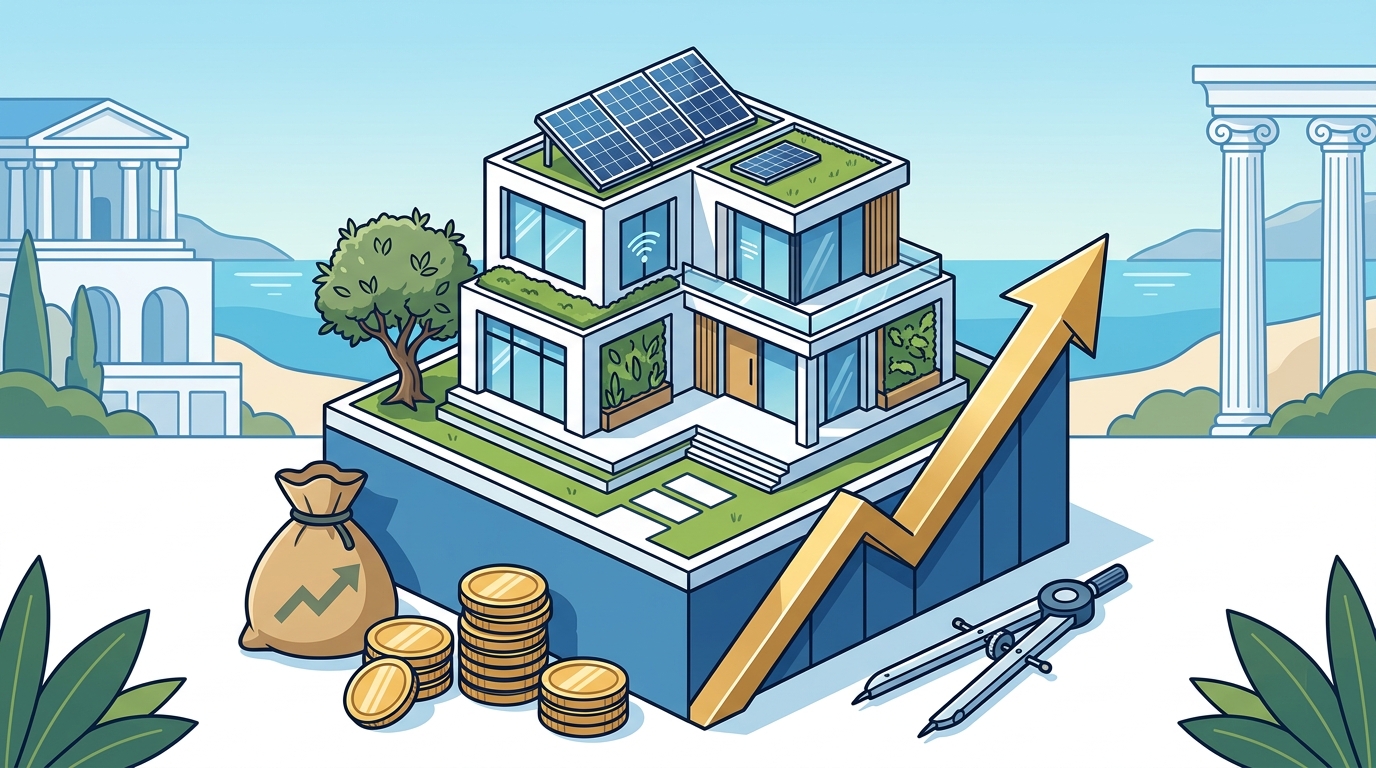
Why Net-Zero Matters for Luxury Buyers
A net-zero energy building is not just an environmental statement. It is a hedge against rising energy costs, providing predictable and minimal operating expenses for decades. Projects like ECLÉDE's Atlas and Pleione villas in Lefkada demonstrate how subterranean luxury design achieves near-zero energy consumption without sacrificing aesthetics.
The Booming Green Building Market
The global green building market is experiencing explosive growth. According to Precedence Research data, the market was valued at $565.33 billion in 2024 and is projected to reach $1,374.23 billion by 2034, growing at a CAGR of 9.42%.
This trajectory means sustainable properties are moving from premium niche to market standard. Investors who enter now position themselves ahead of tightening regulations and growing buyer demand. In Greece, ECLÉDE is at the forefront of this shift, delivering bespoke luxury developments that meet the highest sustainability benchmarks.
Buyer Willingness to Pay More
Data from RubyHome indicates that American buyers are willing to pay a premium of nearly $74,000 more for a green home over a conventional one. In the luxury segment, that premium multiplies as discerning buyers prioritize both sustainability credentials and long-term value retention.
Certifications That Add Measurable Value
Green building certification is a third-party verification that a property meets specific environmental performance standards. The most recognized systems include LEED, WELL, and BREEAM.
LEED Certification
LEED (Leadership in Energy and Environmental Design) remains the global gold standard. Research shows that even Certified or Silver-level LEED buildings can be constructed for little to no additional cost over conventional buildings, while delivering meaningful resale and rental premiums.
WELL Building Standard
The International WELL Building Institute reported in July 2025 that WELL had expanded to more than 6 billion square feet across nearly 100,000 locations, with over 180 Fortune 500 companies using it. Health-focused design is no longer a niche request.
Climate Resilience and Risk Reduction
Sustainable buildings are inherently more resilient to climate-related risks, including extreme heat, flooding, and energy supply disruptions. This resilience translates directly to lower insurance costs and stronger asset protection over time.
According to the American Institute of Architects, homes built to resilient standards earn nearly a 7% premium in resale value. For luxury investors in Mediterranean climates, this is particularly relevant as summer temperatures rise and energy demand spikes.
ECLÉDE's design philosophy, rooted in minimally intrusive and holistic architecture, addresses these challenges by integrating properties into their natural surroundings. Explore the vision of founder Vassilis Siafaricas to understand how this approach safeguards both the environment and your investment.
Key Takeaways
- Sustainable properties command an average 7.6% sales price premium and up to 8% higher resale values in the residential segment.
- LEED-certified buildings reduce operating costs by up to 16.9% over five years and cut maintenance expenses by 20%.
- The global green building market is projected to reach $1.37 trillion by 2034, signaling a permanent market shift.
- Buyers are willing to pay significantly more for eco-friendly homes, with premiums reaching $74,000 in the U.S. market.
- Certifications like LEED and WELL add verifiable, market-recognized value to any property.
- Climate-resilient construction protects your asset against rising environmental risks and insurance costs.
- Luxury developers like ECLÉDE are proving that sustainability and bespoke design can coexist at the highest level.
Frequently Asked Questions
What is a sustainable property investment?
A sustainable property investment is a real estate asset designed to minimize environmental impact through energy efficiency, renewable energy, water conservation, and responsibly sourced materials, while delivering long-term financial returns.
Do green buildings cost more to build?
Green buildings typically cost only 2-7% more upfront than conventional construction. Many LEED-certified buildings at the Certified or Silver level are built for comparable costs to traditional structures.
How much more are sustainable homes worth at resale?
Research shows green homes achieve an average sales price premium of 7.6%, with residential properties specifically seeing around 8% higher resale values compared to conventional homes.
What certifications should I look for in a green property?
The most recognized certifications are LEED (energy and environmental design), WELL (occupant health and wellness), and BREEAM (common in Europe). Each adds verifiable market value to a property.
How do sustainable properties reduce long-term costs?
They lower energy consumption by up to 25%, reduce water use by 11%, and cut maintenance costs by approximately 20%. These savings compound significantly over the property's lifecycle.
Is the green building market still growing?
Yes. The global green building market was valued at $565 billion in 2024 and is projected to reach $1.37 trillion by 2034, reflecting a compound annual growth rate of 9.42%.
Why does ECLÉDE focus on net-zero energy buildings?
ECLÉDE, founded by Vassilis Siafaricas, focuses on net-zero buildings because they eliminate ongoing energy costs, maximize long-term asset value, and align with the company's commitment to environmentally responsible luxury development in Greece.
Are sustainable luxury properties available in Greece?
Yes. ECLÉDE develops bespoke, sustainable luxury properties across Greece's most prestigious locations, including LEED-certified residences in Athens and near-zero energy villas in Lefkada.
Invest in Your Future With Sustainable Luxury
The data is clear: sustainable property investment protects your capital, reduces your costs, and positions you in a market that is growing by nearly 10% annually. If you are ready to explore how bespoke, eco-friendly luxury real estate in Greece can work for you, contact the ECLÉDE team to discuss your next project with Vassilis Siafaricas and his award-winning development studio.