
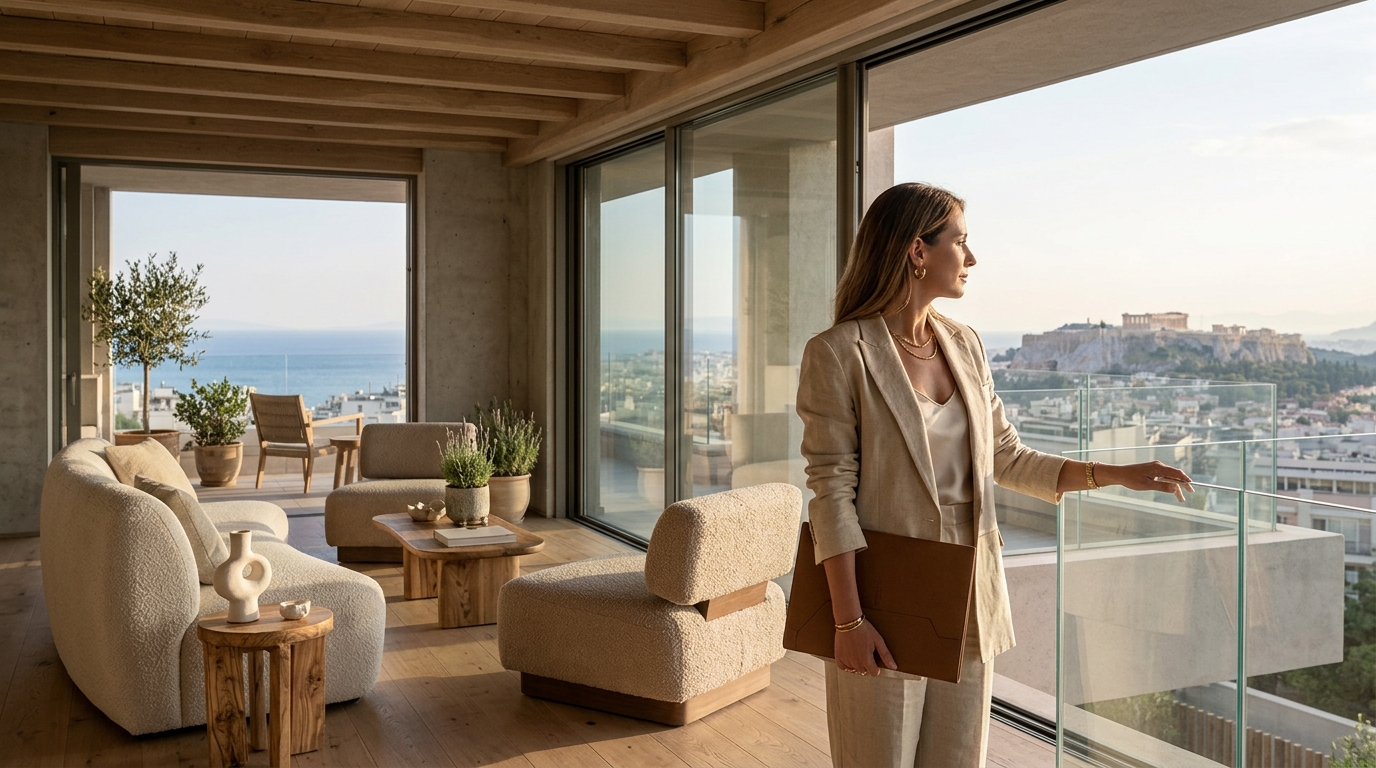
Sustainable Luxury Property Costs: A 2026 Buying Guide
Sustainable luxury real estate is no longer a niche market segment. In 2026, high-net-worth buyers increasingly expect energy efficiency, eco-conscious materials, and intelligent design as standard features in premium properties. But what does it actually cost to purchase a sustainable luxury home? The answer depends on location, certification level, building technology, and the degree of bespoke design involved. This guide breaks down the estimated price ranges, the factors that drive costs up or down, and why a sustainable luxury property from a developer like ECLÉDE can deliver long-term value that outweighs the initial premium.
Defining Sustainable Luxury Real Estate
A sustainable luxury property is a high-end residence designed to minimize environmental impact while delivering premium aesthetics, comfort, and exclusivity. These homes integrate renewable energy systems, advanced insulation, smart automation, and responsibly sourced materials into architecturally distinctive designs.
A Net Zero Energy Building (NZEB) is a structure that produces as much energy as it consumes over the course of a year. Developers like Vassilis Siafaricas, founder of ECLÉDE, have made NZEBs a cornerstone of their portfolio, proving that zero-energy performance and luxury are fully compatible.
In 2026, sustainability in luxury real estate has shifted from a differentiator to a baseline expectation. As PropertyWire's 2026 outlook noted, features like solar integration and intelligent energy management have moved from "desirable" to "expected" among affluent buyers.
Estimated Cost Ranges in 2026
The luxury property market operates on a different scale from the general housing market. According to Sotheby's International Realty 2026 Luxury Outlook, the threshold for a luxury home in the U.S. starts at approximately $1.3 million, while the top 5% begins at $2 million and ultra-luxury (top 1%) at $5.4 million.
| Market Segment | Estimated Entry Price (2026) | Sustainability Premium |
|---|---|---|
| Luxury (Top 10%) | $1.3M+ | +2% to 8% |
| High-End Luxury (Top 5%) | $2M+ | +5% to 12% |
| Ultra-Luxury (Top 1%) | $5.4M+ | +8% to 15% |
| Bespoke NZEB Villa (Greece/Mediterranean) | €1.5M to €10M+ | Integrated into base cost |
In Mediterranean markets like Greece, where ECLÉDE's portfolio is concentrated, bespoke sustainable villas typically range from €1.5 million for smaller builds to well over €10 million for seafront estates with full net-zero systems.
Key Factors That Influence Price
Location and Land Value
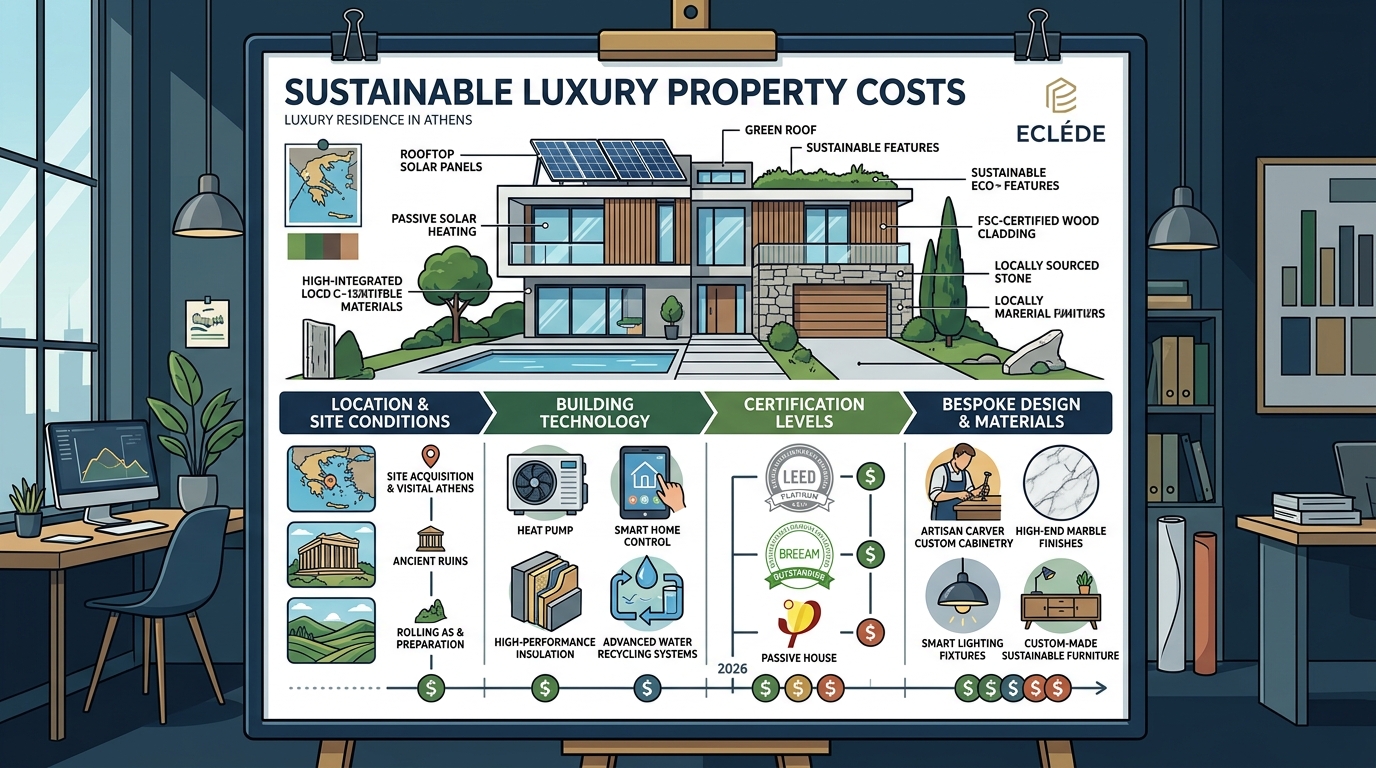
Coastal and island properties in Greece, such as those on Lefkada or in the exclusive Athens suburbs of Ekali and Kifisia, carry significant land premiums. Location alone can account for 30% to 50% of total project cost.
Certification and Energy Performance
A LEED certification is a globally recognized rating that measures a building's environmental performance across energy, water, materials, and indoor quality. Achieving LEED Platinum, the highest tier, typically adds 6% to 8% to construction costs but yields substantial long-term savings. Vassilis Siafaricas led the development of the first LEED Platinum residential project in Greece, setting a regional benchmark.
Bespoke Design and Materials
Custom interiors, subterranean construction, green roofs, and smart-home systems like KNX automation all increase costs but add both lifestyle value and asset appreciation. Projects such as the Atlas and Pleione villas on Lefkada exemplify how bespoke design integrates luxury with sustainability.
The Green Building Premium Explained
The green building premium is the additional upfront cost of incorporating sustainable features compared to conventional construction. Industry data shows this premium is often more modest than buyers expect.
According to research compiled by the U.S. Green Building Council and related studies, green buildings average only about 1.8% to 2% more than comparable non-green projects at the certified or silver level. For higher-performance buildings targeting platinum certification, premiums can reach 6% to 8%.
At the luxury tier, this premium is frequently absorbed into the overall project budget. Developers focused on sustainability from the outset, like ECLÉDE, design around energy performance from day one rather than retrofitting, which keeps the incremental cost minimal relative to total investment.
Long-Term ROI and Operating Savings
The financial case for sustainable luxury goes well beyond environmental values. Green-certified properties deliver measurable returns across multiple dimensions.
- New green buildings see an average operating cost savings of 10.5% in the first year, according to green building industry data.
- Over five years, average operating cost reductions reach 16.9%.
- LEED-certified buildings can see value increases of up to 10% over non-certified equivalents.
- Sustainable luxury homes deliver 20% to 30% savings in energy use, with comparable reductions in water and maintenance costs.
For buyers considering a property as both a residence and a strategic asset, these savings compound over time. As the 2026 Luxury Outlook report confirmed, luxury real estate outperformed traditional real estate in both sales and increased value in 2025, and that trajectory is expected to continue.
The ECLÉDE Approach to Sustainable Luxury
ECLÉDE, founded by Vassilis Siafaricas, represents a development philosophy where sustainability is not an add-on but the foundation of every project. Based in Athens with operations across Greece, the company specializes in net zero energy buildings that blend minimalist architectural lines with their natural surroundings.
Recent award-winning projects illustrate this approach. The Atlas and Pleione subterranean villas on Lefkada Island feature green roofs, energy-efficient glass panels, and custom interiors, all while achieving near-zero energy consumption. The V House integrates photovoltaics and KNX automation into a contemporary design that earned the 2025 A' Sustainable Design Award.
For prospective buyers, working with a developer that integrates sustainability from concept through construction means the "green premium" becomes part of the value proposition rather than an unexpected cost. Explore the full range of completed and upcoming developments in the ECLÉDE portfolio.
Key Takeaways
- Sustainable luxury properties in 2026 start at roughly $1.3 million for entry-level luxury and exceed $5.4 million at the ultra-luxury tier.
- The green building premium averages just 2% to 8% above conventional construction, depending on certification level.
- Green-certified homes deliver 10% to 17% operating cost savings within the first five years.
- Mediterranean markets like Greece offer competitive land values compared to London, New York, or Dubai for comparable quality.
- LEED Platinum and NZEB certifications can increase property value by up to 10%.
- Bespoke developers like ECLÉDE integrate sustainability into base costs, minimizing unexpected premiums.
- Luxury real estate continues to outperform general markets in both sales volume and value appreciation.
Frequently Asked Questions
How much does a sustainable luxury home cost in 2026?
Entry-level luxury starts around $1.3 million in the U.S. and €1.5 million in prime Mediterranean locations. Ultra-luxury sustainable properties can exceed $5.4 million or €10 million for bespoke estates.
What is the green building premium?
The green building premium is the additional upfront cost of sustainable features compared to conventional construction. Studies show it averages 1.8% to 2% for basic green certification, rising to 6% to 8% for the highest performance levels.
Do sustainable homes hold their value better?
Yes. LEED-certified buildings can see value increases of up to 10% over non-certified equivalents, and they depreciate more slowly over time due to lower maintenance and energy costs.
What is a Net Zero Energy Building?
A Net Zero Energy Building (NZEB) is a structure that generates as much renewable energy as it consumes annually. ECLÉDE specializes in NZEB construction across its luxury residential projects in Greece.
Where does ECLÉDE build sustainable luxury properties?
ECLÉDE develops projects across Greece, including the exclusive Athens suburbs of Ekali, Politia, and Kifisia, as well as island locations like Lefkada. The company is headquartered in Athens with an additional office in New York.
What certifications should I look for in a sustainable luxury home?
Key certifications include LEED (especially Gold or Platinum), BREEAM (common in Europe), and national energy performance ratings. ECLÉDE's founder led the first LEED Platinum residential project in Greece.
Is it cheaper to buy or build a sustainable luxury property?
Building bespoke allows full integration of sustainable systems from the design phase, which is typically more cost-effective than retrofitting. Working with a specialized developer ensures sustainability features are optimized rather than added as afterthoughts.
How long does it take to recoup the green premium?
Most studies indicate the green premium is recovered within 3 to 5 years through reduced energy, water, and maintenance costs. After that period, the savings represent net financial gains.
Start Your Sustainable Luxury Journey
Whether you are exploring a seafront villa in Greece or a contemporary net-zero residence near Athens, understanding the true cost of sustainable luxury is the first step. Contact ECLÉDE to discuss your vision with a team that has over two decades of experience delivering award-winning, environmentally responsible developments.