
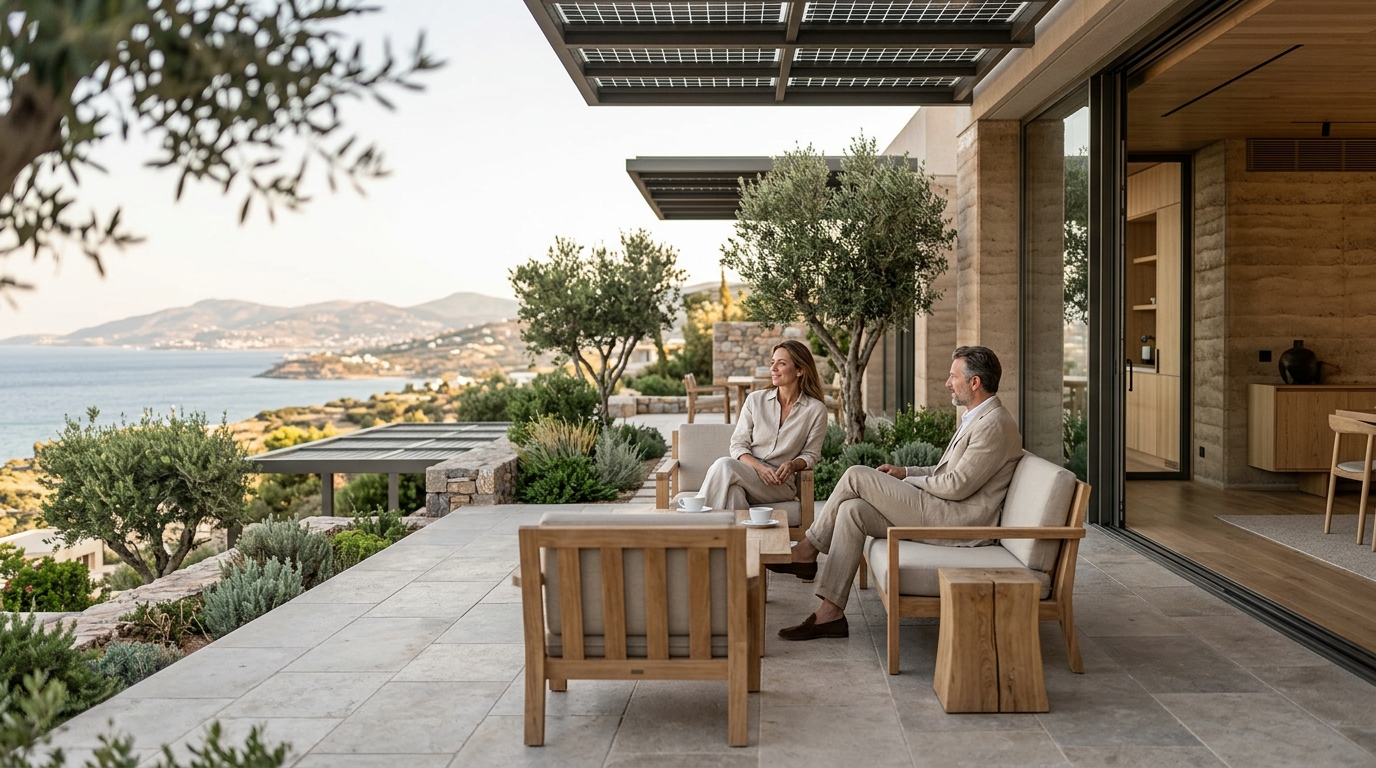
Investing in a sustainable, eco-friendly property is no longer a niche decision reserved for environmentalists. It is a financially strategic move that delivers measurable returns over decades. From lower operating costs and higher resale premiums to healthier living spaces and regulatory future-proofing, green real estate offers advantages that traditional properties simply cannot match. In this guide, we break down exactly how a sustainable property investment benefits you long-term, backed by data from leading industry sources and informed by the design philosophy of ECLÉDE, a luxury development company rooted in bespoke sustainable architecture.
What Is a Sustainable Property Investment?
A sustainable property investment is an allocation of capital into real estate that prioritizes environmental responsibility, energy efficiency, and long-term resource stewardship. These properties embrace the ESG (Environmental, Social, and Governance) framework to reduce carbon emissions and integrate eco-friendly materials into every stage of design and construction.
Net-zero energy building is a design approach where a structure produces as much energy as it consumes annually. Companies like ECLÉDE specialize in exactly this, focusing on net-zero-energy buildings with cutting-edge design that blends seamlessly with natural surroundings.
Financial Returns: Higher Value, Lower Costs
The financial case for sustainable property is compelling. According to CBRE research, LEED-certified buildings command an average 31% higher rent compared to non-certified buildings. Even after controlling for location, age, and size, a consistent 3.7% rent premium remains.
The World Economic Forum reports that sustainable retrofits have achieved 32% above-average rents at properties like One Madison Avenue in New York. These are not outliers but indicators of a structural market shift.
Comparison: Sustainable vs. Traditional Property Investment
| Factor | Sustainable Property | Traditional Property |
|---|---|---|
| Energy costs | 20-30% lower | Baseline |
| Rent premium | 3.7-31% higher | Standard market rate |
| Resale speed | Faster in many markets | Standard |
| Regulatory risk | Low (future-proofed) | Growing exposure |
| Tenant retention | Higher occupancy rates | Standard turnover |
| Carbon emissions | 34% lower (LEED avg.) | Baseline |
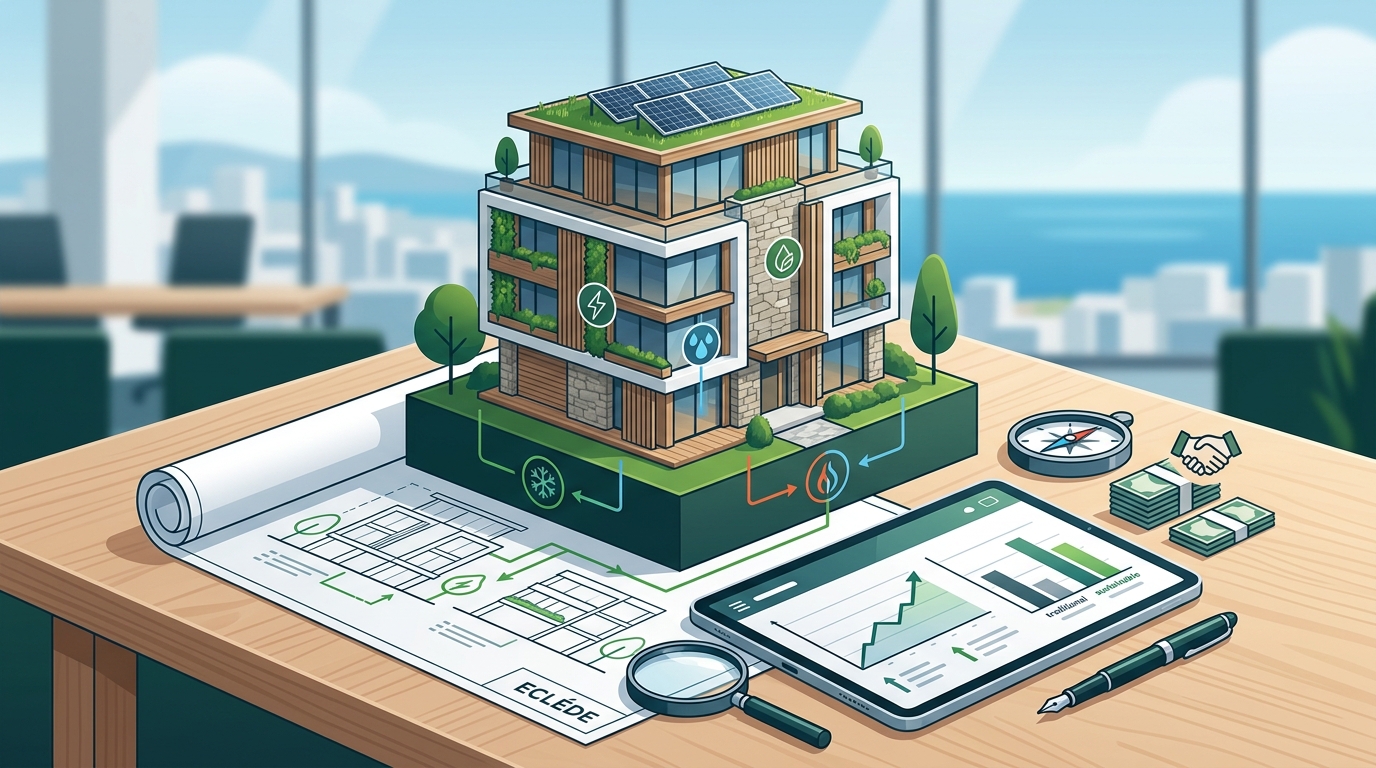
Energy Savings and Operational Efficiency
According to the U.S. Green Building Council, certified homes use 20 to 30% less energy than non-green homes, with some achieving up to 60% savings. A typical LEED building delivers a 25% reduction in energy consumption and 11% less water usage.
These savings compound over the lifetime of a property. For a luxury residence, the reduction in utility bills alone can recoup any premium paid for green features within a few years. Projects like Boomerang Athens by ECLÉDE, the first LEED Platinum certified residence in Greece, demonstrate how energy performance and luxury design coexist without compromise.
Health and Wellbeing Benefits
Sustainable homes are designed to maximize indoor air quality and natural light. The EPA estimates that indoor air can be two to ten times more polluted than outdoor air. LEED-certified homes address this through proper ventilation, high-performance air filters, and safe building materials.
This is not just a comfort upgrade. Healthier indoor environments reduce the risk of respiratory issues and improve cognitive performance. The Atlas and Pleione villas by ECLÉDE, subterranean luxury properties in Lefkada, exemplify this approach with near-zero energy consumption and biophilic design that fosters connection with nature.
Regulatory and Tax Advantages
Governments worldwide are tightening building standards. Properties that already meet green benchmarks avoid the risk of costly future retrofits and potential fines. Investors building green structures may also tap into federal and local tax credits for renewable energy, as well as discounted insurance premiums.
As the built environment accounts for roughly 40% of global emissions, regulatory pressure will only increase. Investing in sustainable property now is a form of risk mitigation that protects your asset value for decades to come.
Rising Market Demand for Green Properties
The green housing market is growing rapidly. The green single-family housing market was valued at over $156 billion in 2024 and is projected to reach nearly $180 billion in 2025. Research shows tenants are willing to pay up to 7.1% more for properties that meet their sustainability preferences.
According to NAR's 2025 Residential Sustainability Report, 86% of home buyers view energy-efficient windows, doors, and siding as important green features. Nearly half of realtors (47%) identify financial incentives as the factor that would most increase demand for sustainable homes.
What Buyers Want Most
Buyers prioritize practical efficiency features over high-profile alternatives. Energy-efficient windows and insulation rank far higher than solar panels or smart-home technology in buyer surveys. This insight guides developers like Vassilis Siafaricas, founder of ECLÉDE, who integrates earth-sheltered energy efficiency and organic materials into every project.
The Role of LEED Certification
LEED (Leadership in Energy and Environmental Design) is the most widely recognized green building rating system in the world. Developed by the U.S. Green Building Council, it evaluates performance across energy use, water efficiency, materials, indoor air quality, and innovation. As of 2024, there were over 195,000 LEED-certified buildings across 186 countries.
LEED certification is awarded at four levels: Certified, Silver, Gold, and Platinum. The newest version, LEED v5, was officially released in April 2025 with a stronger emphasis on decarbonization, health, and climate resilience.
ECLÉDE's Boomerang Athens project achieved LEED Platinum status, making it one of the pioneering certified residences in Greece and a benchmark for luxury sustainable living in the Mediterranean region.
Key Takeaways
- Sustainable properties command 3.7% to 31% higher rents depending on market and certification level.
- LEED-certified homes use 20-30% less energy, delivering significant long-term savings on utility bills.
- Green homes sell faster and for more money in many markets worldwide.
- Healthier indoor air quality reduces respiratory risks and improves occupant wellbeing.
- Tax credits, insurance discounts, and government incentives improve overall investment returns.
- The green housing market is projected to reach $180 billion in 2025, reflecting strong demand growth.
- Regulatory trends favor early adopters, reducing future compliance risk and retrofit costs.
Frequently Asked Questions
What makes a property eco-friendly?
An eco-friendly property uses energy-efficient systems, sustainable materials, water conservation features, and designs that minimize environmental impact. Certifications like LEED provide third-party verification of these standards.
Does a sustainable property cost more to build?
With proper planning, LEED homes can be built for the same cost as non-green homes. Any additional upfront investment is typically recovered through lower operating costs and higher resale value.
How much can I save on energy bills with a green home?
On average, certified green homes use 20 to 30% less energy than conventional homes. Some high-performance designs save up to 60%, depending on climate and building features.
Do green homes have higher resale value?
Yes. In many markets, certified green homes sell more quickly and for more money than comparable non-certified homes. LEED-certified office buildings have shown sale premiums of 25-77% in some studies.
What is LEED Platinum certification?
LEED Platinum is the highest level of LEED certification, awarded to buildings that earn 80 or more points across sustainability categories. It represents exceptional achievement in green building design and performance.
Are there tax benefits for sustainable property owners?
Yes. Many governments offer tax credits for renewable energy installations, energy-efficient upgrades, and green building certifications. Local utility companies may also provide rebates or buy-back programs for excess energy generated.
Is sustainable luxury real estate available in Greece?
Yes. ECLÉDE, founded by Vassilis Siafaricas, develops luxury net-zero-energy properties in Greece, including the award-winning Boomerang Athens and the Atlas and Pleione villas in Lefkada. Visit the ECLÉDE portfolio to explore current projects.
How does sustainability affect tenant demand?
Research shows tenants are willing to pay up to 7.1% more for sustainable properties. Higher occupancy rates and stronger tenant retention make green real estate a reliable income-generating investment.
Start Your Sustainable Investment Journey
Whether you are seeking a luxury residence or a high-performance investment property, sustainable design delivers measurable financial and lifestyle returns. Explore how ECLÉDE combines award-winning architecture with net-zero energy performance by visiting the ECLÉDE contact page to discuss your next project with the team.