
Sustainable Luxury Property Costs: What Buyers Should Expect in 2026
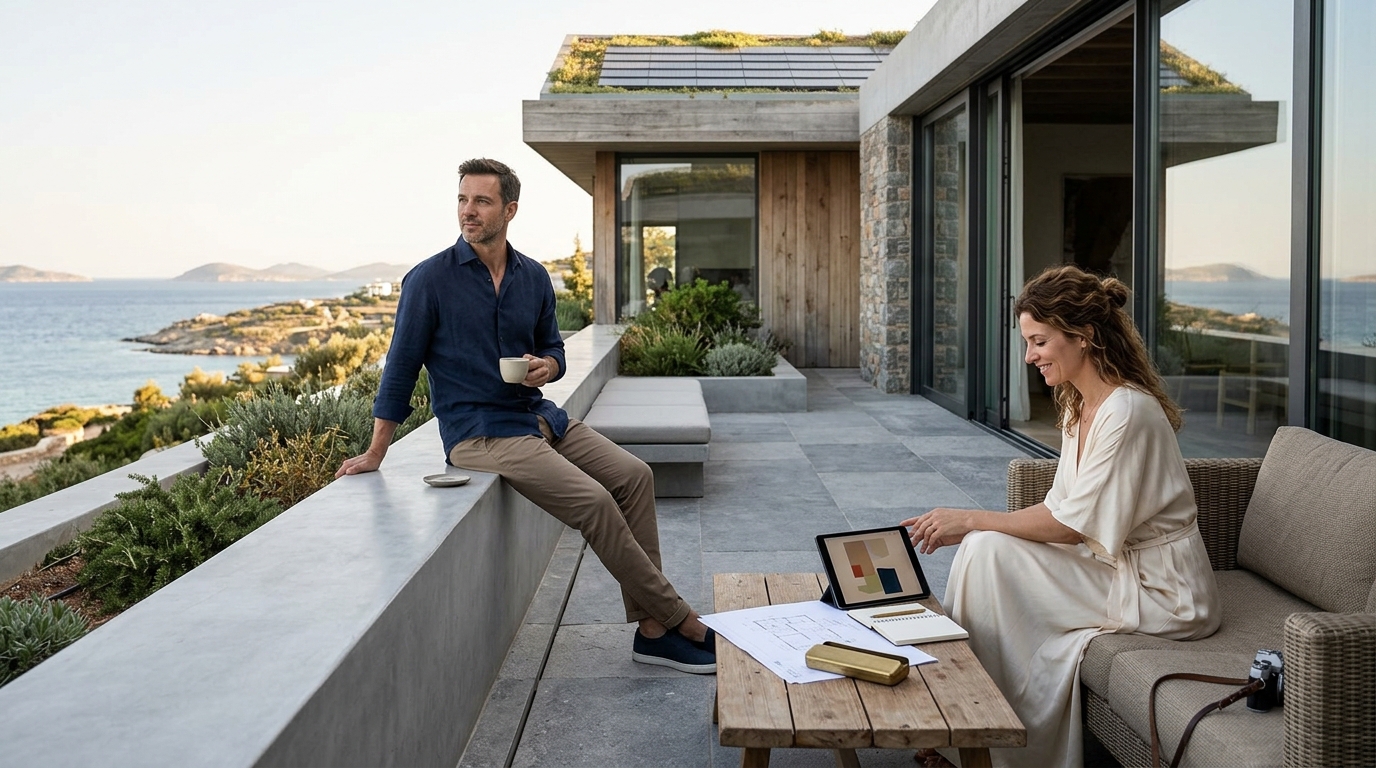
Purchasing a sustainable luxury property is one of the most significant financial decisions a high-net-worth individual can make. In 2026, the intersection of environmental responsibility and premium living has redefined what luxury means, and what it costs. From net-zero energy villas in Greece to branded residences across Europe, sustainable features now command measurable price premiums while delivering long-term savings. This guide breaks down the estimated costs, the factors that influence pricing, and why companies like ECLÉDE are leading the shift toward bespoke, eco-conscious development.
The 2026 Sustainable Luxury Market at a Glance
The global luxury housing market in 2026 operates on its own trajectory, largely independent of mainstream economic pressures. According to PropertyWire's 2026 outlook, the luxury segment is less reactive to interest rates and more driven by lifestyle, mobility, and long-term wealth strategy. A high proportion of luxury deals remain cash-based, insulating buyers from rate movements.
Sustainability has shifted from a desirable add-on to a baseline expectation. Features like solar integration, aerothermal systems, and intelligent energy management are now standard in high-end developments across Europe and beyond.
Estimated Price Tiers for Sustainable Luxury Properties
A sustainable luxury property is a residence that combines premium design, location, and amenities with advanced environmental systems such as renewable energy, low-impact materials, and smart automation. Entry costs vary widely based on location, certification level, and bespoke specifications.
| Market Segment | Estimated Entry Price (2026) | Typical Features |
|---|---|---|
| Top 5% luxury | $2 million+ | Energy-efficient systems, smart home tech, premium location |
| Top 1% ultra-luxury | $5.5 million+ | Net-zero energy, branded residences, bespoke interiors |
| Sustainable villa (Greece) | EUR 1.5 million - EUR 5 million+ | NZEB design, subterranean architecture, custom landscaping |
| Branded sustainable residence (Europe) | $4 million - $15 million+ | Five-star services, concierge, top-tier certifications |
According to Elite Residence International, high-end buyers representing the top 5% face minimum expenditures of $2 million in 2026, while entering the top 1% now requires just under $5.5 million.
The Green Premium: What Sustainability Adds to the Price Tag
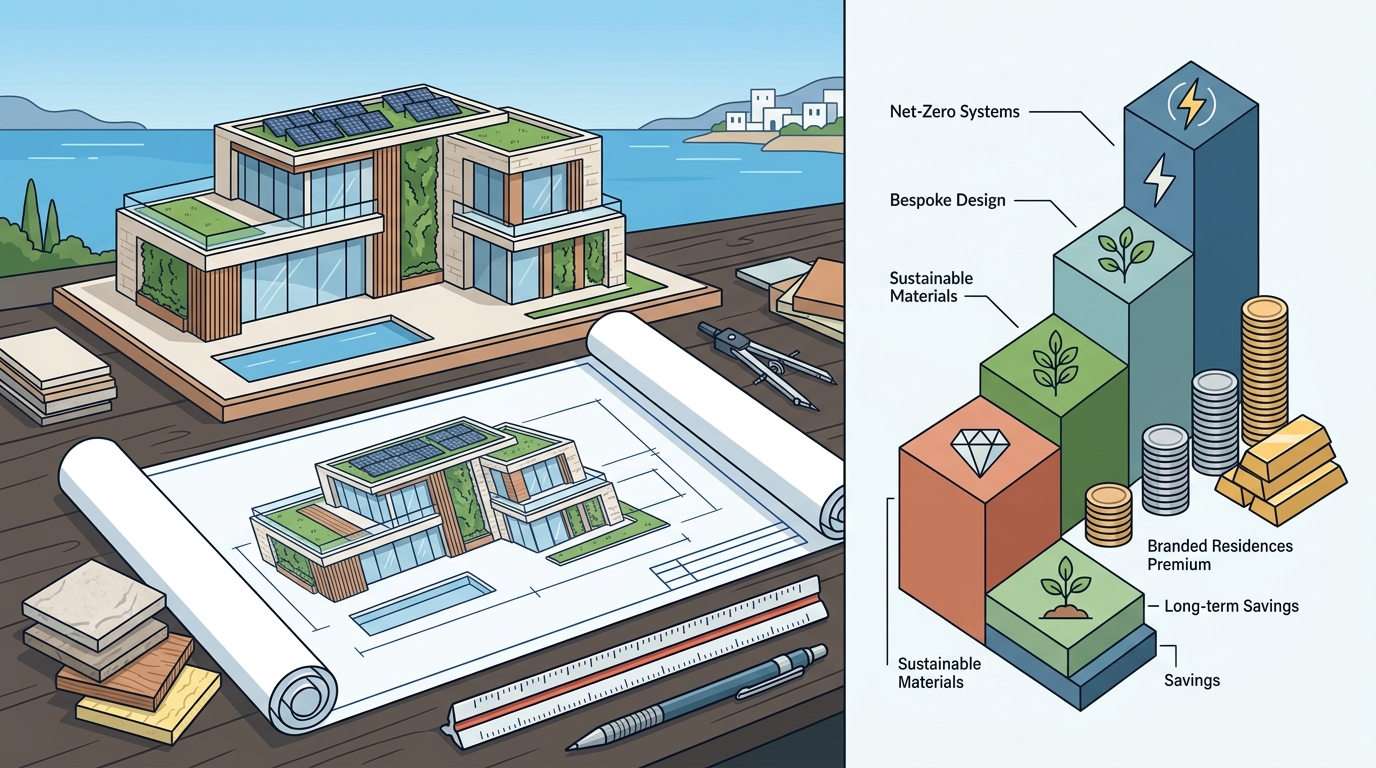
The green premium is the measurable price increase that sustainability-certified properties command over comparable conventional builds. This premium reflects both the upfront investment in eco-technology and the long-term value these features deliver.
Certification-Driven Value
Data from CBRE's analysis indicates that certified properties across Europe carry capital value premiums of around 14 to 16 percent and rental premiums of 6 to 8 percent. Green-certified homes with LEED or WELL credentials can command approximately 7 percent or higher appraisal premiums.
Appreciation Advantage
Properties featuring ESG-compliant interiors see a 10 to 12 percent higher appreciation rate than traditional builds, according to recent market analysis. This makes sustainability not just an ethical choice but a financially strategic one.
Key Factors That Drive Sustainable Luxury Costs
Several elements determine the final price of a sustainable luxury property. Understanding these helps buyers evaluate whether a higher upfront cost translates into genuine long-term value.
Location and Land
Prime locations in Athens suburbs like Ekali, Politia, and Kifisia, or island settings such as Lefkada, carry significant land premiums. Vassilis Siafaricas has developed luxury projects across these exclusive Greek locations for over two decades.
Design Complexity and Materials
Net-zero energy buildings (NZEB) is a building classification for structures that generate as much energy as they consume annually. Achieving NZEB status requires advanced engineering, from photovoltaic arrays and KNX automation to eco-conscious building materials with transparent supply chains. These specifications add 10 to 25 percent to construction costs compared to conventional luxury builds.
Certifications
Pursuing LEED, BREEAM, or WELL certification adds both cost and credibility. According to a joint report by CBRE and GBCI Europe, certified green buildings can increase market value by up to 11 percent while reducing average time to sell by as much as 25 percent.
Long-Term Value and Operational Savings
The upfront premium for sustainable luxury pays dividends over time. Sustainable homes deliver 20 to 30 percent savings in energy use, with comparable reductions in water and maintenance costs. Many governments also offer tax incentives for eco-friendly upgrades, from solar installations to high-efficiency windows.
Luxury buyers increasingly view sustainable properties as strategic hedges. As Dreamer Real Estate notes, sustainable luxury homes not only reduce environmental impact but also strengthen long-term asset performance. Around 70 percent of buyers say they would pay more for energy-efficient features, according to industry surveys.
How ECLÉDE Approaches Sustainable Luxury Development
ECLÉDE (Eclectic Developments) is a luxury development company founded on an ethos of bespoke, sustainable design and architecture. Based in Athens, Greece, the company specializes in net-zero energy buildings that blend seamlessly with natural surroundings.
Under the leadership of founder Vassilis Siafaricas, ECLÉDE has delivered award-winning projects such as the Atlas and Pleione subterranean villas on Lefkada and The V House, both recognized with A' Design Awards for sustainable design excellence. Explore the full range of completed developments in the ECLÉDE portfolio.
ECLÉDE's approach integrates photovoltaics, KNX automation, and eco-technology while maintaining the high-end aesthetic that discerning buyers expect. This philosophy demonstrates that sustainable luxury does not require compromise on design or comfort.
Key Takeaways
- Entry-level sustainable luxury properties start at approximately $2 million in 2026, with ultra-luxury exceeding $5.5 million.
- Green-certified properties in Europe command 14 to 16 percent capital value premiums over non-certified equivalents.
- Sustainable homes deliver 20 to 30 percent savings on energy and operational costs.
- Net-zero energy buildings add 10 to 25 percent to upfront construction costs but offer superior long-term returns.
- ESG-compliant properties appreciate 10 to 12 percent faster than conventional luxury builds.
- ECLÉDE specializes in bespoke, net-zero luxury developments in Greece's most exclusive locations.
- Sustainability in luxury real estate has moved from optional to expected, making early investment a strategic advantage.
Frequently Asked Questions
What is the minimum cost to buy a sustainable luxury property in 2026?
In most global markets, sustainable luxury properties start at approximately $2 million for homes in the top 5 percent of the market. Ultra-luxury sustainable residences in the top 1 percent typically require $5.5 million or more.
Do sustainable features increase a luxury property's resale value?
Yes. Green-certified properties see capital value premiums of 14 to 16 percent in Europe, and ESG-compliant interiors appreciate 10 to 12 percent faster than traditional builds.
What is a net-zero energy building?
A net-zero energy building (NZEB) is a structure designed to produce as much renewable energy as it consumes over the course of a year. ECLÉDE focuses specifically on developing NZEB luxury residences in Greece.
How much do green certifications like LEED or BREEAM add to property value?
According to CBRE research, certified green buildings can increase market value by up to 11 percent while reducing time to sell by 25 percent. LEED and BREEAM certifications are among the most recognized globally.
Are sustainable luxury properties more expensive to maintain?
No. Sustainable luxury homes typically deliver 20 to 30 percent savings in energy, water, and maintenance costs compared to conventional luxury properties, making them less expensive to operate over time.
What regions offer the best value for sustainable luxury real estate?
Regions with stable climates and natural beauty, such as coastal Greece, southern Spain, Portugal, and parts of Italy, are well positioned for sustainable luxury development. Greece, where ECLÉDE operates, combines favorable climate with competitive land costs relative to Western European capitals.
Who is Vassilis Siafaricas?
Vassilis Siafaricas is the founder of ECLÉDE, a luxury development company based in Athens, Greece. He is a civil engineer, designer, and senior project manager with over 20 years of experience developing luxury real estate in Greece's most exclusive suburbs, including Ekali, Politia, Kastri, and Kifisia.
What makes ECLÉDE different from other luxury developers?
ECLÉDE differentiates itself through a commitment to net-zero energy consumption, minimally intrusive design, and holistic integration with natural surroundings. The company has won multiple A' Design Awards for sustainable architecture and hospitality design.
Ready to Explore Sustainable Luxury Living?
Whether you are an investor seeking long-term asset appreciation or a buyer searching for a home that reflects your values, sustainable luxury real estate offers both purpose and performance. Contact ECLÉDE to discuss bespoke development opportunities in Greece's most coveted locations.