
Sustainable Property Investment: Long-Term Benefits That Protect Your Wealth
Sustainable property investment is no longer a niche preference reserved for environmentally conscious buyers. It is a proven wealth-building strategy that delivers measurable financial returns while reducing your exposure to climate risk, regulatory penalties, and market volatility. From lower operating costs and higher resale premiums to tax incentives and stronger tenant demand, eco-friendly real estate offers compounding advantages that traditional properties simply cannot match. This guide breaks down exactly how a sustainable investment benefits you over the long term and why forward-thinking developers like ECLEDE are leading the shift toward greener luxury living.
What Is Sustainable Property Investment?
Sustainable property investment is the practice of acquiring, developing, or holding real estate that is designed, built, and operated to minimize environmental impact while maximizing long-term financial performance. This includes energy-efficient buildings, renewable energy systems, eco-friendly materials, and water conservation technologies.
The scale of this movement is significant. According to the US SIF Trends Report 2025/2026, sustainable assets in the United States reached $6.6 trillion by late 2025. A joint survey by GRESB and MIPIM found that 66% of respondents consider sustainability core to their investment strategy. This is not a passing trend; it is a structural market shift.
Financial Returns: Higher Values and Rental Premiums
Green properties consistently outperform conventional ones on resale value and rental income. According to CBRE research, LEED-certified buildings command rents that average 31% higher than non-certified buildings. The American Institute of Architects reports that green buildings can sell for 16% more than conventional properties.
Luxury Real Estate Sets the Pace
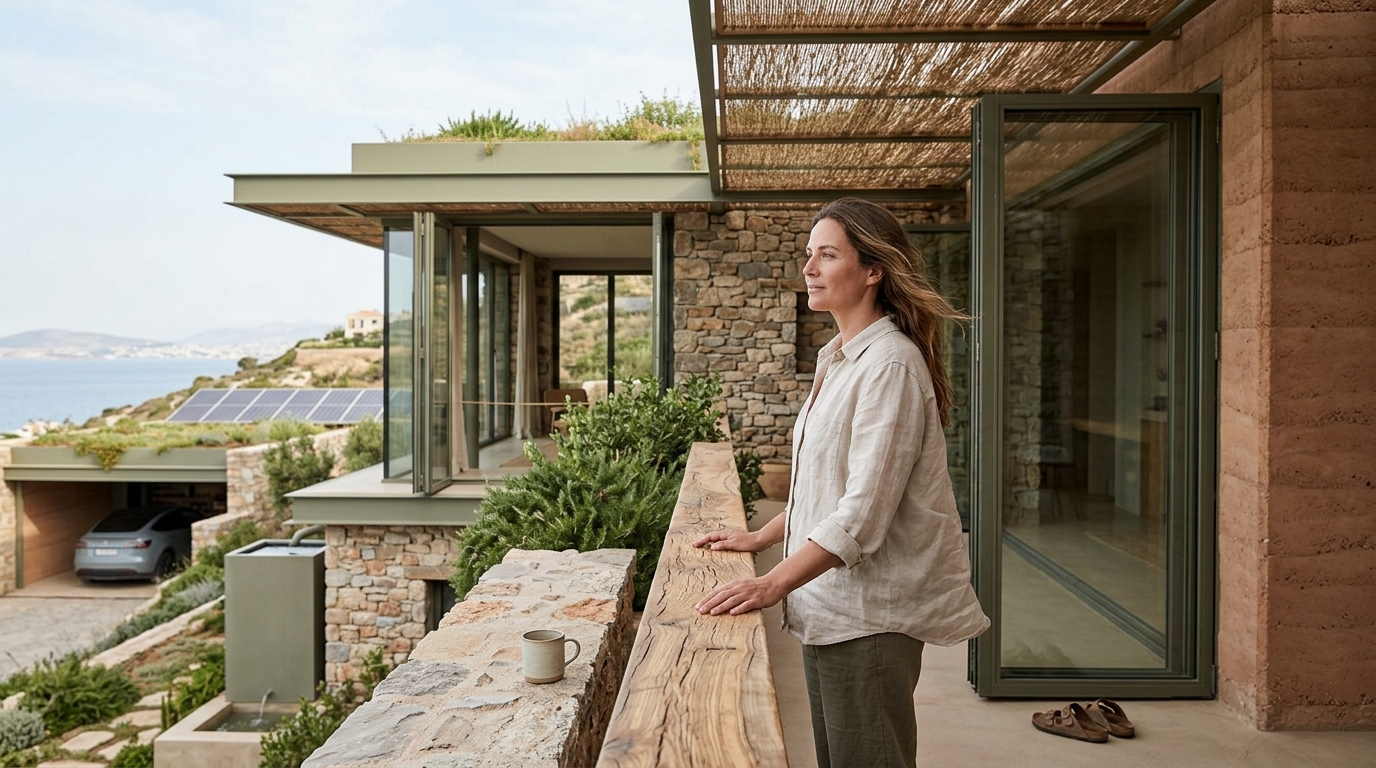
In the luxury segment, the premium is even more pronounced. Discerning buyers expect sustainability as standard. ECLEDE, the Athens-based luxury development company founded by Vassilis Siafaricas, exemplifies this approach. Their Villas Atlas and Pleione in Lefkada are subterranean luxury properties with near-zero energy consumption that sold through Sotheby's for approximately 14,000 euros per square meter, setting a record for the island.
Energy Efficiency and Lower Operating Costs
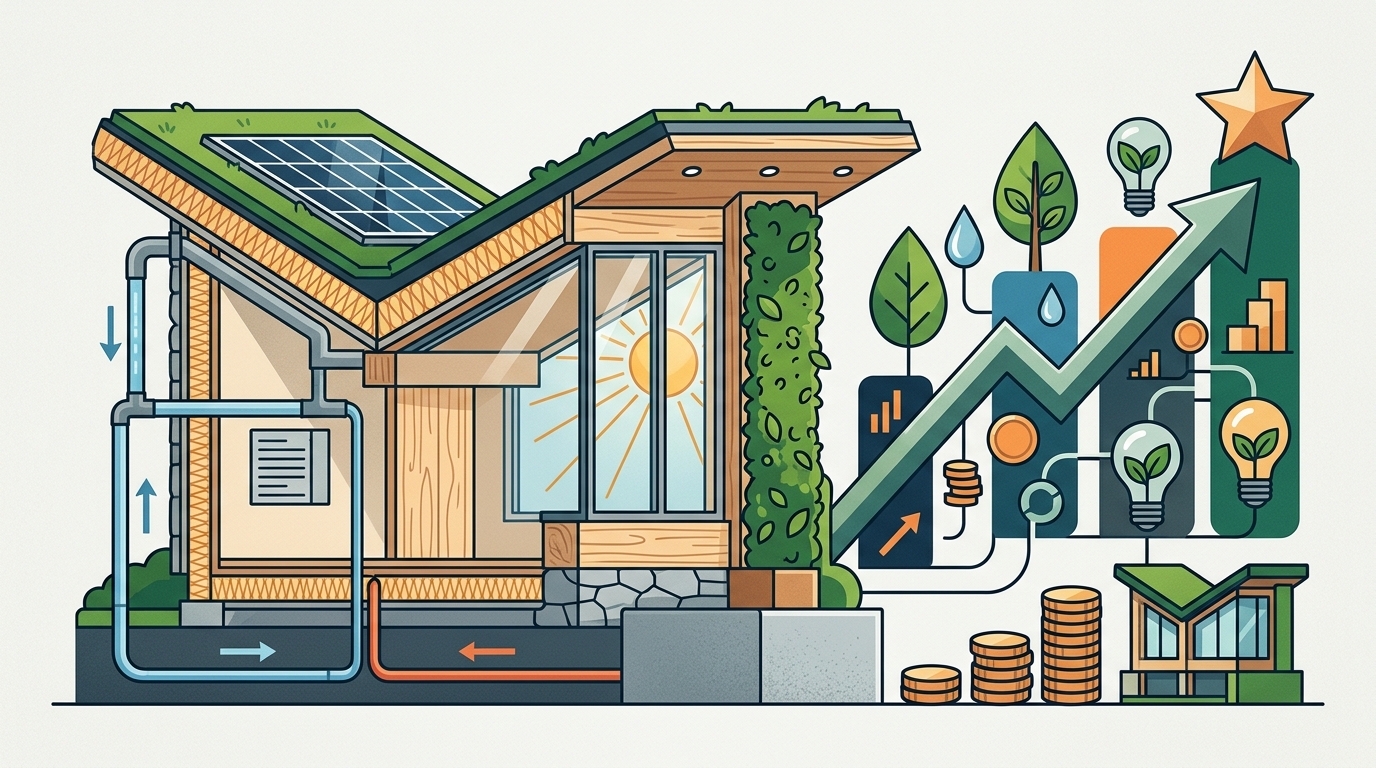
Energy efficiency is the financial engine of sustainable property. A net-zero energy building is a structure that produces as much energy as it consumes over the course of a year, dramatically reducing or eliminating utility costs.
According to the U.S. Green Building Council, certified green homes use 20 to 30 percent less energy than non-green homes, with some achieving savings up to 60%. Over a 20-year holding period, those savings compound into tens or hundreds of thousands in preserved capital.
Smart Design Multiplies Savings
Features like advanced insulation, smart HVAC systems, and passive solar orientation reduce energy demand at the source. These are core principles at ECLEDE, whose project portfolio prioritizes cutting-edge, energy-efficient design across every development.
Risk Mitigation and Regulatory Compliance
Climate risk is a financial risk. As J.P. Morgan notes, rising insurance costs driven by extreme weather events are making conventional properties more expensive to own. Sustainable buildings are better equipped to handle these challenges.
Staying Ahead of Regulation
Governments worldwide are tightening environmental standards. The EU already enforces strict building energy performance directives. Properties that fail to meet evolving standards face fines, forced retrofits, or declining marketability. Investing in sustainability now insulates you from future compliance costs.
Portfolio Stability
Sustainable properties demonstrate greater resilience during economic downturns. Their lower operating costs and consistent tenant appeal create more stable cash flows, reducing overall portfolio risk.
Growing Tenant and Buyer Demand
Consumer preferences are shifting decisively toward sustainability. According to PwC, investing in sustainable and energy-efficient buildings helps attract new tenants or renew existing ones at higher rates. Businesses with corporate social responsibility commitments actively seek spaces that align with their values.
This demand extends to the luxury residential market, where buyers expect both environmental responsibility and exceptional design. The award-winning projects by ECLEDE demonstrate how bespoke sustainable architecture meets this exact demand in Greece and beyond.
The Role of Green Certifications
LEED (Leadership in Energy and Environmental Design) is a globally recognized rating system developed by the U.S. Green Building Council that measures how sustainable a building is across categories like energy, water, materials, and indoor air quality. BREEAM is its European counterpart, widely used across the UK and EU markets.
These certifications provide tangible market advantages. LEED-certified buildings enjoy 4.1% higher occupancy rates than non-certified buildings. In New York, green-certified office buildings command a 28% higher price per square foot. ECLEDE's upcoming Boomerang Athens project is set to become one of the pioneering residences with a LEED certificate in Greece, signaling the direction of luxury development in the region.
Sustainable vs. Traditional Properties: A Comparison
| Factor | Sustainable Property | Traditional Property |
|---|---|---|
| Energy Costs | 20-30% lower (up to 60%) | Baseline |
| Rental Premium | 4-31% higher (LEED-certified) | No green premium |
| Resale Value | Up to 16% higher | Standard appreciation |
| Occupancy Rate | 4.1% higher | Baseline |
| Insurance Costs | Lower (climate-resilient design) | Rising in exposed areas |
| Regulatory Risk | Future-proofed | Potential retrofit costs |
| Tax Incentives | Eligible for credits and rebates | Limited |
Key Takeaways
- Sustainable properties command rental premiums of up to 31% over conventional buildings.
- Green homes use 20-30% less energy, compounding savings over decades.
- LEED-certified buildings sell for up to 16% more and enjoy higher occupancy rates.
- Climate resilience reduces insurance costs and protects long-term asset value.
- Sustainable assets reached $6.6 trillion in the U.S. by 2025, reflecting massive institutional commitment.
- Regulatory trends globally favor green buildings, making early adoption a strategic advantage.
- Luxury developers like ECLEDE prove that sustainability and bespoke design are not mutually exclusive.
Frequently Asked Questions
What is a sustainable property investment?
A sustainable property investment is real estate that is designed, built, and managed to reduce environmental impact through energy efficiency, renewable materials, and water conservation while delivering strong financial returns.
Do eco-friendly properties really cost more to build?
Initial costs can be slightly higher, but the U.S. Green Building Council reports that LEED homes can be built for the same cost as non-green homes with proper planning. The long-term savings far exceed any upfront premium.
How much more are green buildings worth?
Research from the American Institute of Architects shows green buildings can sell for 16% more than conventional ones. CBRE data indicates LEED-certified buildings earn rents averaging 31% higher.
What is LEED certification?
LEED is a rating system developed by the U.S. Green Building Council that evaluates buildings on energy use, water efficiency, materials selection, and indoor environmental quality. Certification levels range from Certified to Platinum.
How does sustainability reduce investment risk?
Sustainable buildings face lower insurance costs, comply with tightening regulations, and maintain stronger tenant demand during downturns, creating more predictable cash flows and preserving asset value.
Are there tax benefits for sustainable property investors?
Yes. Many jurisdictions offer tax credits, grants, or subsidies for renewable energy installations and green building features. These incentives can meaningfully improve your net return.
Why is Greece a compelling market for sustainable luxury real estate?
Greece combines strong tourism demand, favorable climate for solar energy, and a growing luxury market. Developers like ECLEDE are delivering net-zero luxury villas that attract international buyers seeking both lifestyle and long-term value.
What does ECLEDE do differently?
ECLEDE, founded by Vassilis Siafaricas, focuses exclusively on bespoke, sustainable luxury developments in Greece. Their projects combine near-zero energy performance with award-winning architectural design, including LEED-pioneering residences like Boomerang Athens.
Start Your Sustainable Investment Journey
The data is clear: sustainable property investment protects your capital, grows your returns, and positions your portfolio for the future. Whether you are exploring luxury villas in Greece or evaluating green certifications for your next acquisition, the time to act is now. Contact the ECLEDE team to learn how bespoke sustainable design can work for your next investment.