
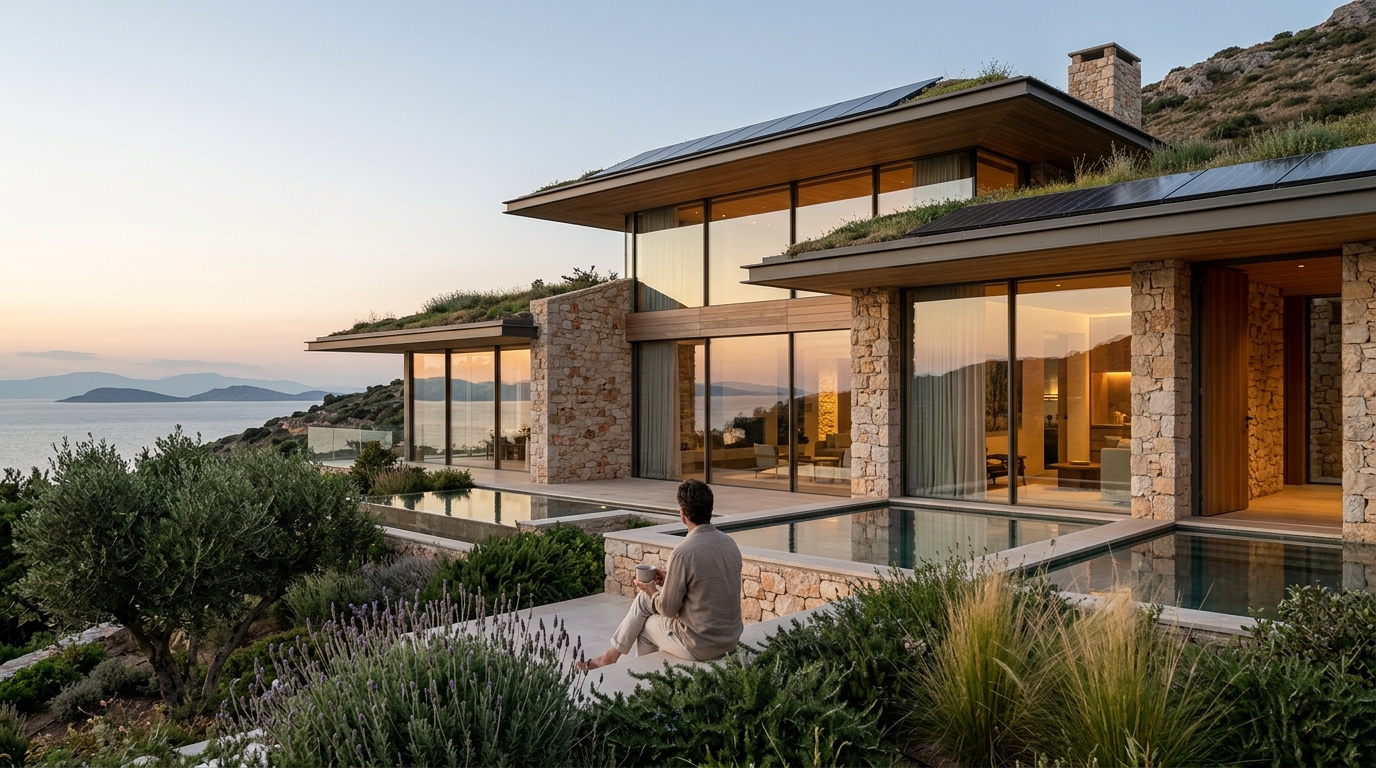
Sustainable Property Investment: Long-Term Benefits That Protect Your Wealth
Sustainable property investment is no longer a niche pursuit reserved for environmentalists. It is a proven wealth-building strategy that delivers measurable financial returns, shields your portfolio from regulatory and climate risk, and positions your assets for decades of appreciation. According to the US SIF Trends Report 2025/2026, sustainable assets in the United States alone reached $6.6 trillion by late 2025. Whether you are considering a luxury villa in Greece or a certified green residence elsewhere, understanding the long-term advantages will help you make a smarter investment decision.
What Is a Sustainable Property Investment?
A sustainable property investment is the acquisition or development of real estate designed, built, and operated to minimize environmental impact while maximizing long-term value. This includes energy-efficient building systems, renewable energy sources, eco-friendly materials, and water conservation strategies.
Sustainable real estate involves the development, construction, and management of properties with a focus on efficiently using resources, reducing exposure to extreme weather, and minimizing negative environmental impact, as J.P. Morgan defines it. Companies like ECLÉDE have built their entire philosophy around this principle, creating luxury developments in Greece that pair bespoke design with near-zero energy consumption.
Financial Returns: Higher Values, Lower Costs
The financial case for sustainable property is backed by hard data. Green buildings consistently outperform conventional ones on both the revenue and cost sides of the equation.
Property Value Premiums
According to the American Institute of Architects, green buildings can sell for 16% more than conventional buildings. LEED-certified Class A urban offices have generated a 25.3% price-per-square-foot premium over non-certified properties.
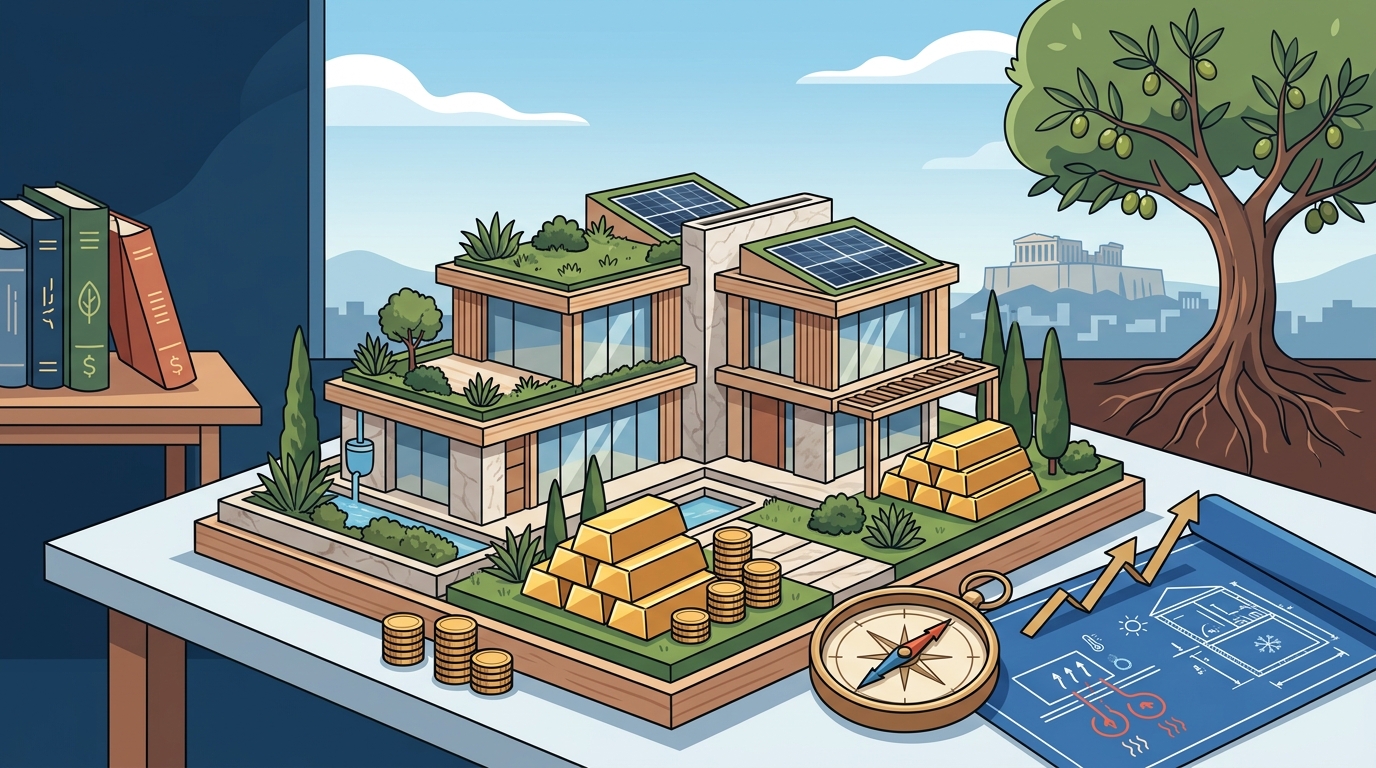
Operating Cost Savings
The U.S. Green Building Council reports that certified homes use 20 to 30 percent less energy than non-green homes, with some saving up to 60 percent. Those savings compound year after year, directly boosting net operating income.
| Metric | Sustainable/Green Property | Conventional Property |
|---|---|---|
| Sale Price Premium | Up to 16% higher | Baseline |
| Rent Premium (LEED) | 4%–8% higher | Baseline |
| Energy Use Reduction | 20%–30% lower | Baseline |
| Occupancy Rate Advantage | +4.1% (LEED certified) | Baseline |
| Insurance Risk | Lower exposure | Rising premiums |
The Role of LEED and Green Certifications
LEED, or Leadership in Energy and Environmental Design, is a globally recognized green building rating system developed by the U.S. Green Building Council in 1998. It works on a point system, awarding Certified, Silver, Gold, or Platinum levels based on performance across categories including climate impact, water resources, and indoor air quality.
For investors, certification translates directly into market value. A CBRE analysis of 20,000 U.S. office buildings found that average rent of LEED-certified buildings is 31% higher than that of non-certified buildings. ECLÉDE's Boomerang Athens project is set to become one of the pioneering residences with a LEED Certificate in Greece, demonstrating how luxury and sustainability converge.
Climate Resilience and Risk Mitigation
Climate risk is a financial risk. Rising insurance costs, stricter building codes, and exposure to extreme weather events make conventional properties increasingly expensive to own and maintain.
Sustainable buildings are better equipped to handle extreme weather events and regulatory shifts. As PwC notes, reducing greenhouse gas emissions and operating expenses can help increase property values, capture tax incentives, and open pathways to sustainable investment capital. Projects like ECLÉDE's Atlas and Pleione villas in Lefkada showcase how subterranean luxury design achieves near-zero energy consumption while withstanding Mediterranean climate conditions.
Growing Tenant and Buyer Demand
Market demand is a critical driver of long-term investment returns. A joint survey by GRESB and MIPIM found that 66% of respondents consider sustainability core to their investment strategy. Tenants are prioritizing buildings that are energy efficient and powered by clean energy.
This trend extends to the luxury residential segment. Buyers increasingly seek properties that align with their values without sacrificing comfort or design quality. The ECLÉDE portfolio exemplifies this intersection, delivering bespoke architecture with integrated sustainability across every project.
The Luxury Buyer Profile Is Shifting
High-net-worth individuals now evaluate environmental credentials alongside location, design, and amenities. A property that performs well on all four dimensions commands premium positioning in competitive markets like Athens and the Greek islands.
Tax Incentives and Government Support
Government incentive programs are a direct financial benefit of sustainable investment. Federal and state programs in many countries offer tax credits for renewable energy installations, energy-efficient upgrades, and green building certifications. LEED-certified homes may also qualify for discounted homeowner's insurance and property tax reductions.
In the European Union, the Green Deal and associated directives are accelerating demand for energy-efficient properties. The real estate sector accounts for approximately 30 to 40% of global emissions, making it a primary target for regulatory action. Investors who act early position themselves ahead of compliance costs that will inevitably affect conventional properties.
To learn more about how Vassilis Siafaricas integrates sustainable thinking into every development, explore the founder's vision for ECLÉDE.
Key Takeaways
- Sustainable properties command sale premiums of up to 16% and rent premiums of 4% to 31% depending on certification level and market.
- LEED-certified homes use 20 to 30% less energy, reducing operating costs year over year.
- Green buildings have 4.1% higher occupancy rates, creating more stable income streams.
- Climate-resilient design reduces insurance costs and protects against regulatory obsolescence.
- Global sustainable investment assets reached $6.6 trillion in 2025, signaling strong institutional demand.
- Tax credits, insurance discounts, and government incentives improve net returns for green property owners.
- Luxury buyers increasingly demand properties that combine bespoke design with eco-friendly performance.
Frequently Asked Questions
What is a sustainable property investment?
A sustainable property investment is real estate designed, built, and operated to minimize environmental impact through energy efficiency, renewable materials, water conservation, and green certifications like LEED.
Do green buildings really sell for more?
Yes. Research from the American Institute of Architects shows green buildings can sell for 16% more than conventional buildings, with LEED-certified Class A properties achieving even higher premiums.
How much energy do LEED-certified homes save?
According to the U.S. Green Building Council, certified homes use 20 to 30 percent less energy than non-green homes. Some achieve savings of up to 60 percent.
Are there tax benefits for sustainable properties?
Many governments offer tax credits for renewable energy installations, green certifications, and energy-efficient upgrades. LEED-certified homes may also qualify for discounted homeowner's insurance.
What is LEED certification?
LEED is Leadership in Energy and Environmental Design, a globally recognized rating system that evaluates buildings across categories like energy use, water efficiency, and indoor environmental quality. It awards Certified, Silver, Gold, or Platinum levels.
How does ECLÉDE approach sustainability in luxury real estate?
ECLÉDE, led by founder Vassilis Siafaricas, develops luxury properties in Greece that integrate net-zero energy design, bespoke architecture, and eco-friendly materials. Projects like Boomerang Athens pursue LEED certification, while the Atlas and Pleione villas achieve near-zero energy consumption.
Is sustainable real estate a good long-term investment?
Yes. Sustainable properties benefit from lower operating costs, stronger tenant demand, regulatory compliance, higher resale values, and growing institutional capital flows. These factors combine to create a resilient, appreciating asset.
Does climate change affect property investment decisions?
Absolutely. Rising insurance costs, extreme weather exposure, and evolving building regulations mean that climate-resilient properties carry lower financial risk and stronger long-term performance.
Start Building a Sustainable Portfolio
If you are ready to explore how luxury sustainable design can protect and grow your wealth, contact the ECLÉDE team to discuss your next investment in bespoke, energy-efficient property development.