
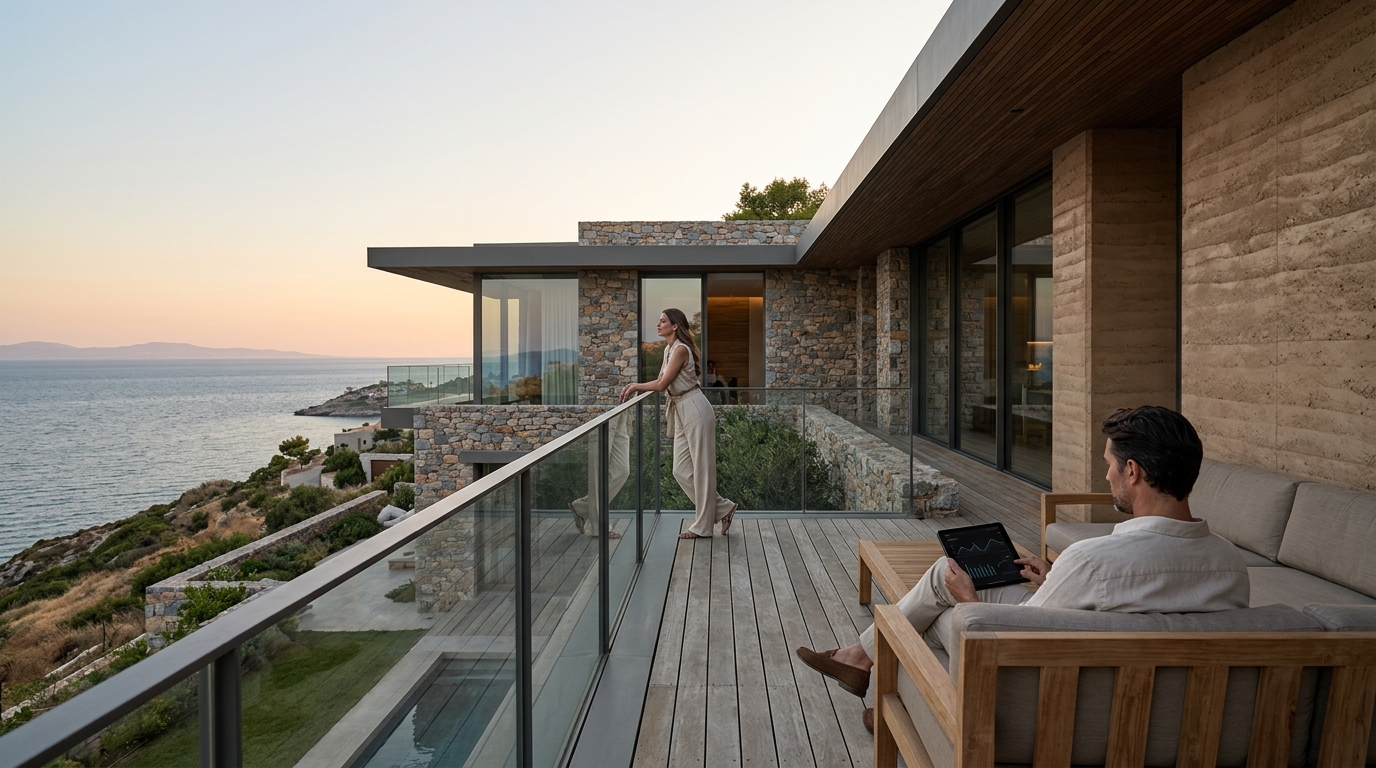
Sustainable Luxury Property Costs: Your 2026 Buying Guide
Sustainable luxury properties are no longer a niche curiosity. They are the fastest-growing segment of the global high-end real estate market. Buyers in 2026 expect green certifications, net-zero energy systems, and wellness-focused design as standard features rather than optional extras. But what does all of this actually cost? This guide breaks down the estimated price ranges, the variables that shift budgets up or down, and the long-term financial case for investing in sustainable luxury. Whether you are eyeing a bespoke villa in the Athens Riviera or a coastal estate elsewhere in Europe, understanding these numbers is the first step toward a smarter acquisition.
What Is a Sustainable Luxury Property?
A sustainable luxury property is a high-end residence that integrates environmentally responsible design, energy-efficient systems, and premium materials without compromising on aesthetics or comfort. These homes go far beyond solar panels, encompassing passive design, advanced engineering, and low-impact materials.
Companies like ECLEDE exemplify this approach. Founded by Vassilis Siafaricas, ECLEDE is a luxury development company built on the ethos of bespoke, sustainable design and architecture. Their projects in Greece, including the award-winning Boomerang Athens, demonstrate that net-zero energy buildings can deliver cutting-edge design alongside environmental responsibility.
Core Features of Sustainable Luxury Homes
- Net-zero or near-zero energy consumption
- LEED, BREEAM, or equivalent green certifications
- Smart home automation for energy management
- Eco-conscious materials with transparent supply chains
- Biophilic design connecting interiors to nature
Estimated Price Ranges in 2026
Pricing in sustainable luxury real estate varies enormously by location, size, and specification. In 2026, entry into the top 5% of the luxury market requires a minimum expenditure of roughly $2 million, according to Elite Residence International. Ultra-luxury territory (the top 1%) now demands close to $5.5 million.
| Property Tier | Estimated Price Range (USD) | Typical Green Features |
|---|---|---|
| Entry Luxury Sustainable | $1.5M - $3M | Energy Star appliances, efficient HVAC, basic solar |
| Mid-Tier Sustainable | $3M - $7M | LEED Gold, smart home systems, geothermal heating |
| Ultra-Luxury Sustainable | $7M - $20M+ | LEED Platinum, net-zero energy, bespoke design, wellness suites |
| Bespoke Estate (e.g., Greek islands) | $5M - $15M+ | Subterranean architecture, full energy independence, custom interiors |
In Greece, ECLEDE's Villas Atlas and Pleione on Lefkada Island illustrate the bespoke estate tier. These subterranean, near-zero energy villas achieved one of the largest individual residence sales in the country.
The Green Building Premium Explained
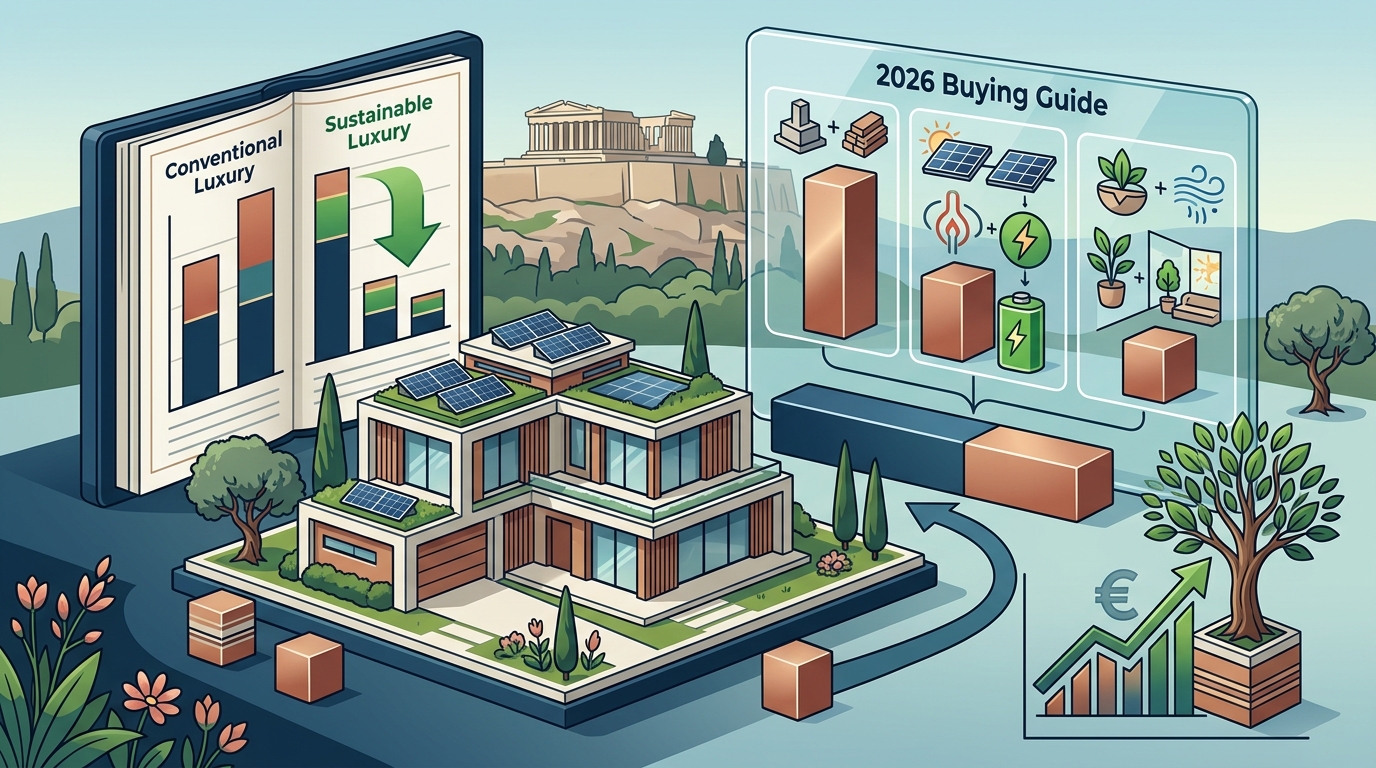
A green building premium is the additional upfront cost of constructing a sustainable property compared to a conventional one. One common concern among buyers is that going green costs dramatically more. The data tells a different story.
Research shows that green buildings average only about 1.8 to 2% more than comparable non-green projects, translating to roughly $3 to $5 per square foot, according to analysis cited by RubyHome. Projects pursuing high-end sustainability features (LEED Platinum level) may push costs up 6 to 12%, but this remains modest relative to total project value.
Why the Premium Is Shrinking
Integrated design practices, improved supply chains for sustainable materials, and growing contractor expertise are driving premiums down. Many developers now achieve green certification within their original budgets by planning sustainability into the building's DNA from day one.
Key Factors That Influence Cost
Location and Land
Land costs in prime Mediterranean locations, exclusive Athens suburbs like Ekali and Kifisia, or island settings in the Cyclades and Ionian Sea represent a major share of total investment. In these areas, the land alone can account for 30 to 50% of the total property cost.
Certification Level
Pursuing LEED Platinum certification, as ECLEDE achieved with Boomerang Athens (the first LEED Platinum certified residence in Greece), requires more rigorous engineering and materials selection. This pushes costs higher than basic certification but delivers superior performance and resale value.
Custom Design and Architecture
Bespoke architecture commands a premium. Architect fees for a fully custom green home typically range from 5% to 15% of total project cost, according to Angi. Working with specialists in sustainable design, such as the ECLEDE project portfolio team, ensures that design fees translate into measurable energy performance and aesthetic distinction.
Long-Term Financial Value
Sustainable luxury properties are not just ethical choices. They are strategic investments. Green buildings deliver 20 to 30% savings in energy use, with comparable reductions in water and maintenance costs, as reported by market analysts. Green buildings also command resale premiums ranging from 7% to over 30% compared to conventional equivalents.
High-net-worth buyers increasingly view sustainable properties as both status indicators and smart investments. In 2026, sustainability in luxury real estate is a defining standard, not an optional upgrade. Affluent buyers seek homes that reflect their values without compromising on exclusivity, comfort, or long-term asset performance.
2026 Market Outlook for Sustainable Luxury
The luxury real estate market outperformed traditional real estate in 2025, and experts expect that trajectory to continue in 2026, according to the Sotheby's 2026 Luxury Outlook Report. A high proportion of luxury deals remain cash-based, insulating the segment from interest rate movements.
Sustainability has moved from desirable to expected in high-end markets. Features like solar integration, aerothermal systems, drought-resistant landscaping, and intelligent energy management are now baseline requirements, as noted by PropertyWire. Regions with stable climates and natural beauty, including coastal Greece, are exceptionally well positioned for continued growth.
ECLEDE's recent recognition, including the German Design Award 2026 and features in Forbes Italia, underscores Greece's rising profile in the global sustainable luxury conversation.
Key Takeaways
- Sustainable luxury properties in 2026 start at approximately $1.5 million and can exceed $20 million for bespoke estates.
- The green building premium averages just 2% over conventional construction costs, with high-end certifications adding 6 to 12%.
- Long-term energy and water savings of 20 to 30% offset the upfront premium, often within five years.
- Green-certified luxury homes command resale premiums of 7% or more compared to conventional properties.
- Location, certification level, and degree of custom design are the three biggest cost drivers.
- Greece, and Athens in particular, is an emerging hotspot for net-zero luxury development led by firms like ECLEDE.
- Cash-based purchasing dominates the luxury segment, reducing sensitivity to interest rate changes.
Frequently Asked Questions
How much does a sustainable luxury home cost in 2026?
Entry-level sustainable luxury homes start around $1.5 million. Mid-tier properties range from $3 million to $7 million, while ultra-luxury and bespoke estates can exceed $20 million depending on location and specification.
Is it more expensive to build a green luxury home?
Only slightly. Studies show that green construction adds an average premium of 1.8 to 2% compared to conventional building. Higher certification levels like LEED Platinum may add 6 to 12%, but long-term savings typically recoup this within five years.
What certifications should I look for?
The three most recognized green building certifications are LEED (Leadership in Energy and Environmental Design), BREEAM, and Energy Star. LEED is the most common globally, while BREEAM is prevalent in Europe. ECLEDE's Boomerang Athens holds LEED Platinum status, the highest available tier.
Do sustainable luxury properties hold their value?
Yes. Green-certified buildings sell at premiums of 7% to over 30% compared to conventional equivalents. Sustainable features also reduce operating costs, making these properties more attractive to future buyers.
Why is Greece a growing market for sustainable luxury?
Greece offers stable climate, natural beauty, and a rich architectural heritage. Developers like ECLEDE are pioneering net-zero energy construction in exclusive Athens suburbs and island locations, attracting international high-net-worth buyers.
What is a net-zero energy building?
A net-zero energy building is a structure that produces as much energy as it consumes on an annual basis, typically through a combination of energy-efficient design and on-site renewable energy generation. ECLEDE focuses specifically on developing net-zero energy buildings across residential and commercial projects.
How does ECLEDE approach sustainable luxury development?
ECLEDE creates bespoke properties that blend seamlessly with natural surroundings and local architectural culture. Their approach combines minimally intrusive design, innovative sustainable materials, and net-zero energy systems to deliver high-end residences with minimal environmental impact.
Are luxury buyers actually prioritizing sustainability?
Absolutely. In 2026, environmentally conscious high-net-worth individuals seek homes that reflect their values without compromising on aesthetics or comfort. Approximately 72% of luxury buyers now consider long-term inheritance potential, which increasingly includes sustainable building performance.
Start Your Sustainable Luxury Journey
If you are considering a sustainable luxury property in Greece or the Mediterranean, explore the ECLEDE project portfolio to see what bespoke, net-zero development looks like in practice. Contact ECLEDE to discuss your vision with a team that has over two decades of experience delivering award-winning sustainable luxury.