
Purchasing a sustainable luxury property is one of the most significant investments a discerning buyer can make. With the global green building market projected to reach $774 billion by 2030 and sustainability now considered a baseline expectation in high-end real estate, understanding the true costs involved is essential. Whether you are exploring bespoke developments in Athens or branded residences in emerging luxury corridors, this guide breaks down the estimated costs, premium factors, and long-term returns of buying a green luxury home in 2026.
What Is a Sustainable Luxury Property?
A sustainable luxury property is a high-end residence designed to minimize environmental impact while maximizing comfort, elegance, and long-term value. These homes incorporate advanced technologies such as solar panels, geothermal systems, rainwater harvesting, and smart energy management alongside premium finishes and bespoke architecture.
Sustainable building, often called green building, is the practice of creating structures using environmentally responsible and resource-efficient processes throughout a building's life cycle. In the luxury segment, this means integrating eco-friendly materials and bioclimatic design without compromising on aesthetics or exclusivity. Companies like ECLEDE exemplify this philosophy, merging bespoke design with environmental responsibility across their award-winning portfolio in Athens, Greece.
Estimated Cost Ranges in 2026
Sustainable luxury property prices vary enormously based on location, size, certification level, and bespoke customization. Here is a general breakdown of what buyers can expect:
| Property Type | Estimated Price Range (USD) | Key Features |
|---|---|---|
| Green-certified urban residence | $1M – $5M | LEED/BREEAM certification, smart home systems, energy-efficient HVAC |
| Bespoke sustainable villa | $3M – $15M | Custom architecture, solar arrays, bioclimatic design, premium materials |
| Ultra-luxury eco compound | $10M – $30M+ | Net-zero energy, regenerative water systems, landscape integration |
| Branded sustainable residence | $5M – $25M | Hotel-branded services, top-tier energy certifications, concierge amenities |
For context, standard green home construction in the U.S. averages around $200 per square foot, compared to $150 for conventional builds. At the luxury tier, costs can exceed $500 to $1,500+ per square foot depending on materials and location.
The Green Premium: How Much More Does Sustainability Cost?
The green premium is the additional cost of building sustainably compared to conventional construction. Contrary to common assumptions, this premium is often modest. Research shows that green buildings average only about 1.8 to 2% more than comparable non-green projects for LEED Silver-level certification.
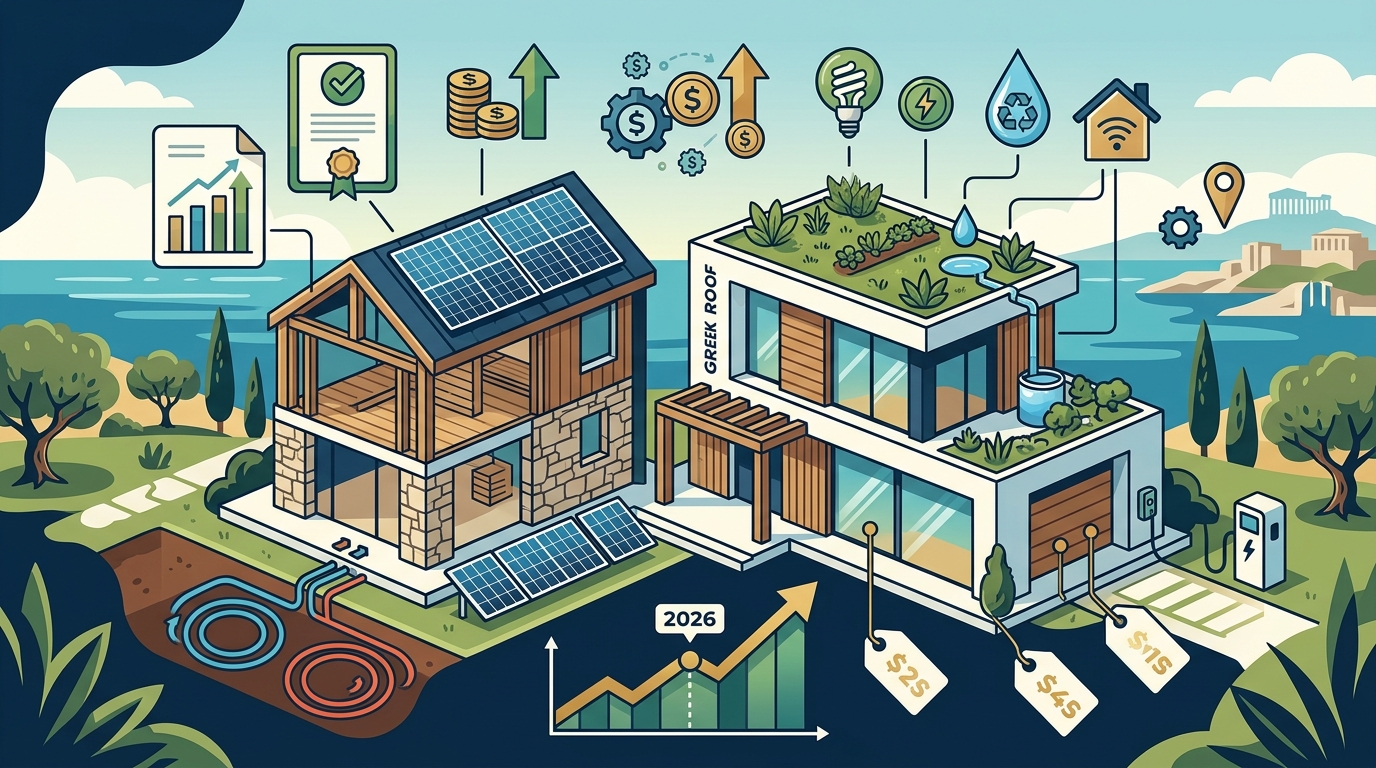
Premium by Certification Level
LEED-certified projects show an average cost premium of 2 to 4% for basic certification, increasing to 6 to 8% for platinum-level builds. BREEAM projects in Europe typically show cost premiums of 3 to 5% for standard certification. A comprehensive academic study of over 1,300 cases across 11 countries found that the median green cost surcharge is approximately 7%.
What This Means for Luxury Buyers
On a $5 million bespoke property, a 5 to 8% green premium translates to $250,000 to $400,000 in additional investment. However, this is often offset within a few years through reduced operational costs and enhanced resale value. Developers like Vassilis Siafaricas of ECLEDE integrate sustainability from the earliest design stage, which helps control premiums by avoiding costly retrofits.
Key Factors That Drive Costs
Materials and Technology
Sustainable materials such as reclaimed wood, low-VOC finishes, and triple-glazed glass carry higher upfront costs. Solar panel arrays, geothermal heat pumps, and smart energy management platforms add to the initial investment but dramatically reduce lifetime energy expenses.
Location and Climate
A property's geographic context significantly impacts sustainable design costs. Mediterranean climates like Athens naturally support bioclimatic architecture, reducing the need for expensive mechanical heating and cooling. This is one reason why developments in Athens can achieve exceptional energy performance at a lower relative cost than properties in extreme climates.
Certification and Compliance
Green building certification is the formal process of verifying that a property meets specific environmental performance standards. Pursuing LEED Platinum or Passivhaus certification requires specialized consultants, testing, and documentation that add 1 to 3% to total project costs.
Long-Term ROI and Financial Benefits
The financial case for sustainable luxury properties is compelling. Green buildings deliver returns through multiple channels beyond energy savings.
- Higher resale value: LEED-certified buildings can see value increases of up to 10% over non-certified buildings, according to U.S. Green Building Council data.
- Lower operating costs: New green buildings average 10.5% operating cost savings in year one, growing to nearly 17% over five years.
- Tax incentives: Many governments offer rebates, grants, and incentives for eco-friendly upgrades, from solar installations to high-efficiency windows.
- Faster sales: Properties with sustainable features sell faster and attract premium offers from environmentally conscious buyers.
Explore how ECLEDE's Dynasty Villas showcase the kind of bespoke, sustainable architecture that drives long-term asset performance.
2026 Market Outlook for Luxury Buyers
The luxury real estate segment enters 2026 from a position of strength. According to Sotheby's International Realty's 2026 Luxury Outlook, luxury real estate outperformed traditional real estate in 2025 in both sales volume and value appreciation, and that trajectory is expected to continue.
Sustainability has moved from a desirable feature to an expected standard. In 2026, environmentally conscious high-net-worth individuals seek homes that reflect their values without compromising on aesthetics, comfort, or exclusivity. Buyers care about efficiency, long-term running costs, environmental impact, and architectural integrity.
Regions with stable climates and natural beauty, including coastal Mediterranean destinations, are exceptionally well positioned. Greece, in particular, benefits from favorable climate conditions and growing international interest, making Athens-based developers like ECLEDE well placed to serve this demand.
Key Takeaways
- Sustainable luxury properties range from $1M for certified urban residences to $30M+ for ultra-luxury eco compounds.
- The green building premium typically adds just 2 to 8% to construction costs, depending on certification level.
- LEED-certified buildings can command up to 10% higher resale values than conventional counterparts.
- Operating cost savings of 10 to 17% offset the initial green premium within a few years.
- Mediterranean climates like Athens offer natural advantages for bioclimatic, cost-efficient sustainable design.
- In 2026, sustainability is no longer optional in the luxury market; it is a baseline buyer expectation.
- Working with a developer experienced in bespoke sustainable design, such as ECLEDE, helps optimize both cost and quality.
Frequently Asked Questions
How much does a sustainable luxury home cost?
Prices vary widely based on location, size, and certification level. A bespoke sustainable villa typically ranges from $3 million to $15 million, while ultra-luxury eco compounds can exceed $30 million.
Is it more expensive to build a sustainable luxury home?
Sustainable construction typically costs 2 to 8% more than conventional building. However, studies show that many green projects achieve certification with little or no added cost, especially when sustainability is integrated from the design phase.
What certifications should I look for?
The most recognized certifications include LEED (used globally), BREEAM (prevalent in Europe), and Passivhaus (focused on energy efficiency). Each has different cost implications and performance requirements.
Do sustainable luxury homes hold their value?
Yes. Green-certified properties consistently show higher resale values, with research indicating premiums of 8 to 10% compared to non-certified homes. Demand for eco-friendly luxury is growing steadily worldwide.
What green features add the most value?
Solar energy systems, smart home automation, high-performance insulation, water recycling systems, and biophilic design elements are among the most valued features in the luxury segment.
Are there tax benefits for buying a green luxury property?
Many countries offer tax credits, rebates, and incentives for energy-efficient home features. Greece, for example, has introduced programs supporting energy upgrades in residential properties. Consult a local tax advisor for specifics.
Why choose a developer like ECLEDE for a sustainable property?
ECLEDE, founded by Vassilis Siafaricas, specializes in bespoke, sustainable luxury developments in Athens. By integrating eco-conscious design from the earliest architectural phase, they minimize green premiums while delivering award-winning quality.
What is the outlook for sustainable luxury real estate in 2026?
The market is strong. Luxury real estate continues to outperform the broader housing market, and sustainability has become a defining standard for high-net-worth buyers globally.
Your Next Step
If you are considering a sustainable luxury property, the most important step is partnering with a developer who understands both the art of bespoke design and the science of sustainable building. Contact ECLEDE to explore how their team, led by visionary developer Vassilis Siafaricas, can bring your vision to life with integrity, elegance, and environmental responsibility.