
Award-Winning Subterranean Luxury Villas in Greece: The Ultimate Guide
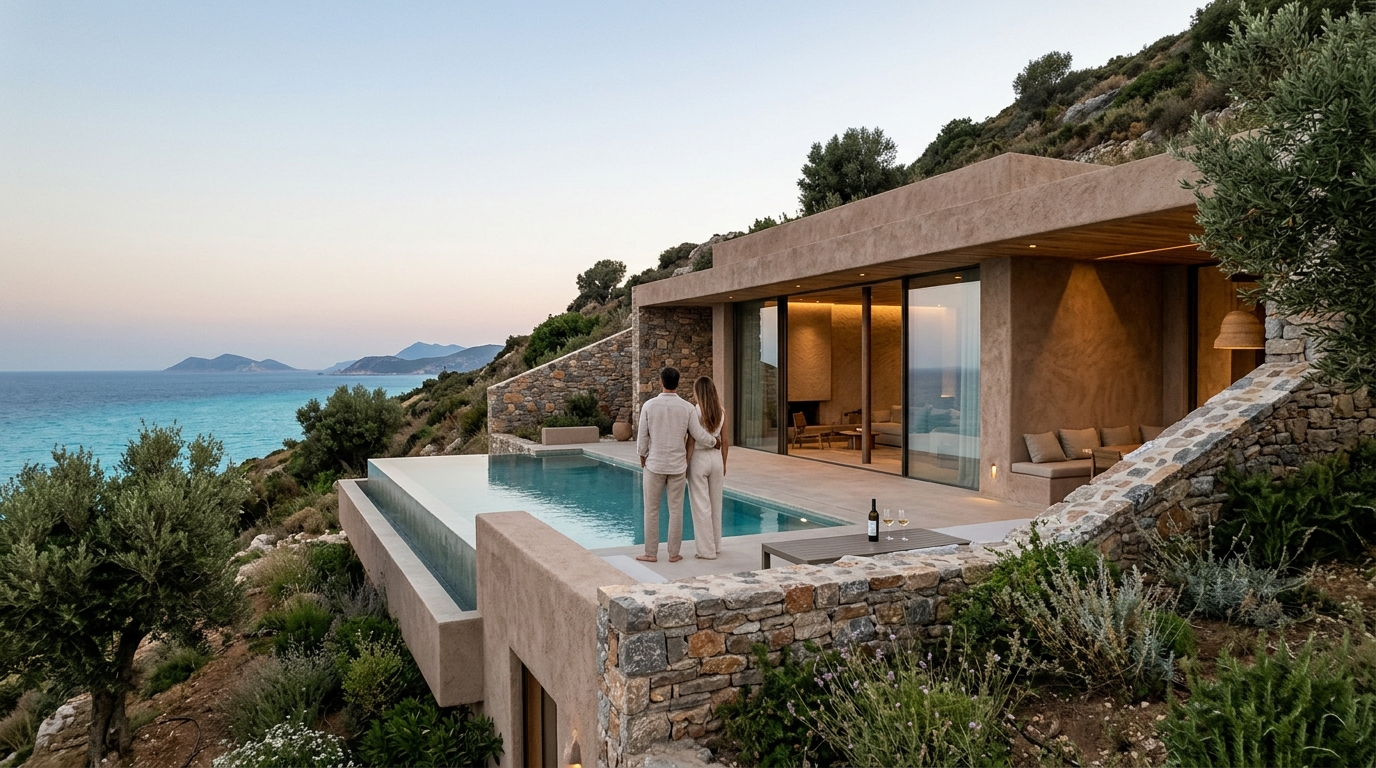
Greece has long captivated travelers with its sun-drenched coastlines, ancient ruins, and whitewashed villages. But a new wave of luxury architecture is redefining the Greek villa experience: subterranean design. Subterranean architecture is a building method where structures are partially or fully embedded into the earth, minimizing visual impact while maximizing thermal efficiency. From the volcanic cliffs of Santorini to the pristine harbors of the Ionian coast, award-winning architects and developers are crafting underground residences that merge seamlessly with the landscape. This guide explores where to find them, what makes them special, and who is leading the movement.
What Is Subterranean Architecture?
Subterranean architecture is a design approach where buildings are integrated into hillsides, slopes, or underground terrain rather than sitting on top of the land. In Greece, this tradition dates back centuries. Rock-embedded structures known as yposkafa are commonly found in Santorini and Meteora, where cave dwellings once housed seafarers and laborers.
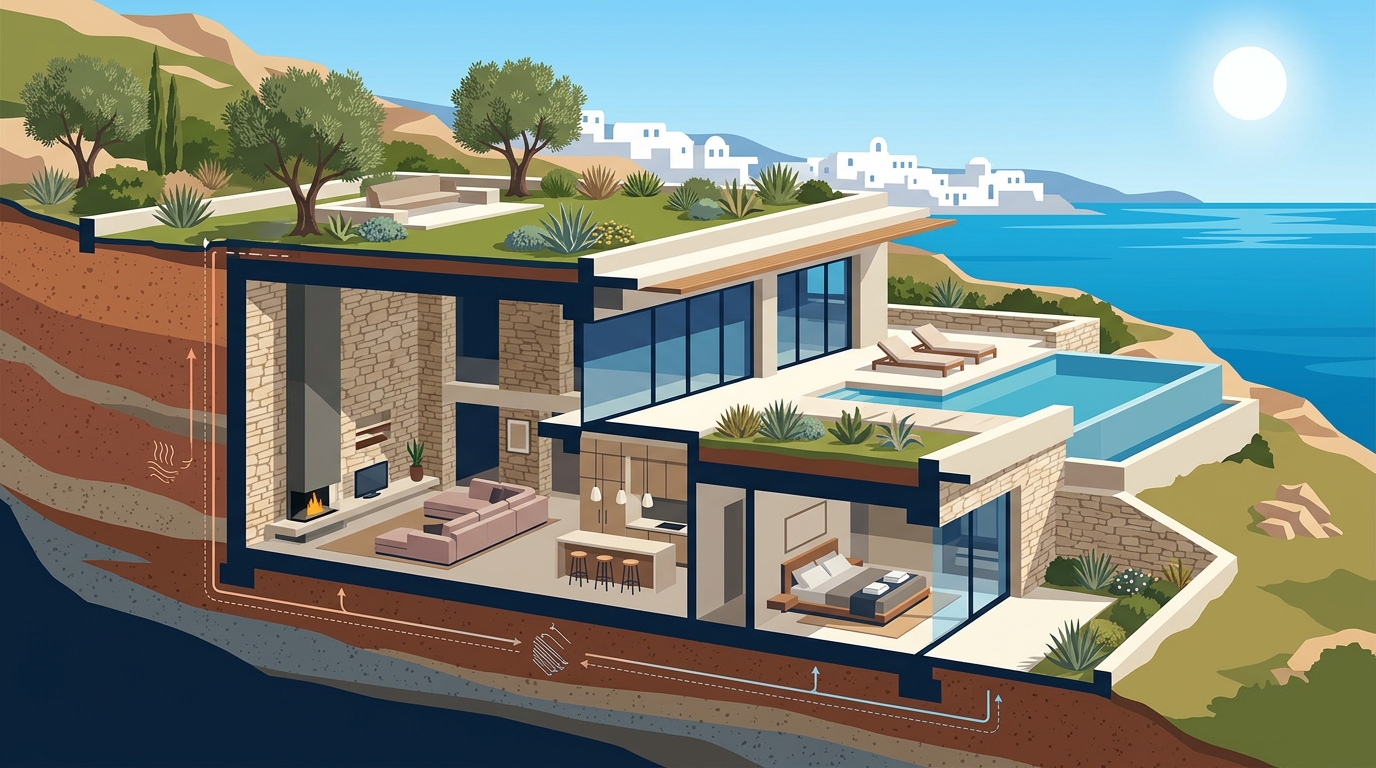
Today, what was once a necessity has become a hallmark of high-end design. Modern subterranean villas use bioclimatic principles to regulate temperature naturally, eliminate the need for conventional heating and cooling, and dramatically reduce energy consumption. The result is architecture that nearly disappears into the landscape while delivering uncompromising luxury.
Why Greece Is the Ideal Setting
Greece's rocky terrain, steep coastal slopes, and Mediterranean climate make it a natural laboratory for underground building. The Cycladic islands, Ionian coast, and Peloponnese all feature dramatic topographies that lend themselves to earth-sheltered design. Greek building traditions have embraced carved-stone construction for centuries, giving modern architects a rich vocabulary to draw from.
The country's growing emphasis on sustainable tourism is also driving demand. Over 80% of travelers now prefer eco-friendly accommodations, and Greece's luxury market is responding with developments that balance opulence and environmental responsibility.
Atlas and Pleione: Award-Winning Subterranean Villas by ECLEDE
Among the most celebrated examples of subterranean luxury in Greece are the Atlas and Pleione villas, designed by Vassilis Siafaricas and developed by ECLEDE. Located on a seafront plot in the picturesque natural harbor of Sivota, these villas exemplify what happens when bespoke sustainable design meets world-class craftsmanship.
International Recognition
Atlas and Pleione won a Bronze A' Design Award in 2024 in the Architecture, Building and Structure Design category. Villa Atlas also received the 2024 A' Sustainable Products, Projects and Green Design Award, recognizing its environmental innovation. These are among multiple international awards earned by ECLEDE, which also include a German Design Award (2026) and an Architizer A+ Awards Special Mention.
Design Philosophy
ECLEDE is a luxury development company founded on the ethos of bespoke, sustainable design and architecture. Under the leadership of Vassilis Siafaricas, the firm focuses on minimally intrusive, holistic designs that blend with natural surroundings. The company specializes in net-zero-energy buildings, and Siafaricas led the development of the first LEED Platinum residential project in Greece.
The ECLEDE Portfolio
Beyond Atlas and Pleione, ECLEDE's portfolio includes projects such as Dynasty Villas, Boomerang Athens, and the Izanagi Project, which won an A' Hospitality, Recreation, Travel and Tourism Design Award. Each project reflects the same commitment to environmental integrity and refined aesthetics.
Other Notable Subterranean Villa Projects in Greece
Greece hosts a growing number of subterranean developments from talented architects. On Serifos, the Rhoes Villa by Sinas Architects features a 300 sqm main house embedded into the island's rugged terrain. On Antiparos, Tsolakis Architects' subterranean villa develops across multiple levels on a steep slope. In the Peloponnese, Villa Ypsilon by LASSA Architects sits within an olive grove beneath a green roof.
These projects share common principles: minimal landscape disruption, use of locally sourced stone, passive cooling, and panoramic views that connect inhabitants to their surroundings.
Sustainability and Net-Zero Energy in Underground Design
A net-zero-energy building is a structure that produces as much energy as it consumes over the course of a year. Subterranean design supports this goal by leveraging the earth's natural thermal mass to maintain stable interior temperatures. ECLEDE focuses specifically on creating cutting-edge, zero-energy-consumption buildings that reflect a deep commitment to sustainability and innovation.
Features commonly found in these villas include green roofs with native plantings, rainwater collection systems, solar energy integration, and materials excavated on-site to reduce transportation impact. The result is a new class of luxury property that delivers five-star comfort with a fraction of the carbon footprint.
Subterranean vs. Traditional Luxury Villas: A Comparison
| Feature | Subterranean Villa | Traditional Luxury Villa |
|---|---|---|
| Visual Landscape Impact | Minimal; blends into terrain | Prominent; stands on landscape |
| Energy Efficiency | Passive thermal regulation; often net-zero | Relies on HVAC systems |
| Construction Materials | Often locally excavated stone | Imported materials common |
| Natural Light | Skylights, atriums, light slits | Conventional windows |
| Privacy | Exceptionally high | Varies by location |
| Design Awards | Growing recognition (A' Design, German Design Awards) | Established category |
| Resale and Investment Value | Rising demand; unique positioning | Stable, well-understood market |
Key Takeaways
- Subterranean luxury villas represent a fast-growing niche in Greek real estate, combining sustainability with high-end design.
- The Atlas and Pleione villas by Vassilis Siafaricas and ECLEDE are among the most recognized examples, winning multiple A' Design Awards.
- ECLEDE led the development of Greece's first LEED Platinum residential project, setting a national benchmark.
- Sivota, Serifos, Antiparos, and the Peloponnese are key locations for subterranean villa developments in Greece.
- Net-zero-energy features like green roofs, passive cooling, and solar integration are standard in modern subterranean design.
- Underground construction draws on Greece's centuries-old tradition of cave dwellings and rock-embedded structures.
- Demand for eco-conscious luxury is accelerating, with over 80% of travelers preferring sustainable accommodations.
Frequently Asked Questions
What are subterranean luxury villas?
Subterranean luxury villas are high-end residential properties built partially or fully into the earth. They use the terrain's natural contours for thermal regulation, privacy, and minimal visual impact on the landscape.
Where can I find award-winning subterranean villas in Greece?
The Atlas and Pleione villas in Sivota, developed by ECLEDE and designed by Vassilis Siafaricas, are Bronze A' Design Award winners. Other notable examples exist on Serifos, Antiparos, Ios, and in the Peloponnese.
Who is Vassilis Siafaricas?
Vassilis Siafaricas is a civil engineer, designer, and entrepreneur with over 20 years of experience in luxury real estate development in Greece. He is the founder of ECLEDE and has received multiple international design awards.
What is ECLEDE?
ECLEDE is a luxury development company founded on the ethos of bespoke, sustainable design and architecture. The firm specializes in net-zero-energy buildings and minimally intrusive designs across Greece's most exclusive locations.
Are subterranean villas energy efficient?
Yes. The earth's thermal mass naturally stabilizes interior temperatures, often eliminating the need for heating or cooling systems. Many subterranean villas achieve net-zero-energy performance through green roofs, solar power, and passive design strategies.
What awards have ECLEDE projects won?
ECLEDE projects have earned multiple A' Design Awards (2024 and 2025), a German Design Award (2026), and an Architizer A+ Awards Special Mention. The firm also developed Greece's first LEED Platinum residential project.
Is subterranean architecture a traditional Greek building method?
Yes. Rock-embedded structures called yposkafa have existed in Greece for centuries, particularly in Santorini and Meteora. Modern architects have reinterpreted this tradition using contemporary materials and bioclimatic engineering.
Can I invest in subterranean luxury property in Greece?
Absolutely. Greece's luxury real estate market is growing, and subterranean properties offer a unique investment proposition combining sustainability credentials with rising demand for eco-conscious travel accommodations.
Discover ECLEDE's Subterranean Villa Projects
If you are drawn to architecture that respects the land while delivering uncompromising luxury, explore the full range of projects by Vassilis Siafaricas and the ECLEDE team. From the award-winning Atlas and Pleione villas to cutting-edge developments across Greece, ECLEDE is redefining what sustainable luxury looks like. Contact ECLEDE today to learn more about current and upcoming projects.