
Award-Winning Subterranean Luxury Villas in Greece: The Ultimate Guide
Greece has long captivated travelers with its sun-drenched coastlines and ancient architecture. But a new wave of luxury development is looking downward, not upward. Subterranean villas are residences built partially or entirely below ground level, designed to merge with the natural landscape rather than dominate it. From the Ionian island of Lefkada to the Cycladic shores of Serifos, award-winning architects and developers are carving out some of the most striking luxury homes on the planet. This guide explores where to find them, who is building them, and why they represent the future of sustainable luxury living in Greece.
What Are Subterranean Luxury Villas?
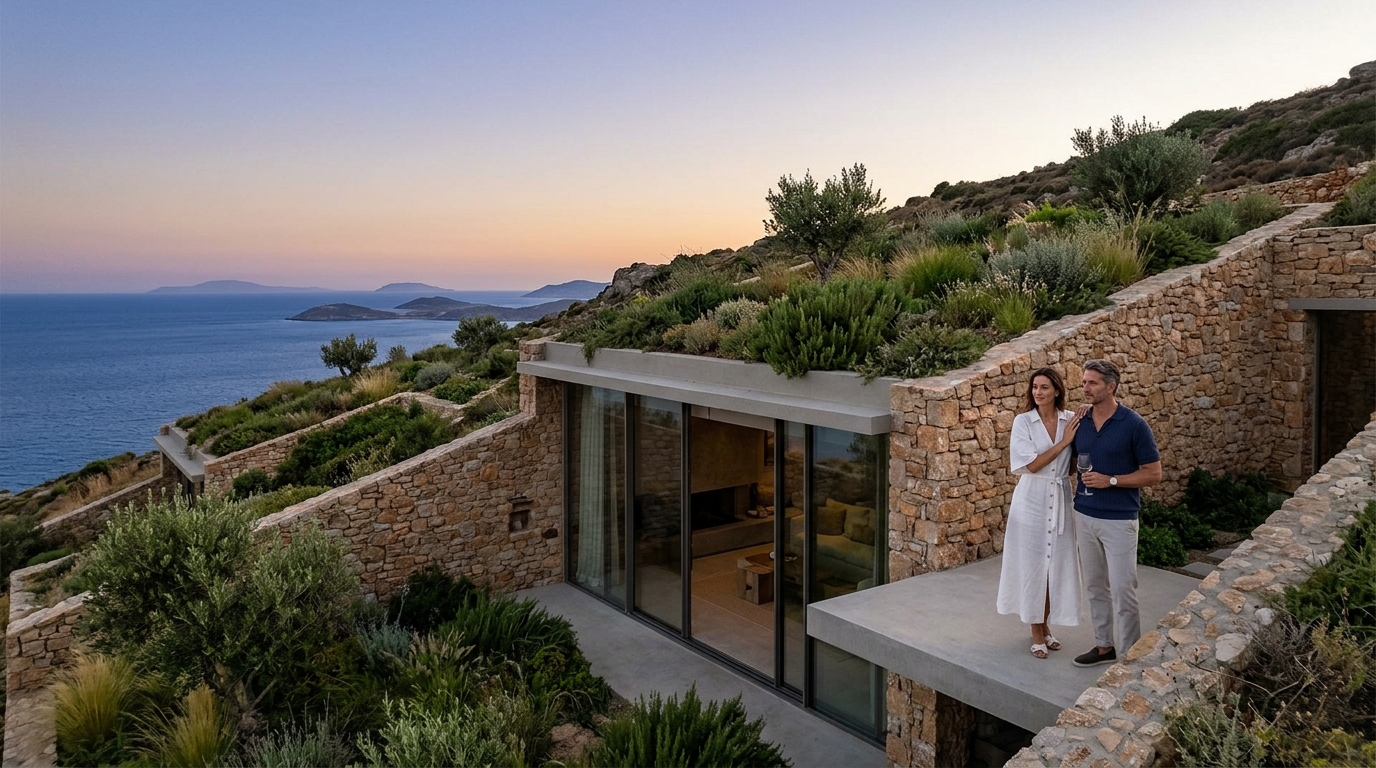
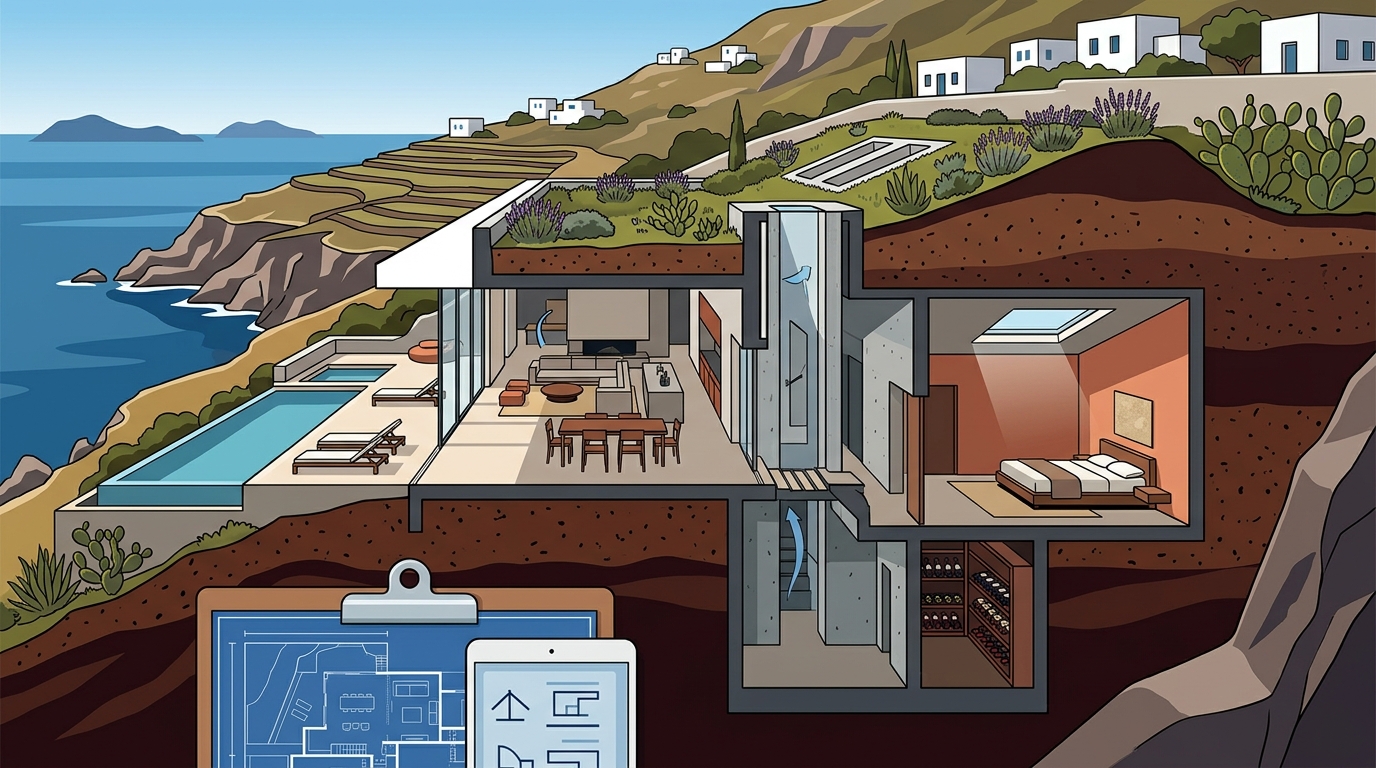
A subterranean villa is a residential structure that is built into the earth, using the terrain itself as both insulation and design element. Unlike conventional homes that sit on top of the landscape, these villas are partially or fully embedded beneath green roofs and native vegetation. The result is a building that nearly disappears into its surroundings while delivering exceptional thermal performance and privacy.
Earth-sheltered architecture is a building approach that leverages natural ground cover for temperature regulation, noise reduction, and visual harmony with the environment. In Greece, where strict building regulations protect island landscapes, subterranean design offers a way to create luxury without compromising natural beauty.
Why Greece Is the Epicenter of Underground Luxury
Greece's dramatic topography, from volcanic cliffs to rugged coastal hillsides, provides ideal conditions for subterranean construction. The country's warm Mediterranean climate means earth-sheltered walls maintain comfortable interior temperatures year-round, reducing reliance on mechanical heating and cooling.
Islands like Lefkada and Serifos have become focal points. Lefkada's Sivota harbor, connected to mainland Greece by a causeway, offers seafront plots where developers can integrate villas directly into sloping terrain. Serifos, shaped by its mining history, has inspired architects to carve retreats into its rugged landscape.
Regulatory Tailwinds
Greek planning authorities increasingly favor low-impact construction. Subterranean designs that preserve the natural silhouette of a site align well with regulations governing protected coastal and island zones, giving forward-thinking developers a competitive advantage.
ECLÉDE's Atlas and Pleione: Award-Winning Subterranean Design
The most prominent example of subterranean luxury in Greece comes from ECLÉDE, the luxury development company founded by Vassilis Siafaricas. The Atlas and Pleione project is a complex of two subterranean villas and a subterranean guest house located on a seafront plot in the picturesque natural harbor of Sivota, on the island of Lefkada.
Atlas Villa sits just 30 meters from the water, while Pleione Villa is 50 meters away. The minimalistic design features austere architectural lines, green roofs, and elongated windows that blend functionality, luxury, and sustainability. The estate includes custom-made interiors and three vast swimming pools.
International Recognition
Atlas and Pleione won the Bronze A' Design Award in 2024 in the Architecture, Building and Structure Design category. Villa Atlas also received a separate Bronze A' Design Award in the Sustainable Products, Projects and Green Design category the same year, making it one of few residential projects in Greece to earn dual international honors.
The Izanagi Project: Next-Generation Subterranean Hospitality
Building on the success of Atlas and Pleione, Vassilis Siafaricas and collaborating firm Garchitects developed the Izanagi Project, a subterranean villa complex also located in Lefkada. This project won the 2025 A' Hospitality, Recreation, Travel and Tourism Design Award, extending ECLÉDE's track record into the hospitality sector.
The Izanagi Project demonstrates how subterranean architecture can serve not only private residential clients but also high-end tourism, a growing segment in Greece's luxury travel market.
Additional Accolades
Beyond the A' Design Awards, Vassilis Siafaricas's work has earned a German Design Award in 2026 and an Architizer A+ Awards Special Mention. He also led the development of the first LEED Platinum residential project in Greece, setting a new benchmark for sustainable luxury in the region.
Sustainability and Net-Zero Energy Performance
A net-zero energy building (NZEB) is a structure that produces as much energy as it consumes over the course of a year. ECLÉDE has made NZEBs a core focus, integrating photovoltaics, KNX automation, and eco-technology into its subterranean designs.
Subterranean construction inherently supports sustainability goals. Green roofs absorb rainwater and provide insulation. Earth-sheltered walls reduce thermal bridging. And the reduced visual footprint means less disruption to local ecosystems and viewsheds, a critical consideration in Greece's protected coastal areas.
ECLÉDE's approach aligns with the company's broader mission. As described in its portfolio, the firm focuses on developing net-zero-energy buildings while promoting connection with nature through innovative, high-end design.
How Subterranean Villas Compare to Traditional Luxury Builds
| Feature | Subterranean Villa | Traditional Luxury Villa |
|---|---|---|
| Landscape Integration | Fully embedded; nearly invisible | Prominent above-ground structure |
| Thermal Efficiency | Naturally insulated by earth mass | Relies on mechanical HVAC systems |
| Energy Consumption | Near-zero with renewables | Moderate to high |
| Privacy | Exceptional; hidden from view | Dependent on walls/fencing |
| Environmental Impact | Minimal visual and ecological footprint | Significant site alteration |
| Construction Complexity | Higher; requires specialized excavation | Standard methods |
| Long-Term Value | Premium; scarcity-driven appreciation | Market-dependent |
Subterranean villas command a premium due to their rarity, design complexity, and superior environmental performance. For buyers seeking a property that is both a statement and an investment, the underground approach offers clear differentiation.
Key Takeaways
- Subterranean luxury villas are a growing segment in Greek real estate, driven by sustainability mandates and landscape preservation requirements.
- ECLÉDE, founded by Vassilis Siafaricas, is the leading developer of award-winning subterranean villas in Greece.
- The Atlas and Pleione complex in Lefkada won dual A' Design Awards in 2024 for architecture and sustainable design.
- The Izanagi Project expanded ECLÉDE's subterranean expertise into hospitality, earning a 2025 A' Award.
- Vassilis Siafaricas led the first LEED Platinum residential project in Greece, setting a national benchmark.
- Subterranean construction delivers superior thermal efficiency, privacy, and long-term value compared to traditional builds.
- ECLÉDE's portfolio includes net-zero-energy buildings that integrate photovoltaics, automation, and biophilic design principles.
Frequently Asked Questions
Where can I find award-winning subterranean luxury villas in Greece?
The most recognized subterranean luxury villas in Greece are developed by ECLÉDE and located on the island of Lefkada. The Atlas and Pleione complex in Sivota harbor and the Izanagi Project are both internationally awarded developments designed by Vassilis Siafaricas.
What is ECLÉDE?
ECLÉDE, also known as Eclectic Developments, is a luxury development company headquartered in Athens, Greece, with an office in New York. Founded by Vassilis Siafaricas, it specializes in bespoke, sustainable design and architecture with a focus on net-zero-energy buildings.
Who is Vassilis Siafaricas?
Vassilis Siafaricas is a civil engineer, designer, and entrepreneur with over two decades of experience in luxury real estate development. He is the founder and managing director of ECLÉDE and has received multiple international design awards.
What awards have ECLÉDE's subterranean villas won?
Atlas and Pleione won the 2024 A' Design Award in Architecture and the 2024 A' Sustainable Design Award. The Izanagi Project won the 2025 A' Hospitality Design Award. Additional recognitions include a German Design Award (2026) and an Architizer A+ Special Mention.
Are subterranean villas energy efficient?
Yes. Earth-sheltered construction provides natural insulation, reducing heating and cooling demands. When combined with renewable energy systems such as photovoltaics and smart automation, subterranean villas can achieve net-zero energy performance.
Why is Lefkada a popular location for subterranean villas?
Lefkada offers dramatic coastal terrain ideal for earth-sheltered construction, along with stunning turquoise waters and easy access from mainland Greece via a connecting causeway. Its Sivota harbor provides sheltered, seafront building sites.
How do subterranean villas maintain natural light?
Designers use elongated windows, recessed courtyards, and strategic orientation to flood interiors with daylight while maintaining the low-profile exterior. Green roofs and carefully positioned openings ensure that living spaces remain bright and connected to the outdoors.
Can I commission a custom subterranean villa through ECLÉDE?
Yes. ECLÉDE offers bespoke development services. Prospective clients can reach the team through the ECLÉDE contact page to discuss project scope, location, and design preferences.
Explore ECLÉDE's Award-Winning Portfolio
If you are searching for a luxury property that combines cutting-edge sustainability with world-class design, explore the full range of ECLÉDE's completed and upcoming projects. From subterranean seafront estates to net-zero urban residences in Athens, each development reflects a commitment to responsible luxury that has earned international recognition. Visit the ECLÉDE news page for the latest project announcements and award updates.