
Award-Winning Subterranean Luxury Villas in Greece: The Ultimate Guide
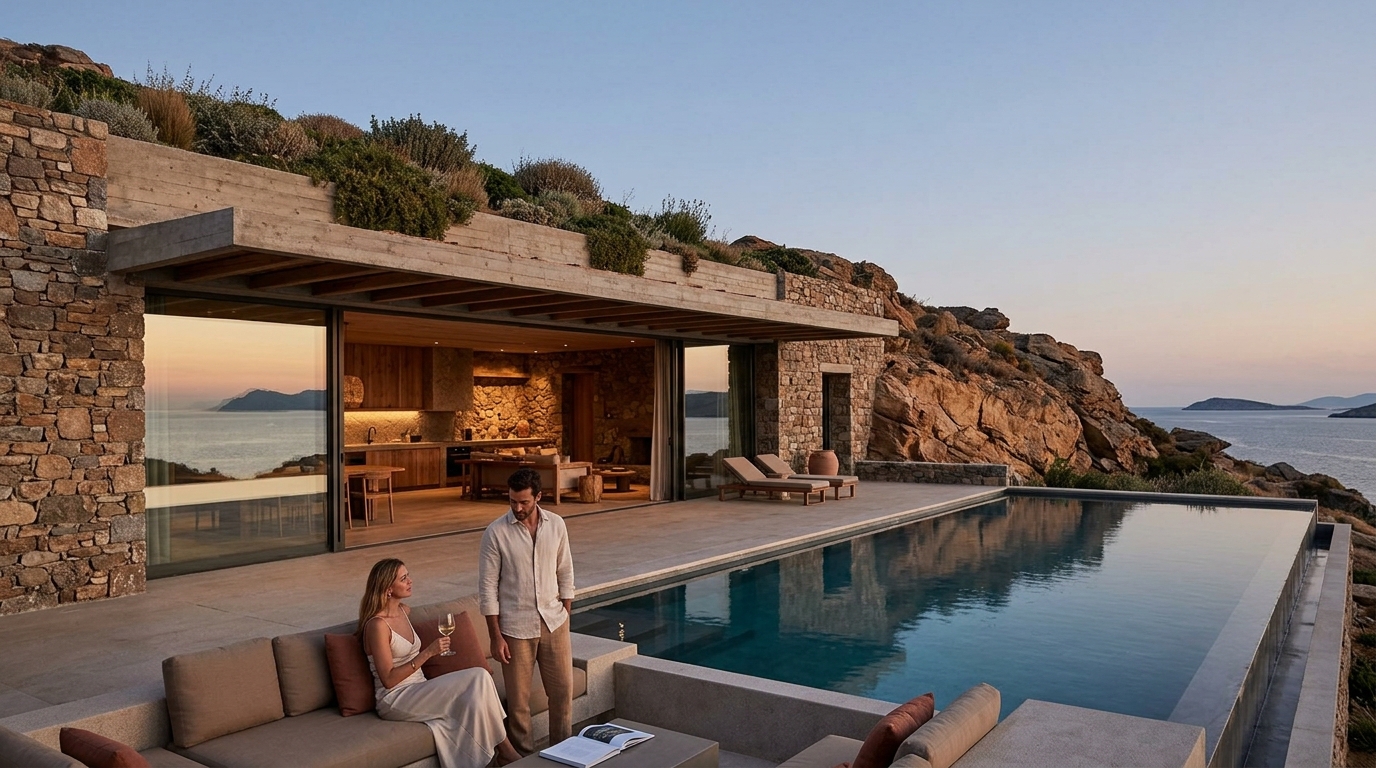
Greece has long been celebrated for whitewashed clifftop homes and sun-drenched terraces, but a quieter revolution is reshaping the country's luxury real estate landscape. Subterranean villas, structures built into the earth rather than on top of it, are earning international design awards and attracting discerning buyers who value privacy, sustainability, and architectural innovation. A subterranean villa is a residence that is partially or fully embedded into the natural terrain, using the earth itself for insulation, visual integration, and ecological preservation. This guide explores where to find the finest examples, who is designing them, and why they represent the future of luxury living in Greece.
Why Subterranean Architecture Is Redefining Greek Luxury
Rock-embedded structures known as yposkafa have existed in Greece since antiquity, most notably in Santorini and Meteora. What once housed seafarers and the working class is now the foundation of a modern design movement. Today's subterranean villas pair bioclimatic performance with five-star finishes, offering natural temperature regulation, reduced visual impact, and a profound connection to the landscape.
Contemporary Greek architects are leading this movement by designing homes that, in the words of leading design publications, are "built in and of the landscape, rarely atop or upon it." The result is a new category of luxury property that appeals to environmentally conscious investors and architecture enthusiasts alike.
Atlas and Pleione: The Award-Winning Benchmark
Among the most recognized subterranean villa projects in Greece is Atlas and Pleione, designed by Vassilis Siafaricas and developed by ECLÉDE. Located on a seafront land plot in the picturesque natural harbor of Sivota, these villas won the 2024 A' Architecture, Building and Structure Design Award (Bronze). The project also earned a separate A' Sustainable Products, Projects and Green Design Award in the same year.
The A' Design Award is an international competition that recognizes outstanding designs distinguished by creativity, ingenuity, and attention to detail. Atlas and Pleione's dual recognition across both architecture and sustainability categories underscores the project's holistic approach to luxury development.
Design Highlights
Atlas and Pleione integrate seamlessly into the Sivota coastline, minimizing visual disruption while maximizing panoramic sea views. The design uses locally sourced materials and passive thermal strategies to maintain interior comfort without excessive energy consumption.
ECLÉDE's Sustainable Design Philosophy
ECLÉDE is a luxury development company founded on the ethos of bespoke, sustainable design and architecture. Led by Vassilis Siafaricas, the firm specializes in creating minimally intrusive, holistic designs that blend with natural surroundings and local architectural culture.
Siafaricas brings over two decades of experience in luxury real estate development across Greece's most exclusive locations. His work has earned multiple international distinctions, including German Design Awards 2026, Architizer A+ Awards recognition, and the distinction of developing the first LEED Platinum residential project in Greece.
A Multidisciplinary Approach
Vassilis Siafaricas is a civil engineer, designer, senior project manager, and real estate consultant. This multidisciplinary background allows ECLÉDE to bridge technical precision with creative vision, delivering projects that are both aesthetically refined and functionally intelligent.
Top Locations for Subterranean Villas in Greece
Subterranean architecture thrives in locations where dramatic topography meets protected natural beauty. Below are the regions where award-winning examples can be found.
Sivota, Epirus
Home to the Atlas and Pleione villas by ECLÉDE, Sivota offers a sheltered natural harbor with turquoise waters and lush hillsides. This relatively undiscovered destination provides the privacy and landscape integration that subterranean design demands.
The Cyclades
Islands like Antiparos, Serifos, and Paros host several notable subterranean projects. Architects such as Tsolakis Architects and Sinas Architects have created earth-embedded residences on these islands that reinterpret traditional Cycladic building methods through a contemporary lens.
The Peloponnese
Southern Peloponnese is home to projects like Villa Ypsilon by LASSA Architects, an underground holiday home topped with a green roof offering panoramic views across olive groves and coastline.
Sustainability and Net Zero Energy Performance
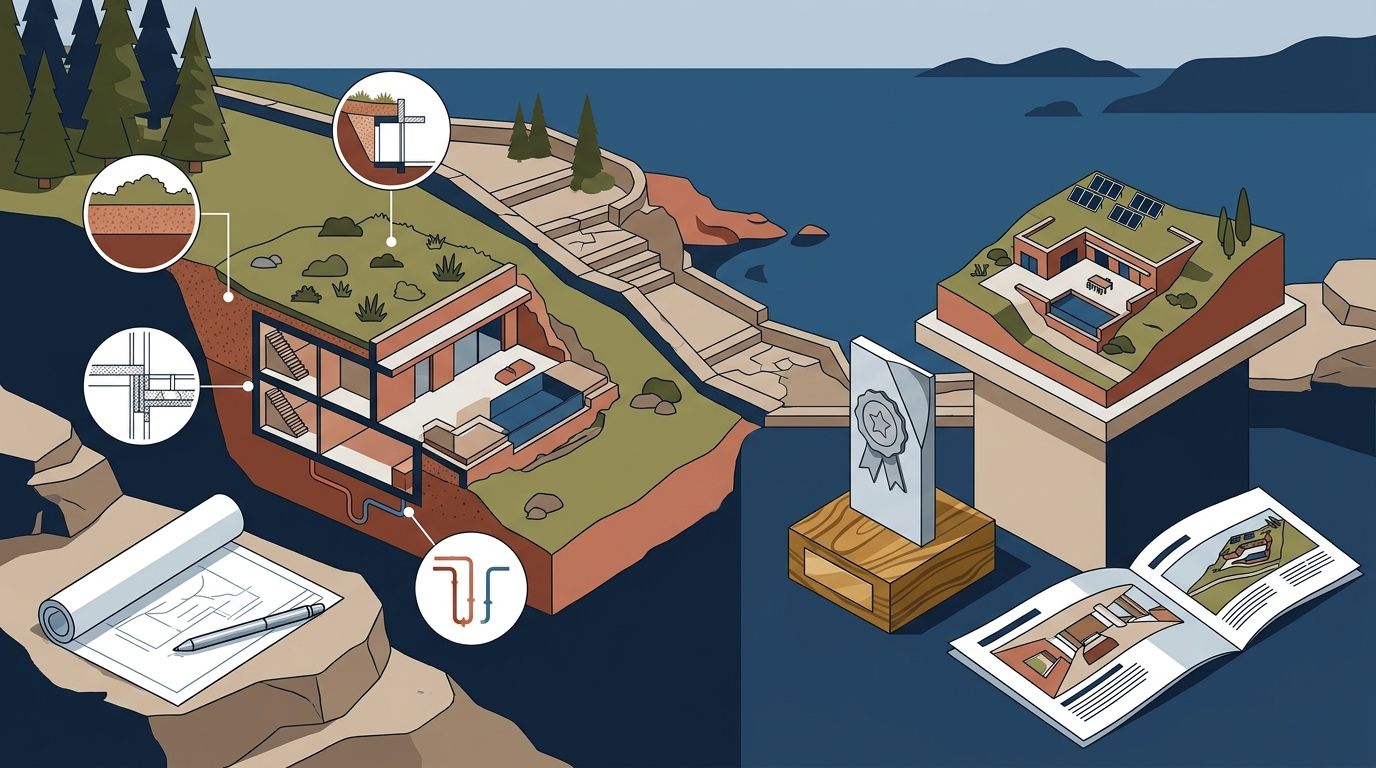
Net Zero Energy Building (NZEB) is a structure that produces as much energy as it consumes over the course of a year. ECLÉDE has made this standard central to its development strategy, focusing on cutting-edge, zero-energy-consumption buildings that reflect a commitment to sustainability and innovation.
Subterranean construction inherently supports sustainability goals. The thermal mass of surrounding earth reduces heating and cooling loads, while green roofs manage stormwater and restore habitat. Combined with solar systems and passive ventilation, these villas can achieve energy performance levels that conventional above-ground construction cannot easily match.
How Subterranean Villas Compare to Traditional Luxury Homes
| Feature | Subterranean Villa | Traditional Luxury Villa |
|---|---|---|
| Visual Landscape Impact | Minimal; integrated into terrain | Prominent; visible structure |
| Energy Efficiency | High; passive thermal regulation | Moderate; relies on HVAC systems |
| Privacy | Exceptional; concealed footprint | Variable; depends on plot |
| Construction Complexity | Higher; requires specialized engineering | Standard building methods |
| Maintenance Costs | Lower long-term (thermal stability) | Higher (exposed facades, roofing) |
| Resale Appeal | Growing; design-award recognition | Established market |
Subterranean villas offer clear advantages in energy performance, privacy, and environmental sensitivity. However, they require specialized design expertise, making the choice of developer critical. Firms like ECLÉDE, with proven award-winning credentials, ensure that underground construction meets the highest standards of luxury and engineering.
Key Takeaways
- Subterranean luxury villas in Greece represent the intersection of ancient building traditions and cutting-edge sustainable architecture.
- Atlas and Pleione by ECLÉDE won dual 2024 A' Design Awards for architecture and sustainability, setting a new benchmark for the category.
- Vassilis Siafaricas, founder of ECLÉDE, has over 20 years of experience and has led the first LEED Platinum residential project in Greece.
- Key locations include Sivota (Epirus), the Cyclades islands, and the southern Peloponnese.
- Net Zero Energy performance is achievable through subterranean construction combined with passive design and renewable energy systems.
- ECLÉDE has earned German Design Awards 2026 and Architizer A+ Awards recognition alongside its A' Design Award wins.
- Subterranean villas offer superior energy efficiency, privacy, and landscape preservation compared to conventional luxury homes.
Frequently Asked Questions
What is a subterranean luxury villa?
A subterranean luxury villa is a high-end residential property that is partially or fully built into the natural terrain. These homes use the earth for thermal insulation, visual concealment, and ecological preservation while offering premium interiors and finishes.
Where can I find award-winning subterranean villas in Greece?
The most notable example is the Atlas and Pleione project by ECLÉDE, located in Sivota, Epirus. Additional subterranean villa projects exist on Cycladic islands such as Antiparos, Serifos, and Paros, as well as in the southern Peloponnese.
Who designed the Atlas and Pleione villas?
Atlas and Pleione were designed by Vassilis Siafaricas, the founder of ECLÉDE. The project won both the 2024 A' Architecture Award and the A' Sustainable Products and Green Design Award.
What awards has ECLÉDE received?
ECLÉDE's projects have earned multiple A' Design Awards (2024), a German Design Award (2026), and an Architizer A+ Awards Special Mention. Vassilis Siafaricas also led the development of the first LEED Platinum residential project in Greece.
Are subterranean villas energy efficient?
Yes. The surrounding earth provides natural thermal regulation, significantly reducing heating and cooling energy requirements. When paired with solar panels and passive ventilation, many subterranean villas achieve net zero energy performance.
How much do subterranean luxury villas cost in Greece?
Pricing varies widely based on location, size, and specification. Award-winning subterranean developments in premium coastal locations typically represent the upper tier of the Greek luxury market. Contact ECLÉDE directly for project-specific information.
Can subterranean villas be built on any terrain?
Subterranean construction works best on sloped or rocky terrain where the natural topography supports earth integration. Greece's mountainous coastlines and island landscapes are ideal for this building typology.
What makes ECLÉDE different from other luxury developers?
ECLÉDE combines bespoke sustainable design with internationally recognized architectural excellence. The company focuses exclusively on minimally intrusive, net-zero-energy developments, backed by Vassilis Siafaricas's multidisciplinary expertise in engineering, design, and real estate strategy.
Explore Award-Winning Subterranean Luxury with ECLÉDE
If you are seeking a luxury property in Greece that merges world-class design with environmental responsibility, explore ECLÉDE's full project portfolio or get in touch with the team to discuss bespoke development opportunities. From the seafront villas of Sivota to visionary projects across Greece, ECLÉDE is redefining what luxury living looks like beneath the surface.