
Award-Winning Subterranean Luxury Villas in Greece: The Ultimate Guide
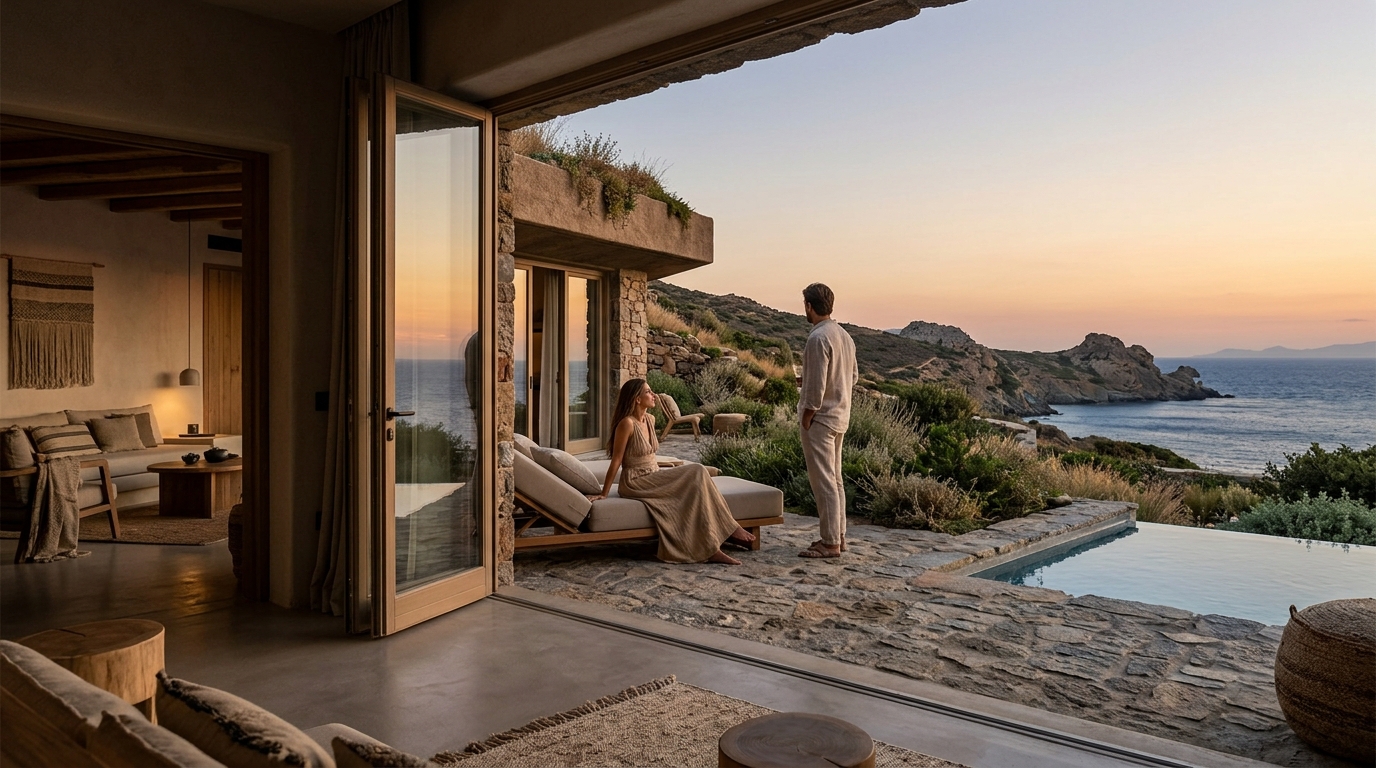
Greece has long captivated the world with its sun-drenched coastlines and ancient architecture. Now, a new wave of subterranean luxury villas is redefining what high-end living looks like in the Mediterranean. These earth-sheltered homes disappear into hillsides and clifftops, offering privacy, energy efficiency, and breathtaking design in equal measure. From the Ionian Islands to the Cyclades, award-winning architects and developers are building underground residences that merge sustainability with uncompromising luxury. This guide explores where to find them, who designs them, and why they represent the future of Greek real estate.
What Are Subterranean Luxury Villas?
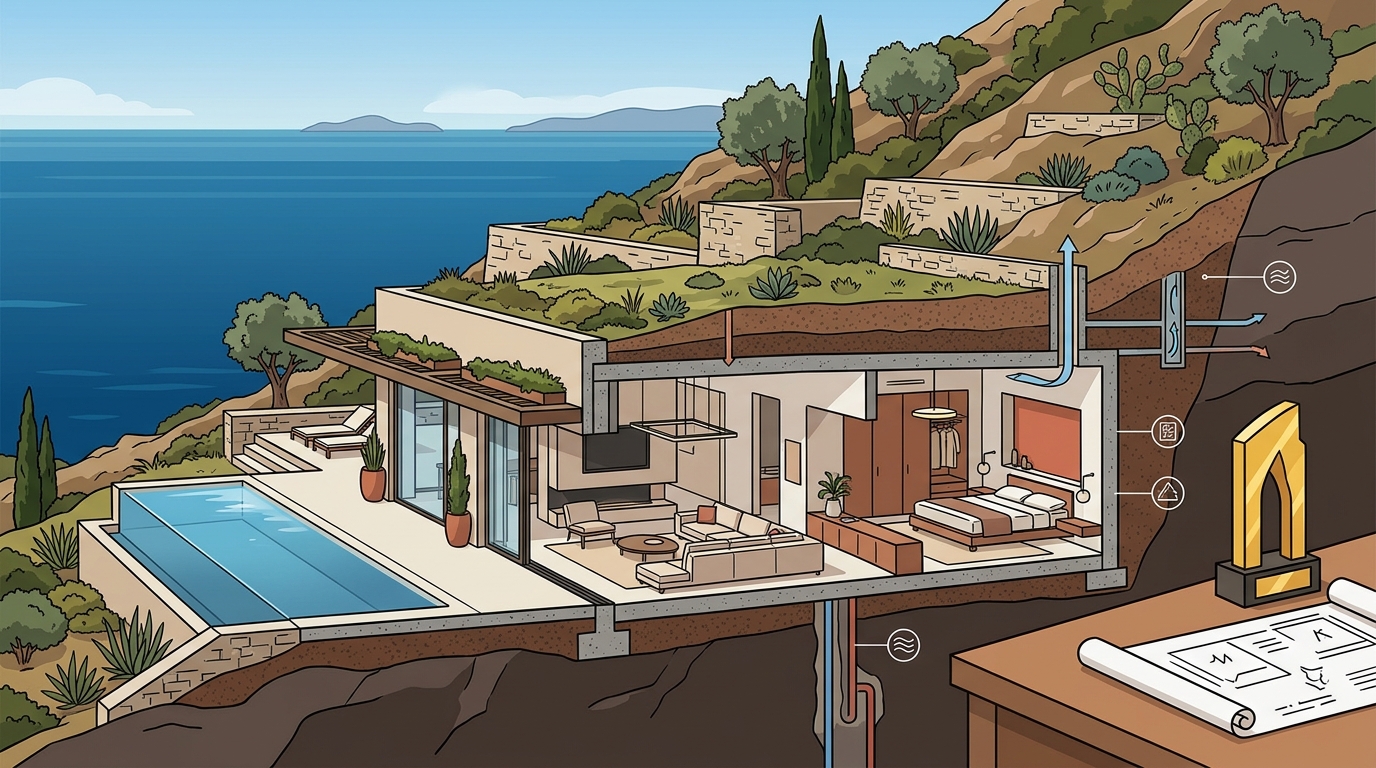
A subterranean villa is a residential structure built partially or fully below the natural ground level, designed to integrate with the surrounding landscape rather than dominate it. These properties use the earth itself as insulation and structural support, resulting in buildings that consume significantly less energy for heating and cooling.
Unlike traditional underground bunkers, modern subterranean villas feature expansive glazing, open-plan living spaces, private pools, and custom interiors. The design philosophy prioritizes minimal visual intrusion while delivering five-star comfort. In Greece, this approach aligns naturally with both Cycladic cave-dwelling traditions and contemporary demands for sustainable, high-quality architecture.
Why Greece Is the Ideal Setting for Earth-Sheltered Architecture
Greece offers a rare combination of dramatic topography, a mild Mediterranean climate, and a deep cultural history of building into the landscape. Santorini's cave houses, carved by sailors centuries ago, are perhaps the most famous example. The country's rocky terrain across islands like Lefkada, Serifos, and Crete provides natural canvases for subterranean design.
Greece's luxury real estate market has also experienced significant growth. Major developments such as the Hellinikon Project in Athens are transforming the country into a magnet for international investment. Within this landscape, earth-sheltered villas offer a distinct value proposition: lower operational costs, superior thermal performance, and a design language that appeals to environmentally conscious buyers.
Atlas and Pleione: The Award-Winning Benchmark in Lefkada
When it comes to award-winning subterranean luxury villas in Greece, the Atlas and Pleione project stands as the definitive reference. Located on a seafront plot in the picturesque natural harbor of Sivota on the island of Lefkada, this complex comprises two subterranean villas and a subterranean guest house. Atlas Villa sits just 30 meters from the water, with Pleione Villa 50 meters away.
International Recognition
Atlas and Pleione won the 2024 A' Architecture, Building and Structure Design Award (Bronze), a prestigious recognition for creativity and ingenuity. Villa Atlas separately earned the 2024 A' Sustainable Products, Projects and Green Design Award, underscoring the project's dual excellence in aesthetics and environmental responsibility.
Design Philosophy
The minimalistic design features austere architectural lines, green roofs, and elongated windows that blend functionality, luxury, and sustainability. The estate includes custom-made interiors and three expansive swimming pools. Every element is calibrated to complement the Ionian coastline while maintaining near-zero visual impact on the natural setting.
The ECLÉDE Approach to Sustainable Luxury Development
ECLÉDE is a luxury development company founded on the ethos of bespoke, sustainable design and architecture. Headquartered in Athens, Greece, with a presence in New York, the firm specializes in minimally intrusive developments that seamlessly blend with their natural surroundings and local architectural culture.
At the helm is Vassilis Siafaricas, a civil engineer, designer, and entrepreneur with over two decades of experience in luxury real estate. Under his leadership, ECLÉDE has delivered landmark projects including Boomerang Athens and Dynasty Villas, earning multiple international design awards including the German Design Awards 2026 and an Architizer A+ Awards Special Mention.
Net Zero Energy Buildings
A Net Zero Energy Building (NZEB) is a structure that produces as much energy as it consumes on an annual basis. ECLÉDE focuses on developing NZEBs across residential and commercial projects, including the first LEED Platinum residential project in Greece. This commitment to zero-energy construction sets the company apart in the Greek luxury market.
Other Notable Subterranean Projects in Greece
While ECLÉDE leads in award-winning subterranean development, Greece hosts several other noteworthy earth-sheltered projects. The Rhoēs Villa on Serifos Island, designed by Athens-based Sinas Architects, is a 300-square-meter residence carved into the terrain with stone masonry sourced from excavation material. Homa Villas, also on Serifos, was designed by MOLD Architects as a trio of subterranean lodgings that reinterpret traditional Cycladic architecture through a contemporary lens.
On Santorini, luxury cave villas in Oia and Imerovigli draw on the island's volcanic geology, transforming ancient seafarer dwellings into five-star retreats with infinity pools and caldera views. These projects collectively demonstrate that subterranean living in Greece is not a niche trend but a growing movement.
How Subterranean Villas Compare to Traditional Luxury Properties
| Feature | Subterranean Luxury Villa | Traditional Luxury Villa |
|---|---|---|
| Energy Efficiency | Excellent (earth insulation, NZEB potential) | Moderate (depends on systems installed) |
| Visual Landscape Impact | Minimal to none | Significant footprint |
| Thermal Comfort | Naturally stable year-round | Relies on HVAC |
| Privacy | Very high (integrated into terrain) | Varies by location |
| Construction Complexity | Higher (specialized engineering) | Standard |
| Design Prestige | Award-winning, architecturally distinctive | Wide range |
| Long-term Investment Value | Strong (sustainability premium) | Market-dependent |
Subterranean villas command growing interest from buyers who value sustainability, privacy, and architectural distinction. Their superior energy performance and reduced environmental footprint make them increasingly attractive as green building regulations tighten across the EU.
Key Takeaways
- Subterranean luxury villas integrate into the Greek landscape, offering privacy, energy efficiency, and minimal environmental impact.
- The Atlas and Pleione project in Lefkada, designed by Vassilis Siafaricas for ECLÉDE, won the 2024 A' Design Award for Architecture.
- ECLÉDE specializes in net-zero energy buildings and has delivered the first LEED Platinum residential project in Greece.
- Greece's topography, climate, and cave-dwelling heritage make it uniquely suited to earth-sheltered architecture.
- Subterranean villas outperform traditional properties in thermal stability, energy consumption, and landscape preservation.
- International awards from the A' Design Award, German Design Awards, and Architizer validate the quality of Greek subterranean design.
- Demand is growing among environmentally conscious buyers and investors seeking sustainable luxury assets.
Frequently Asked Questions
What is a subterranean luxury villa?
A subterranean luxury villa is a high-end residential property built partially or entirely below ground level. It uses the earth for insulation and structural support while featuring premium interiors, private pools, and expansive glazing to maintain natural light and views.
Where are the most famous subterranean villas in Greece?
Notable locations include Sivota in Lefkada (home to the award-winning Atlas and Pleione villas by ECLÉDE), Serifos in the Cyclades, and the cave villas of Santorini's Oia village. Each location offers a distinct take on underground luxury living.
Who designed the Atlas and Pleione subterranean villas?
Atlas and Pleione were designed by Vassilis Siafaricas, founder of ECLÉDE, a luxury development company based in Athens. The project won a Bronze A' Design Award in 2024 for Architecture, Building and Structure Design.
Are subterranean villas energy efficient?
Yes. Earth-sheltered structures benefit from natural thermal mass, maintaining stable interior temperatures year-round. Many subterranean villas, particularly those by ECLÉDE, are designed as Net Zero Energy Buildings that produce as much energy as they consume.
What does ECLÉDE specialize in?
ECLÉDE is a luxury development company that specializes in bespoke, sustainable design and architecture. The firm develops net-zero energy buildings, subterranean residences, and high-end properties across Greece, with offices in Athens and New York.
How do subterranean villas affect property value?
Subterranean villas typically carry a sustainability premium due to lower operational costs, unique design appeal, and increasing buyer demand for eco-conscious properties. Award recognition further enhances resale value and prestige.
Can subterranean villas have sea views and natural light?
Absolutely. Modern subterranean design uses strategic orientation, elongated windows, open courtyards, and terraced layouts to deliver panoramic views and abundant daylight while remaining integrated into the terrain.
What awards have ECLÉDE projects received?
ECLÉDE projects have earned multiple A' Design Awards, a German Design Award (2026), and an Architizer A+ Awards Special Mention. The firm also developed the first LEED Platinum certified residential project in Greece.
Explore Award-Winning Subterranean Design With ECLÉDE
If you are seeking a luxury property that harmonizes with nature, delivers long-term energy savings, and carries international design recognition, explore the full ECLÉDE portfolio. From the seafront villas of Lefkada to innovative urban projects in Athens, ECLÉDE offers a rare combination of vision, sustainability, and craftsmanship. Contact the team to discuss your next investment in sustainable luxury.