
Award-Winning Subterranean Luxury Villas in Greece: The Ultimate Guide
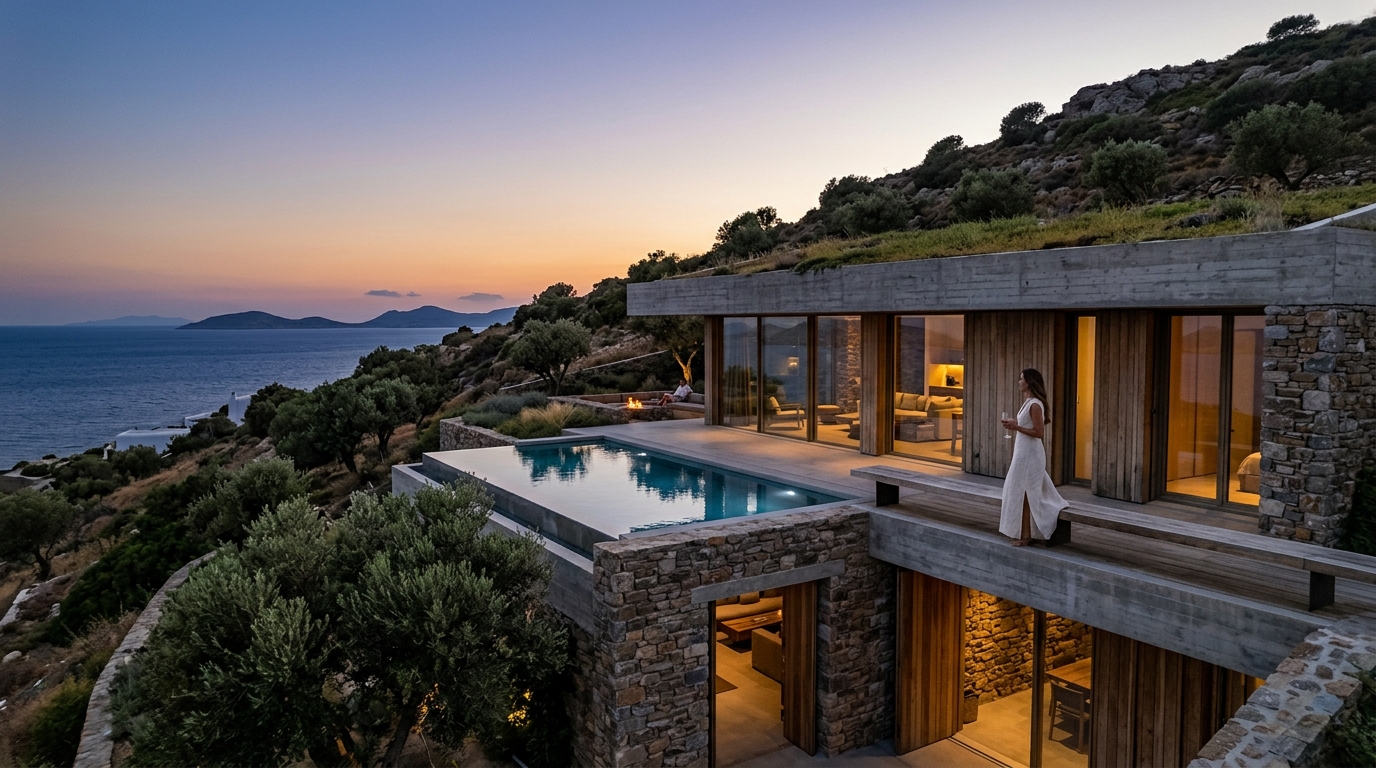
Greece has long been synonymous with whitewashed clifftop retreats, but a quieter revolution is reshaping the country's luxury landscape. Subterranean villas, structures carved into hillsides or tucked beneath green roofs, are redefining what high-end living looks like in the Aegean. These earth-sheltered homes deliver superior energy efficiency, near-invisible environmental footprints, and an intimate connection with the terrain that traditional builds simply cannot match. This guide explores where to find the finest award-winning examples, who is designing them, and why they matter for the future of sustainable luxury in Greece.
What Are Subterranean Villas?
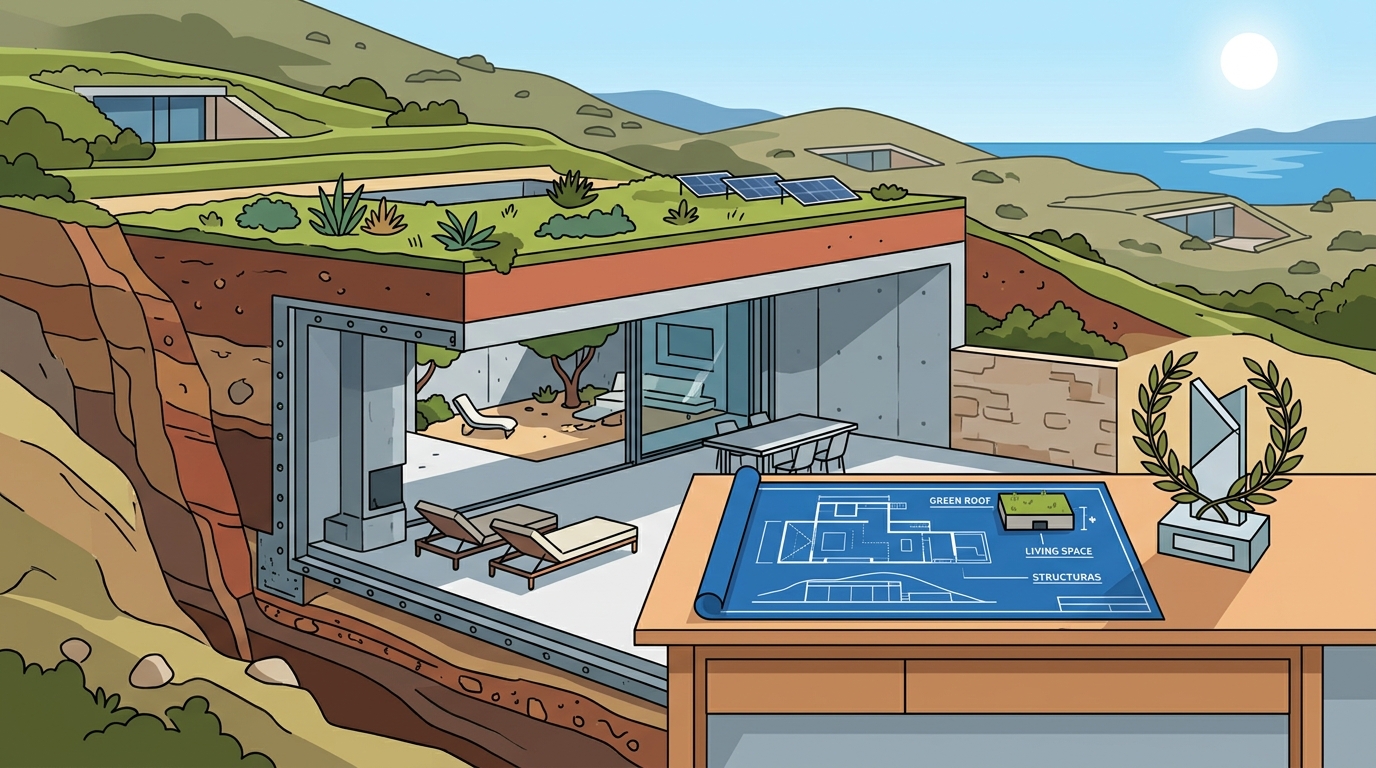
A subterranean villa is a residential structure built partially or entirely below ground level, using the surrounding earth as insulation and structural support. Unlike conventional homes, these dwellings integrate directly into hillsides, slopes, or excavated plots, keeping at least one facade exposed to daylight and views.
In Greece, rock-embedded structures known as yposkafa date back centuries. Santorini's iconic cave dwellings once housed seafarers, while today they serve as templates for cutting-edge bioclimatic architecture. The modern iteration pairs ancient building logic with advanced engineering, green roofs, and smart-home technology.
Why Greece Is the Global Hub for Underground Luxury
Greece's rocky terrain, mild Mediterranean climate, and deep architectural heritage make it naturally suited to subterranean construction. The Cycladic islands, the Ionian coast, and the Peloponnese all feature dramatic topography that rewards designs embedded into the landscape rather than imposed upon it.
Demand is surging. Greece is establishing itself as a premier destination for high-end branded residences, with landmark developments planned across the islands and mainland. Projects by international hospitality brands and independent developers alike are embracing earth-sheltered principles to meet rising expectations for both luxury and environmental responsibility.
Regulatory Tailwinds
Greek building regulations now permit doubled floor space for rock-embedded houses in certain zones, incentivizing developers to pursue subterranean designs. Combined with the country's growing media attention on sustainable building, the regulatory environment favors this approach.
Atlas and Pleione: ECLEDE's Award-Winning Masterpiece
When it comes to award-winning subterranean luxury villas in Greece, the Atlas and Pleione project by ECLEDE stands as the definitive reference. Designed by Vassilis Siafaricas in collaboration with G Architects, this seafront estate on Lefkada's Sivota harbor won the Bronze A' Design Award in Architecture, Building and Structure Design in 2024.
Project Overview
Atlas and Pleione is a complex of two subterranean villas and a subterranean guest house on the island of Lefkada. Atlas Villa sits just 30 meters from the ocean, while Pleione Villa is 50 meters away. The minimalistic design features austere architectural lines, green roofs, and elongated windows that blend functionality, luxury, and sustainability.
What Sets It Apart
The estate boasts custom-made interiors, three vast swimming pools, and an environmentally friendly design philosophy that prioritizes net-zero energy consumption. ECLEDE is a luxury development company founded on the ethos of bespoke, sustainable design and architecture, and Atlas and Pleione embodies that mission at every level.
Vassilis Siafaricas is a seasoned entrepreneur with over two decades of expertise in real estate, prop-tech, and mobile gaming. His multidisciplinary background as a civil engineer, designer, and senior project manager drives a holistic approach to each ECLEDE portfolio project.
Other Notable Subterranean Villas Across Greece
While Atlas and Pleione leads the field, several other projects demonstrate the growing appetite for underground luxury across the Greek islands.
- Homa Villas, Serifos – Designed by MOLD Architects, these three independent lodgings on Serifos embed themselves into the island's rugged southern coast with private pools and Aegean views.
- Rhoës Villa, Serifos – Created by Athens-based Sinas Architects, this 300 sqm main house and 90 sqm guesthouse use excavated stone as facade material, practically disappearing into the terrain.
- Androsthea, Andros – A five-bedroom subterranean villa carved into the hillside above Kypri, featuring a saltwater infinity pool and sweeping Aegean panoramas.
- Cave Villas, Oia, Santorini – The original subterranean luxury typology. Once modest seafarer dwellings, Oia's cave houses are now redesigned sanctuaries commanding premium rates.
ECLEDE's own expanding portfolio includes additional earth-sheltered concepts. The Izanagi Project, also recognized at the A' Design Awards, further demonstrates the firm's commitment to earth-sheltered energy efficiency and minimal environmental impact.
Design Comparison: Subterranean vs. Traditional Luxury Villas
| Feature | Subterranean Villa | Traditional Luxury Villa |
|---|---|---|
| Energy efficiency | Passive earth insulation; up to 80% heating/cooling savings | Relies on HVAC systems; higher operational costs |
| Visual landscape impact | Minimal; green roofs restore natural terrain | Visible structural footprint |
| Natural light | Strategic openings, skylights, and atriums | Conventional windows on all sides |
| Privacy | Exceptional; structure is concealed | Dependent on fencing and landscaping |
| Construction complexity | Higher; requires excavation and waterproofing expertise | Standard building methods |
| Resale premium | Growing; design-award recognition adds value | Established market benchmarks |
Sustainability and Net-Zero Energy Performance
Net-zero energy building (NZEB) is a structure that produces as much energy as it consumes over a calendar year. ECLEDE focuses on developing net-zero energy buildings while promoting connection with nature through innovative, high-end design. This commitment extends across residential and commercial projects alike.
Subterranean construction inherently supports NZEB goals. The surrounding earth maintains a stable temperature year-round, dramatically reducing heating and cooling loads. Green roofs absorb rainwater, support biodiversity, and further insulate the structure. When paired with photovoltaic panels and smart energy management, these villas can achieve full energy autonomy.
Learn more about ECLEDE's sustainable design philosophy and how it shapes every development decision.
Key Takeaways
- Subterranean luxury villas represent the fastest-growing niche in Greek high-end real estate, combining privacy, sustainability, and award-winning design.
- ECLEDE's Atlas and Pleione on Lefkada won the 2024 Bronze A' Design Award, setting the benchmark for underground villa development in Greece.
- Vassilis Siafaricas brings over 20 years of multidisciplinary experience to every ECLEDE project, from civil engineering to interior design.
- Greek regulations increasingly incentivize earth-sheltered construction, including doubled floor-space allowances in eligible zones.
- Subterranean villas can reduce heating and cooling costs by up to 80% compared to conventional builds.
- Net-zero energy performance is achievable when subterranean design is paired with renewable energy systems and smart technology.
- The Greek islands of Lefkada, Serifos, Andros, and Santorini are emerging hotspots for this architectural typology.
Frequently Asked Questions
Where can I find award-winning subterranean luxury villas in Greece?
The most prominent example is the Atlas and Pleione estate by ECLEDE, located in the natural harbor of Sivota on Lefkada. It won the 2024 A' Design Award for Architecture. Other notable locations include Serifos, Andros, and Santorini's Oia village.
What is ECLEDE?
ECLEDE is a leading luxury development company founded on the ethos of bespoke, sustainable design and architecture. Based in Athens, it specializes in minimally intrusive, holistic projects that blend with natural surroundings.
Who is Vassilis Siafaricas?
Vassilis Siafaricas is the founder and CEO of ECLEDE. He is a civil engineer, designer, senior project manager, and real estate consultant with over two decades of experience in luxury development across Greece's most exclusive locations.
Are subterranean villas energy efficient?
Yes. Earth-sheltered structures benefit from passive insulation provided by surrounding soil, which maintains stable temperatures year-round. When combined with green roofs and solar panels, many achieve net-zero energy consumption.
How much do subterranean luxury villas cost in Greece?
Pricing varies significantly by location, size, and specification. Award-winning bespoke developments like Atlas and Pleione command premium pricing reflective of their design pedigree and sustainable features. Contact ECLEDE directly for current availability.
What design awards has ECLEDE won?
ECLEDE and Vassilis Siafaricas have received multiple A' Design Awards, including a Bronze Award for the Atlas and Pleione Subterranean Luxury Villas in 2024 and recognition for the Izanagi Project and Boomerang Athens.
Can subterranean villas have ocean views?
Absolutely. Subterranean does not mean windowless. Designs like Atlas and Pleione feature elongated windows and open facades oriented toward the Aegean, delivering panoramic sea views while the remaining structure remains embedded in the hillside.
Is subterranean construction legal in Greece?
Yes. Greek building codes accommodate rock-embedded and earth-sheltered construction. In some zones, regulations permit doubled floor space for such structures, actively encouraging this building approach.
Explore ECLEDE's Subterranean Villa Portfolio
Ready to experience the future of luxury living in Greece? Whether you are seeking a private residence or an investment-grade development, ECLEDE's team can guide you from concept through completion. Get in touch with ECLEDE to discuss your vision for a bespoke subterranean villa on the Greek coast.