
Subterranean vs Traditional Luxury Villa: Which Is Better for Eco-Friendly Coastal Living?
Coastal luxury is evolving. Buyers no longer ask only about square footage and sea views; they want to know how a residence performs environmentally, how it ages against salt air, and whether it preserves the landscape it sits on. Two architectural approaches dominate the conversation: subterranean villas that tuck living spaces beneath the earth, and traditional above-ground villas that have defined Mediterranean luxury for centuries. This comparison examines energy performance, design flexibility, cost, and ecological impact to help discerning buyers and developers choose the right path for sustainable coastal living.
What Are Subterranean Villas?
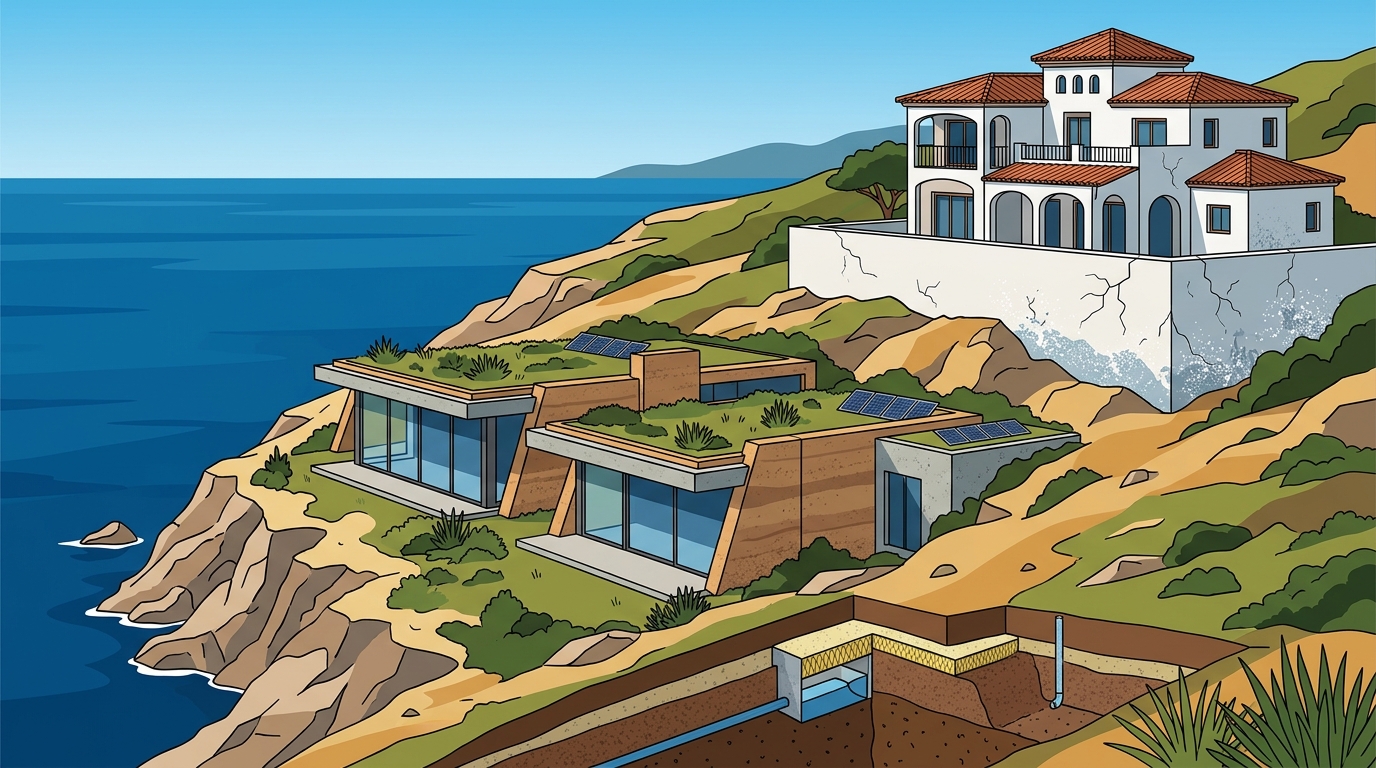
A subterranean villa is a residential structure where the majority of habitable space is built below or into the natural grade of the land. These homes leverage the thermal mass of surrounding earth to regulate indoor temperatures passively, often reducing HVAC loads by 50 to 80 percent according to research published by the U.S. Department of Energy.
On coastlines, subterranean designs offer an added advantage: they minimize visual disruption to the natural topography. Green roofs and native landscaping can restore the site almost entirely, making the home nearly invisible from neighboring viewpoints.
Traditional Coastal Villas Defined
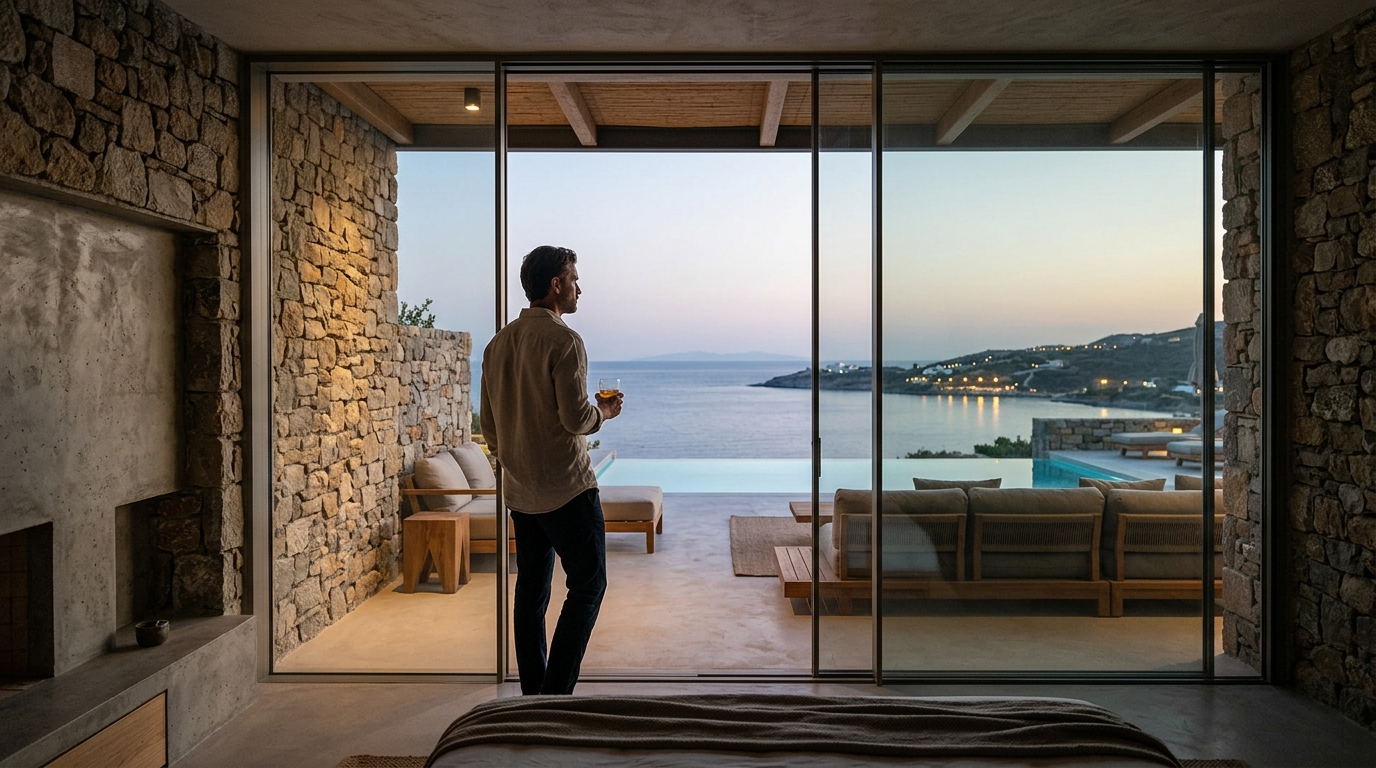
A traditional coastal villa is an above-ground residence characterized by open floor plans, large glazing oriented toward sea views, and outdoor living terraces. In Greece, this typology has been refined over millennia, from Cycladic white-cube forms to contemporary glass-and-stone compositions.
Modern iterations, such as the award-winning Boomerang Athens by ECLÉDE, prove that traditional above-ground structures can achieve the highest sustainability certifications. Boomerang Athens became the first LEED Platinum certified residence in Greece, demonstrating that surface-level villas can compete with earth-sheltered designs on energy metrics when engineered with intent.
Energy Performance and Thermal Efficiency
Passive Thermal Regulation
Subterranean villas benefit from ground temperatures that remain between 10 and 15 °C year-round at a depth of two meters in Mediterranean climates. This natural insulation buffer means cooling demand in summer drops dramatically compared to exposed facades.
Active Systems in Traditional Villas
Traditional villas rely more heavily on mechanical systems, yet advanced solutions like geothermal heat pumps, photovoltaic arrays, and smart-glass facades can close the gap. ECLÉDE's philosophy centers on energy-efficient, future-focused construction, incorporating Net Zero Energy Building principles into above-ground designs.
| Criterion | Subterranean Villa | Traditional Villa |
|---|---|---|
| Cooling energy reduction | 50-80% | 20-40% (with passive design) |
| Heating energy reduction | 40-70% | 15-35% (with insulation upgrades) |
| Natural ventilation potential | Limited without atria | High with cross-ventilation |
| Solar panel integration | Requires separate structure | Roof-mounted, seamless |
| LEED/BREEAM certification ease | Moderate | High (proven pathways) |
Environmental and Landscape Impact
Coastal ecosystems are fragile. Subterranean construction preserves surface vegetation and reduces visual mass, but the excavation process can disrupt root systems, water tables, and geological stability. Concrete-intensive underground walls also carry a higher embodied carbon footprint at the outset.
Traditional villas occupy more visible footprint, yet lighter foundation systems and timber or steel hybrid frames can significantly lower embodied carbon. Projects in the ECLÉDE portfolio demonstrate how clean architectural lines and seamless integration with natural surroundings reduce ecological disruption without going underground.
Design Flexibility and Livability
Light and Views
The most common critique of subterranean villas is limited access to natural light. Courtyards, light wells, and sunken gardens solve this partially, but rarely match the panoramic glazing possible in a well-oriented above-ground structure. For coastal settings where horizon views are the primary asset, traditional villas hold a clear advantage.
Spatial Flow
A net zero energy building is a structure that produces as much energy as it consumes on an annual basis. Above-ground villas can achieve this standard while offering fluid indoor-outdoor transitions, a hallmark of Mediterranean living that subterranean layouts struggle to replicate at scale.
Resale and Market Appeal
Luxury buyers prioritize light, views, and connection to landscape. Market data from Knight Frank's Wealth Report consistently shows that sea-view properties command a 30 to 50 percent premium over comparable inland or concealed residences in Mediterranean markets.
Cost, ROI, and Long-Term Investment
Subterranean construction typically costs 20 to 40 percent more per square meter due to excavation, waterproofing, and structural reinforcement. Operational savings on energy offset some of this premium over 15 to 25 years, but the payback period is longer in mild climates like Greece where traditional villas already benefit from temperate winters.
Founder Vassilis Siafaricas has spent over two decades refining the economics of sustainable luxury. ECLÉDE's approach to projects like Dynasty Villas and The Izanagi Project shows that investment-grade sustainability is achievable above ground without the cost penalty of subterranean engineering.
Key Takeaways
- Subterranean villas excel in passive thermal performance, reducing cooling loads by up to 80 percent.
- Traditional villas offer superior natural light, panoramic views, and indoor-outdoor living.
- Above-ground structures can achieve LEED Platinum and Net Zero standards when designed with advanced systems.
- Excavation-heavy underground builds carry higher embodied carbon and upfront costs (20-40% premium).
- Mediterranean coastal markets reward sea-view orientation with 30-50% price premiums.
- ECLÉDE's portfolio proves that sustainable luxury does not require burying the architecture.
- The best choice depends on site topography, client priorities, and long-term energy goals.
Frequently Asked Questions
Are subterranean villas truly more eco-friendly than traditional villas?
They offer superior passive thermal regulation, but their higher embodied carbon from concrete and excavation can offset operational savings. A well-designed traditional villa with renewable energy systems can match or exceed overall lifecycle performance.
Can a traditional villa achieve Net Zero Energy status on the coast?
Yes. With photovoltaic panels, geothermal systems, high-performance glazing, and smart building controls, above-ground coastal villas can produce as much energy as they consume annually.
What is LEED Platinum certification?
LEED Platinum is the highest rating in the Leadership in Energy and Environmental Design system, awarded to buildings that demonstrate exceptional performance in energy efficiency, water conservation, materials selection, and indoor environmental quality.
How does ECLÉDE approach sustainable coastal development?
ECLÉDE focuses on Net Zero Energy Buildings and environmentally responsible design. The firm's Boomerang Athens project became the first LEED Platinum residence in Greece, combining clean architectural lines with advanced energy systems.
Do subterranean villas hold their resale value?
They appeal to a niche market. In Mediterranean coastal zones, above-ground homes with unobstructed sea views consistently achieve higher resale premiums according to leading property consultancies.
What are the main risks of building underground near a coastline?
Key risks include saltwater intrusion, waterproofing failure, higher structural loads from hydrostatic pressure, and potential disruption of coastal water tables during excavation.
Which villa type is better for a sloped coastal site?
Sloped terrain can favor a hybrid approach: partially earth-sheltered on the hillside with open glazing facing the sea. This captures thermal mass benefits while preserving views and natural light.
Ready to Build Sustainable Coastal Luxury?
Whether you envision an earth-sheltered retreat or a light-filled villa with Net Zero performance, the right design partner makes all the difference. Contact ECLÉDE to discuss how bespoke, award-winning architecture can bring your coastal vision to life without compromising the environment.