
Sustainable Property Investment: Long-Term Benefits That Protect Your Wealth
Sustainable property investment is the practice of acquiring or developing real estate that prioritizes energy efficiency, eco-friendly materials, and reduced environmental impact. Far from being a passing trend, green real estate has become a strategic wealth-building tool. The global green building market is valued at $618.58 billion and is projected to reach $1,374.23 billion by 2034, according to industry data. Whether you are eyeing a luxury villa in the Mediterranean or a certified residential asset, understanding how sustainability translates into tangible, long-term returns is essential. Here is everything you need to know about why eco-friendly property investment benefits you for decades to come.
Higher Property Values and Resale Premiums
One of the most compelling reasons to invest in sustainable property is the measurable increase in asset value. According to the American Institute of Architects, green buildings can sell for up to 16% more than conventional buildings. Residential properties built to LEED standards have shown an 8% boost in resale value in major U.S. markets.
A green premium is the additional market value a property commands due to its sustainability credentials. In contrast, properties lacking eco-friendly features are increasingly subject to what analysts call a "brown discount," where outdated buildings lose value relative to greener competitors. JLL research shows average rental premiums of over 7% in North America, 10% in Asia Pacific, and more than 11% in London for properties with green credentials.
This trend is especially relevant in the luxury segment. ECLÉDE's approach to bespoke, sustainable design ensures that every development is positioned to capture these premiums from day one.
Lower Operating Costs Year After Year
Sustainable properties deliver significant savings on utilities and maintenance. The U.S. Green Building Council reports that LEED buildings have nearly 20% lower maintenance costs than typical commercial buildings, and green retrofits decrease operation costs by almost 10% in just one year.
Energy and Water Savings
Green buildings consume 25% to 30% less energy than conventional structures, according to the World Green Building Council. Water savings typically range from 15% to 40%. These reductions compound over decades, making eco-friendly properties far cheaper to own and operate.
The Five-Year Payoff
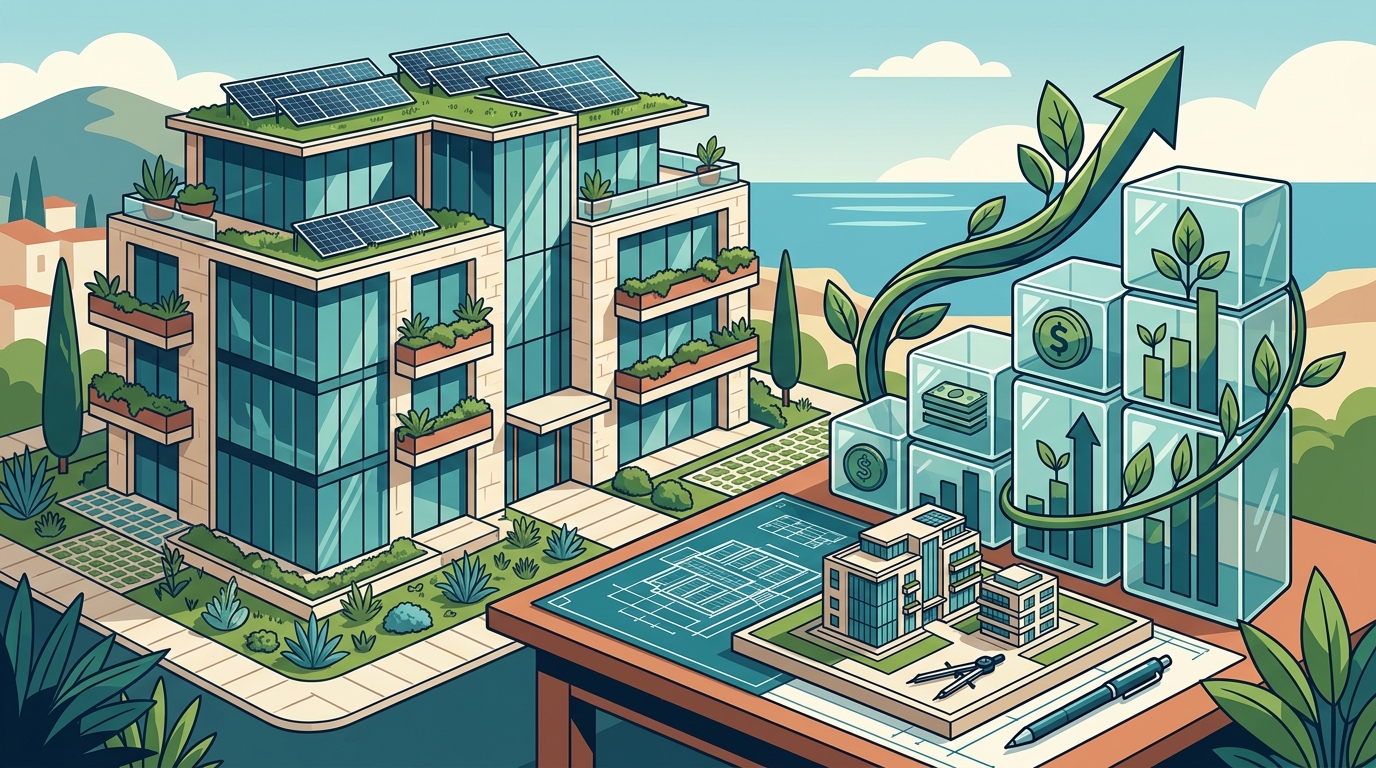
While sustainable construction may cost 2% to 7% more upfront, long-term savings often offset the investment within three to five years. Over a five-year period, green buildings see an average operating cost reduction of 16.9%.
| Metric | Sustainable Property | Conventional Property |
|---|---|---|
| Energy Consumption | 25-30% lower | Baseline |
| Maintenance Costs | ~20% lower | Baseline |
| 5-Year Operating Cost Reduction | 16.9% average | 0% |
| Resale Premium | 8-16% higher | Baseline |
| Rental Premium | 7-11% higher | Baseline |
Stronger Rental Income and Tenant Retention
Eco-friendly properties attract higher-quality tenants willing to pay more. Research shows that tenants are willing to pay up to 7.1% more for properties meeting their sustainability preferences. High-performing sustainable buildings also achieve lower vacancy rates and higher occupancy.
For luxury developments like those in the ECLÉDE portfolio, this translates into consistent demand from discerning buyers and tenants who value both quality and environmental responsibility.
Tax Incentives and Green Financing
A tax incentive for green building is a government-provided financial benefit that reduces the cost of constructing or upgrading sustainable properties. Many jurisdictions offer credits for renewable energy installations, energy-efficient systems, and green certifications.
Available Incentives
According to J.P. Morgan, incorporating renewable energy across your property may qualify you for tax credits, including geothermal credits of up to 60%. Green bonds also offer favorable interest rates, with the global green bond market exceeding $600 billion in annual issuance by 2024.
EU and Greek Incentives
In Greece and across the European Union, property owners benefit from energy renovation subsidies and favorable financing for certified green projects. These incentives further improve the return on investment for sustainable luxury developments in locations like Athens and Lefkada, where Vassilis Siafaricas and ECLÉDE have pioneered award-winning eco-conscious design.
Climate Resilience and Risk Reduction
Climate resilience is the ability of a property to withstand and adapt to extreme weather events and changing environmental conditions. As insurance costs rise in exposed regions, sustainable construction offers a measurable hedge against physical climate risk.
Properties built with advanced insulation, resilient materials, and on-site energy generation are better positioned to endure heatwaves, storms, and flooding. Every $1 spent on mitigation activities saves $6 in response and recovery costs. Sustainable design is not just about saving the planet; it is about protecting your investment from accelerating climate volatility.
The Role of Green Certifications
Green building certifications such as LEED, BREEAM, and ENERGY STAR provide independent verification of a property's sustainability performance. These certifications serve as a mark of quality that enhances marketability and buyer confidence.
ECLÉDE's Boomerang Athens is the first LEED Platinum certified residence in Greece, setting a new benchmark for sustainable luxury in the Mediterranean. This milestone demonstrates that world-class design and environmental responsibility go hand in hand.
Certified properties consistently outperform non-certified ones. LEED-certified buildings achieve lease-up rates that exceed market averages by 20%, and vacancy rates stay between 1% and 2% in certified properties.
Key Takeaways
- Sustainable properties command 8% to 16% higher resale values than conventional buildings.
- Green buildings consume 25% to 30% less energy, reducing long-term operating costs significantly.
- Tenants pay up to 7% to 11% more in rent for eco-certified spaces.
- Tax credits and green financing options lower the effective cost of sustainable development.
- Climate-resilient construction reduces insurance exposure and protects asset value.
- Certifications like LEED Platinum, as achieved by ECLÉDE's Boomerang Athens, signal quality and attract premium buyers.
- The global green building market is on track to more than double by 2034, ensuring sustained demand.
Frequently Asked Questions
What is a sustainable property investment?
A sustainable property investment is the acquisition or development of real estate designed to minimize environmental impact through energy efficiency, eco-friendly materials, and responsible resource management. It integrates ESG (Environmental, Social, and Governance) criteria into every stage of the property lifecycle.
Do green buildings really cost more to build?
Green construction typically costs between 2% and 7% more than conventional building. However, the long-term savings on energy, maintenance, and operations often offset this premium within three to five years.
How much more can I sell a sustainable property for?
Studies show that green-certified buildings sell for 8% to 16% more than non-certified equivalents, depending on location and certification level. In some premium markets, the gap is even wider.
Are there tax benefits for eco-friendly properties?
Yes. Many governments offer tax credits for renewable energy systems, energy-efficient upgrades, and green certifications. In the U.S., geothermal system credits can reach up to 60%. European countries, including Greece, offer energy renovation subsidies and green financing programs.
What is LEED Platinum certification?
LEED Platinum is the highest tier of the Leadership in Energy and Environmental Design rating system, awarded to buildings that achieve the most advanced sustainability benchmarks. ECLÉDE's Boomerang Athens was the first residence in Greece to earn this distinction.
How does sustainability affect rental income?
Sustainable properties attract premium tenants and achieve higher occupancy rates. Research indicates rental premiums of 7% to 11% for green-certified buildings, along with improved tenant retention.
Is sustainable luxury real estate a good long-term investment?
Absolutely. With rising energy costs, tightening regulations, and growing buyer demand for eco-friendly living, sustainable luxury properties are positioned for strong long-term appreciation. The track record of developers like Vassilis Siafaricas demonstrates the viability of this approach.
What role does climate resilience play in property value?
Properties designed to withstand extreme weather and environmental shifts retain value better and incur lower insurance costs. Climate-resilient design is increasingly factored into property appraisals and lending decisions.
Your Next Step Toward Sustainable Luxury
Investing in sustainable property is one of the smartest long-term financial decisions you can make. Whether you are seeking a certified luxury villa, a bespoke Mediterranean residence, or a portfolio-grade asset that appreciates while protecting the environment, the data is clear: green real estate outperforms.
Explore ECLÉDE's award-winning portfolio to see how visionary sustainable design creates enduring value, or get in touch with the ECLÉDE team to discuss your next investment.