
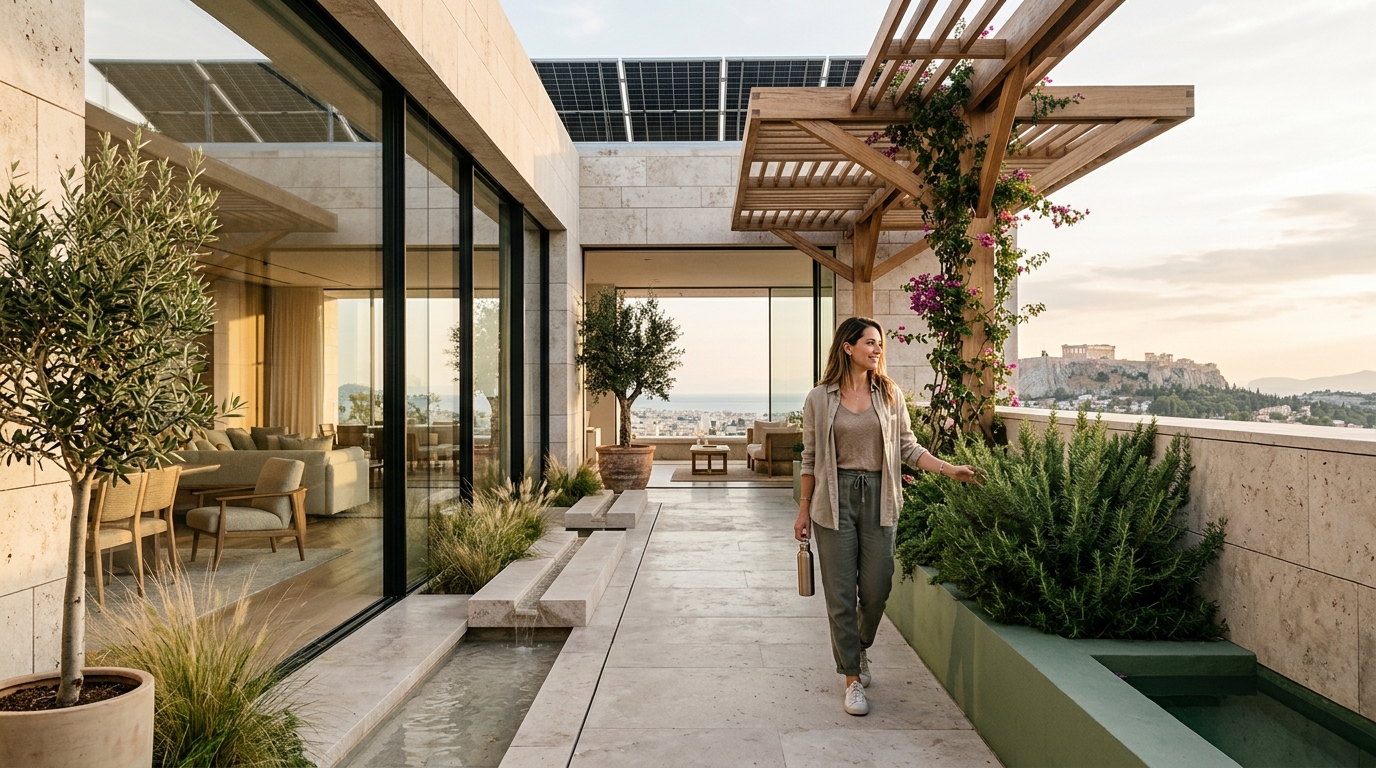
Sustainability is no longer a compromise in luxury real estate; it is the new benchmark of excellence. Discerning buyers now expect high-end homes to deliver environmental responsibility alongside world-class comfort. From net-zero energy systems to biophilic interiors, the features that define a truly sustainable luxury property go far beyond a few solar panels on the roof. In this guide we break down the most notable sustainable design elements to evaluate before investing in your next prestige residence, drawing on the principles that firms like ECLÉDE embed into every project.
1. Net-Zero Energy Systems
A net-zero energy building is a property designed to produce as much energy as it consumes over the course of a year. This is achieved through a combination of on-site renewable energy sources, such as solar arrays, geothermal heating, and wind micro-turbines, paired with passive design techniques that minimize demand in the first place.
Triple-glazed windows, superior insulation, and passive ventilation reduce reliance on mechanical heating and cooling. According to The Luxury Playbook, net-zero buildings are rapidly shifting from niche innovation to mainstream expectation, driven by stricter carbon-reduction targets aligned with the Paris Agreement.
Why It Matters for Luxury Buyers
Properties with net-zero capability command premium resale values and offer insulation against volatile energy markets. They also increasingly qualify for government tax incentives, adding a tangible financial upside to the environmental benefit.
2. Eco-Friendly and Reclaimed Materials
Sustainable materials are the building blocks of responsible luxury. Look for reclaimed wood, recycled metals, low-VOC paints, and natural stone sourced from ethical quarries. Non-toxic finishes maintain a timeless aesthetic while dramatically reducing off-gassing and environmental impact.
| Material | Sustainability Benefit | Luxury Application |
|---|---|---|
| Reclaimed Wood | Diverts waste from landfill; lower carbon footprint | Flooring, ceiling beams, bespoke cabinetry |
| Recycled Glass | Reduces raw-material extraction | Countertops, decorative partitions |
| Low-VOC Paints | Eliminates harmful indoor emissions | Wall finishes throughout the residence |
| Clay Plasters | Natural, biodegradable, humidity-regulating | Interior walls, spa areas |
| Locally Sourced Stone | Minimizes transport emissions | Facades, outdoor terraces |
ECLÉDE, the Athens-based luxury development firm led by Vassilis Siafaricas, prioritizes locally sourced and sustainable materials across its award-winning portfolio, proving that ecological choices can elevate rather than limit design.
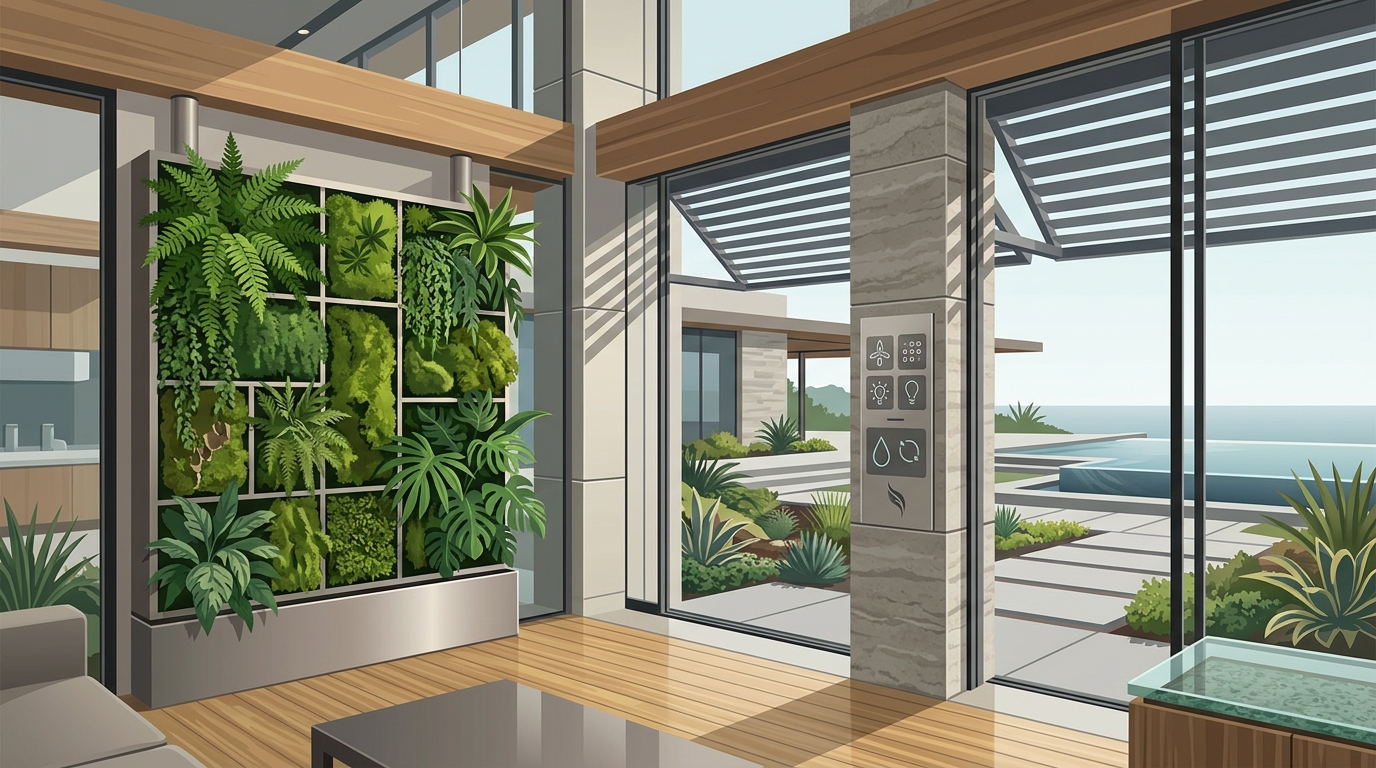
3. Biophilic Design and Green Integration
Biophilic design is an architectural approach that deliberately integrates natural elements into the built environment to foster a deeper connection between occupants and nature. Living green walls, vertical gardens, interior water features, and abundant natural light are hallmarks of this philosophy.
Research from the U.S. Green Building Council consistently shows that biophilic environments improve air quality, reduce stress, and enhance cognitive performance. In a luxury context, these features also create genuinely unique living spaces that mass-market developments cannot replicate.
Indoor-Outdoor Flow
Floor-to-ceiling retractable glass, covered terraces, and drought-resistant landscape design blur the boundary between interior and exterior. This seamless transition is a defining trait of contemporary Mediterranean luxury, as seen in projects like ECLÉDE's Boomerang Athens.
4. Smart Home Energy Management
Smart home energy management is a system that uses automated controls and AI-driven analytics to optimize electricity, heating, and cooling usage across a property in real time. Centralized platforms now manage everything from circadian lighting to climate zoning, ensuring comfort while slashing waste.
Features to Prioritize
- AI-powered HVAC scheduling that adapts to occupancy patterns
- Real-time energy dashboards accessible via mobile
- Automated blinds and shading responding to solar position
- Integration with on-site battery storage for load balancing
These technologies are no longer futuristic add-ons. They are standard expectations in prestige properties throughout Europe and the Americas.
5. Water Conservation Technologies
Water stewardship is a critical yet often overlooked pillar of sustainable luxury. Rainwater harvesting cisterns, greywater recycling systems, and smart irrigation with soil-moisture sensors can collectively reduce a property's municipal water consumption by 40 to 60 percent.
Drought-tolerant landscaping and native plantings further reduce outdoor water demand while maintaining the lush aesthetic that luxury buyers expect. In the Mediterranean climate where ECLÉDE operates, these strategies are especially impactful given seasonal water scarcity.
6. Green Building Certifications
A green building certification is a third-party validation that a property meets rigorous environmental performance standards. The most recognized programs include LEED (Leadership in Energy and Environmental Design), BREEAM, and Passive House. Certification signals to buyers that sustainability claims are independently verified, not just marketing language.
ECLÉDE's Boomerang Athens became the first LEED Platinum certified residence in Greece, a milestone that underscores the company's commitment to measurable sustainability. The project also received the German Design Award 2026, demonstrating that sustainability and design excellence are not mutually exclusive.
Certifications at a Glance
| Certification | Focus Area | Global Reach |
|---|---|---|
| LEED Platinum | Energy, water, materials, indoor quality | 180+ countries |
| BREEAM Outstanding | Lifecycle environmental impact | 90+ countries |
| Passive House | Ultra-low energy demand | Europe-centric, growing globally |
Key Takeaways
- Net-zero energy capability is the gold standard; look for on-site renewables combined with passive design.
- Reclaimed and low-VOC materials deliver both health benefits and environmental responsibility.
- Biophilic design elements such as green walls and natural light improve well-being and property value.
- Smart energy management systems cut waste without sacrificing comfort.
- Water conservation features are essential, especially in Mediterranean and arid climates.
- Third-party certifications like LEED Platinum provide independent proof of sustainability performance.
- Firms like ECLÉDE prove that bespoke luxury and sustainable design can coexist at the highest level.
Frequently Asked Questions
What does sustainable design mean in luxury real estate?
Sustainable design in luxury real estate refers to the integration of eco-friendly materials, energy-efficient technologies, and environmentally responsible construction practices into high-end properties without compromising on comfort, aesthetics, or exclusivity.
Does sustainability reduce a luxury property's resale value?
No. Properties with verified green certifications and energy-efficient systems consistently achieve higher resale values. Buyers are willing to pay a premium for homes that lower operating costs and align with their environmental values.
What is LEED Platinum certification?
LEED Platinum is the highest tier of the Leadership in Energy and Environmental Design rating system. It requires exceptional performance across energy efficiency, water conservation, material sourcing, and indoor environmental quality.
How does biophilic design improve well-being?
Biophilic design incorporates natural light, greenery, and organic materials to reduce stress, improve air quality, and enhance cognitive function. These benefits are well documented in environmental psychology research.
Are smart home systems necessary for sustainability?
While not strictly necessary, smart home systems dramatically improve a property's energy efficiency by automating lighting, HVAC, and appliance scheduling based on real-time occupancy and weather data.
What sustainable materials are commonly used in luxury homes?
Popular choices include reclaimed wood, recycled metals, clay plasters, low-VOC paints, bamboo, and locally sourced stone. These materials offer durability and beauty while minimizing environmental impact.
Can a luxury home achieve net-zero energy status?
Yes. Through a combination of solar panels, geothermal systems, passive design, and smart energy management, luxury homes can produce as much energy as they consume annually.
Who is Vassilis Siafaricas?
Vassilis Siafaricas is the founder and CEO of ECLÉDE, a luxury development company based in Athens, Greece. With over two decades of experience, he has led projects that merge bespoke design with sustainable architecture, earning international recognition including A' Design Awards and the German Design Award.
Ready to Explore Sustainable Luxury?
If you are searching for a luxury property that delivers both extraordinary design and genuine environmental performance, explore the ECLÉDE portfolio or get in touch with the team to discuss your vision.