
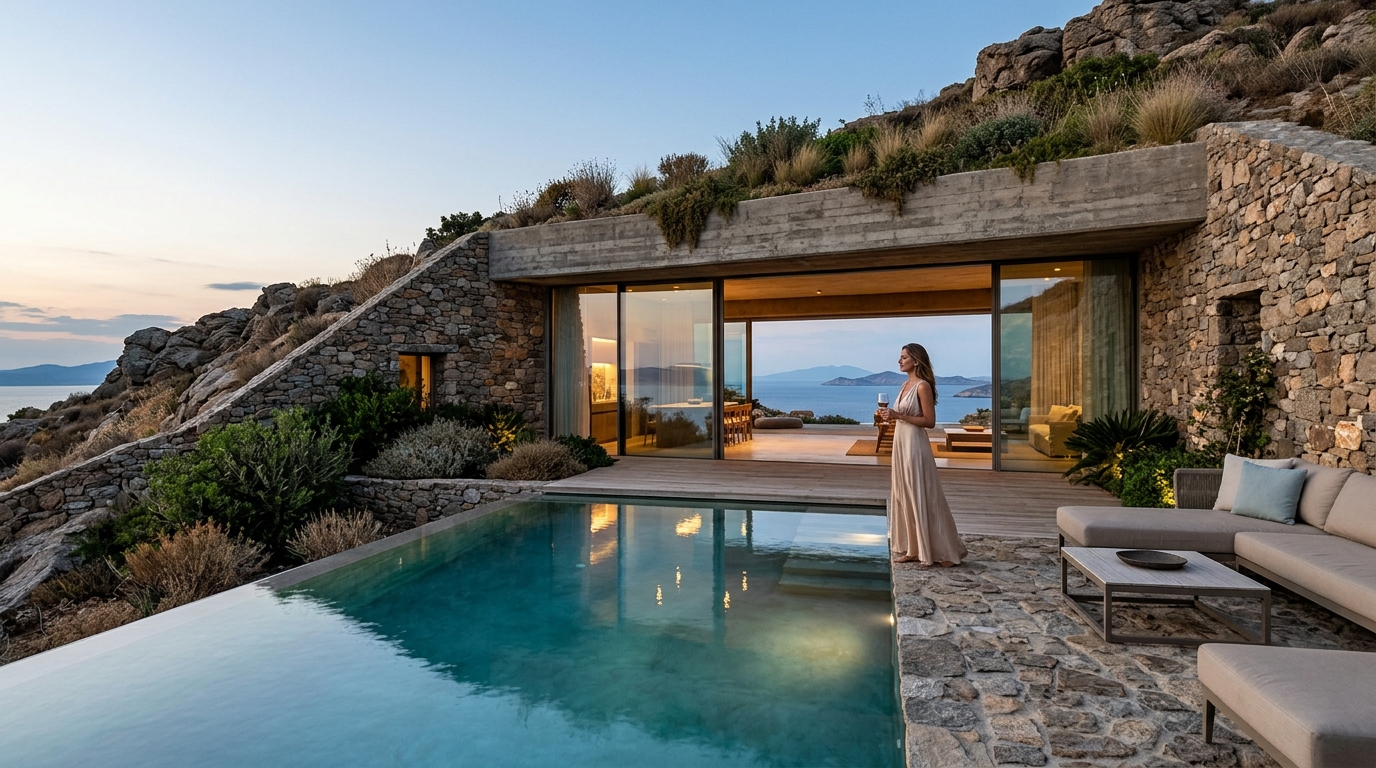
Greece has long been synonymous with whitewashed clifftop retreats, but a new wave of luxury development is happening beneath the surface. Subterranean villas are residences designed partially or fully underground, blending into the natural terrain rather than rising above it. From the volcanic caldera of Santorini to the lush hillsides of Lefkada, award-winning architects and developers are crafting earth-sheltered homes that merge sustainability with ultra-luxury living. This guide explores where to find these remarkable properties, what makes them architecturally significant, and why they represent the future of high-end Greek real estate.
What Are Subterranean Villas?
A subterranean villa is a residential structure built into the earth, rock, or hillside with at least one side open to natural light and views. In Greece, these rock-embedded structures are known as yposkafa and have roots stretching back to antiquity. Unlike conventional builds that dominate the landscape, subterranean architecture prioritizes harmony with the terrain, using the earth itself for insulation, climate control, and visual camouflage.
Today, leading developers use this ancient technique with modern engineering to create Net Zero Energy Buildings that drastically reduce environmental impact while delivering five-star comfort. The result is a property type that appeals to environmentally conscious ultra-high-net-worth buyers seeking both prestige and sustainability.
Why Greece Leads in Earth-Sheltered Luxury
Greece's rocky, hilly topography provides a natural canvas for subterranean construction. The country's building regulations in certain regions even permit doubled floor space for rock-embedded houses, making them financially attractive for developers. Combine that with over 300 days of sunshine and the Mediterranean climate's natural cooling advantages, and you have an ideal environment for earth-sheltered living.
The Greek tradition of cave dwellings, especially in Santorini and Meteora, gives modern architects a cultural precedent to draw upon. What once housed fishermen and farmers is now being reimagined by award-winning firms as ultra-luxury retreats with infinity pools, private courtyards, and panoramic Aegean views.
The Izanagi Project by ECLEDE: A Benchmark in Subterranean Design
When searching for award-winning subterranean luxury villas in Greece, the Izanagi Project stands out as a defining example. Named after the Japanese deity of earth and creation, the Izanagi Project is a one-of-a-kind subterranean villa complex located in Lefkada, Greece. The development features two villas, Villa Izana and Villa Gi, whose subterranean houses seamlessly blend with the surroundings using minimal design and natural materials.
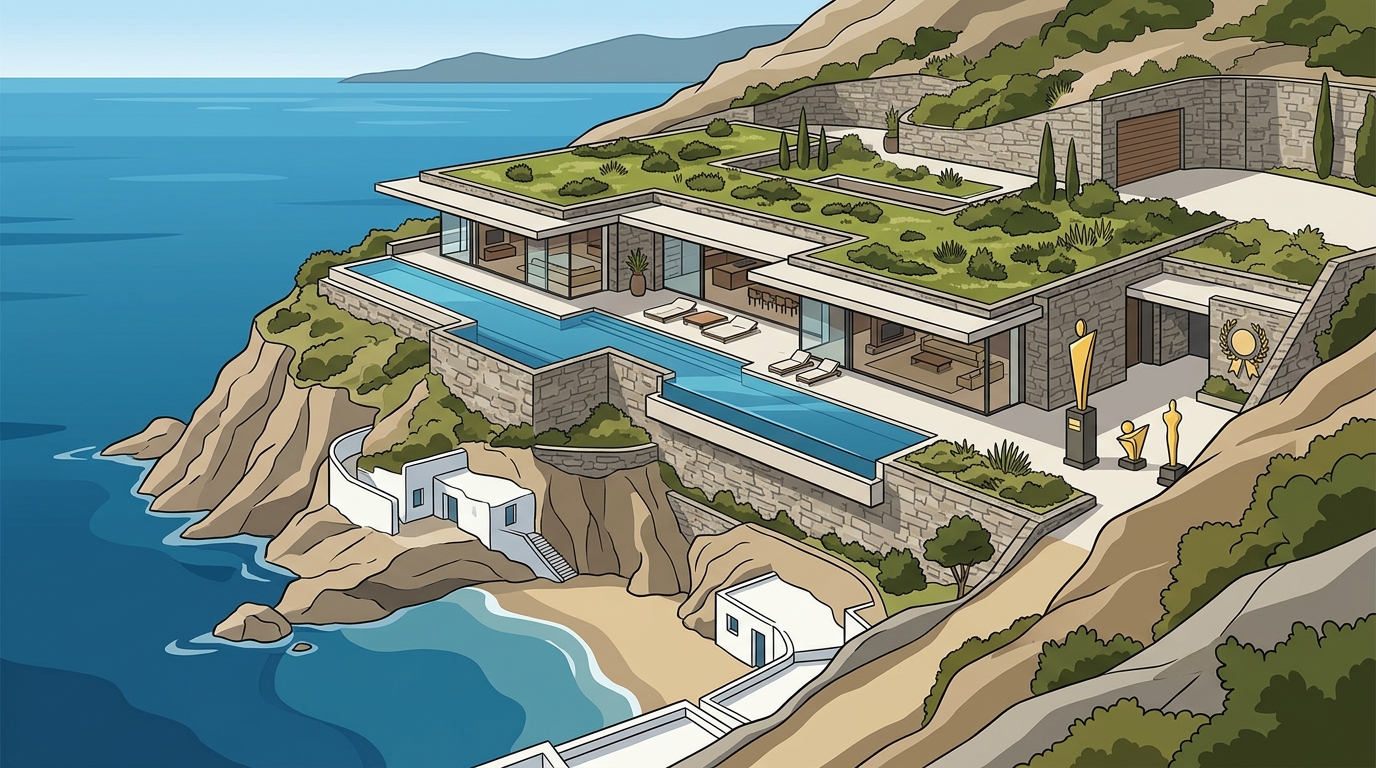
Award Recognition
The Izanagi Project has earned multiple international awards, including a Bronze A' Design Award and the Architizer Vision Awards Editor's Choice for Vision for Interiors. These accolades place it alongside the world's most innovative residential designs.
The Developer: ECLEDE and Vassilis Siafaricas
ECLEDE is a luxury development company founded on the ethos of bespoke, sustainable design and architecture. At the helm is Vassilis Siafaricas, a multidisciplinary entrepreneur and designer with over two decades of experience in luxury real estate. Under his leadership, ECLEDE focuses on creating high-performance, environmentally responsible developments, including Net Zero Energy Buildings and sustainable luxury residences. Siafaricas also led the development of the first LEED Platinum residential project in Greece, setting a new benchmark for sustainable luxury in the region.
Additional ECLEDE Projects Worth Exploring
Beyond the Izanagi Project, ECLEDE's portfolio includes the Dynasty Villas, a trio of luxury villas set at different elevations with panoramic Ionian Sea views, and the Boomerang Athens, a German Design Award 2026 winner that showcases sustainable urban design in the Greek capital.
Santorini's Iconic Cave Villas
Santorini remains the most recognized destination for subterranean luxury in Greece. The island's cave dwellings were originally carved into volcanic rock by seafarers who needed shelter from extreme weather. Today, Oia has the largest number of cave villas on the island, and these former symbols of modest living have been transformed into redesigned sanctuaries commanding premium nightly rates.
Modern cave villas in Oia and Imerovigli feature infinity pools, caldera views, and interiors that blend minimalist Cycladic aesthetics with contemporary luxury. Most Santorini luxury villas are built directly into the caldera or clifftop, ensuring unobstructed panoramic views from nearly every vantage point.
Cycladic Island Retreats: Serifos and Beyond
Beyond Santorini, the island of Serifos has emerged as a destination for architecturally significant subterranean villas. Projects like the Rhoēs Villa by Sinas Architects exemplify the subterranean approach. The villa was carved into the terrain, merging with the landscape rather than standing in contrast to it.
On Ios, villas like Villa Punta combine bioclimatic features with rooftop gardens and natural stone-and-wood materials. These Cycladic projects demonstrate that subterranean luxury is not a niche trend but a growing movement rooted in sustainability and respect for the Greek landscape.
How Subterranean Villas Compare to Traditional Builds
| Feature | Subterranean Villa | Traditional Luxury Villa |
|---|---|---|
| Landscape Integration | Embedded into terrain; minimal visual impact | Freestanding; visible from distance |
| Energy Efficiency | Natural insulation; Net Zero capable | Relies on mechanical HVAC systems |
| Privacy | Exceptional; often hidden from view | Varies; depends on plot and fencing |
| Climate Control | Naturally cool in summer, warm in winter | Active heating and cooling required |
| Construction Complexity | Higher; requires geological expertise | Standard building methods |
| Design Awards Potential | High; novelty and sustainability appeal to juries | Moderate; depends on architectural merit |
| Resale and Investment Value | Premium; unique positioning in market | Strong but competitive market segment |
Key Takeaways
- Subterranean villas in Greece combine ancient building traditions with modern sustainability and luxury standards.
- The Izanagi Project by ECLEDE in Lefkada is a multi-award-winning subterranean villa complex that sets the benchmark for this property type.
- Vassilis Siafaricas, founder of ECLEDE, has over 20 years of experience and led the first LEED Platinum residential project in Greece.
- Santorini's Oia district offers the highest concentration of luxury cave villas in the country.
- Serifos and Ios are emerging destinations for architecturally significant earth-sheltered homes.
- Earth-sheltered construction offers superior energy efficiency, natural climate control, and exceptional privacy compared to traditional builds.
- Greek building regulations in certain zones incentivize subterranean construction with increased floor area allowances.
Frequently Asked Questions
What is a subterranean luxury villa?
A subterranean luxury villa is a high-end residential property built partially or fully into the earth, rock, or hillside. It uses the natural terrain for insulation and climate regulation while offering premium amenities such as private pools, panoramic views, and bespoke interior design.
Where is the Izanagi Project located?
The Izanagi Project is a subterranean villa complex located in Lefkada, Greece. It was developed by ECLEDE and designed in collaboration with G_Architects. It comprises two villas: Villa Izana and Villa Gi.
Who is Vassilis Siafaricas?
Vassilis Siafaricas is a multidisciplinary entrepreneur, designer, and real estate developer who founded ECLEDE. He has over two decades of experience in luxury real estate and led the creation of the first LEED Platinum residential project in Greece.
Are subterranean villas energy efficient?
Yes. Earth-sheltered homes benefit from natural thermal mass, which keeps interiors cool in summer and warm in winter without heavy reliance on mechanical systems. Many subterranean villas are designed to meet Net Zero Energy Building standards.
Can I find cave villas for sale or rent in Santorini?
Yes. Santorini, especially the villages of Oia and Imerovigli, offers a range of cave villas available for purchase or short-term luxury rental. These properties are built into the volcanic caldera and are among the most sought-after addresses in Greece.
What awards has ECLEDE won for its villa projects?
ECLEDE has received multiple A' Design Awards (including Bronze for the Izanagi Project and Atlas + Pleione), the Architizer Vision Awards Editor's Choice, and the German Design Award 2026 for Boomerang Athens.
Why are subterranean villas becoming popular in the Greek islands?
Greece's rocky terrain, Mediterranean climate, and cultural tradition of cave dwellings create ideal conditions for subterranean construction. Modern buyers value the sustainability, privacy, and unique design aesthetic these properties offer.
How do I contact ECLEDE about luxury development projects?
You can reach ECLEDE through their official contact page. The company has offices in Athens, Greece (6 Tsakalof Street) and New York, USA (80 Nassau Street).
Discover Your Subterranean Retreat
Ready to explore award-winning subterranean luxury villas in Greece? Browse the full ECLEDE portfolio or get in touch with the team to discuss bespoke development opportunities.