
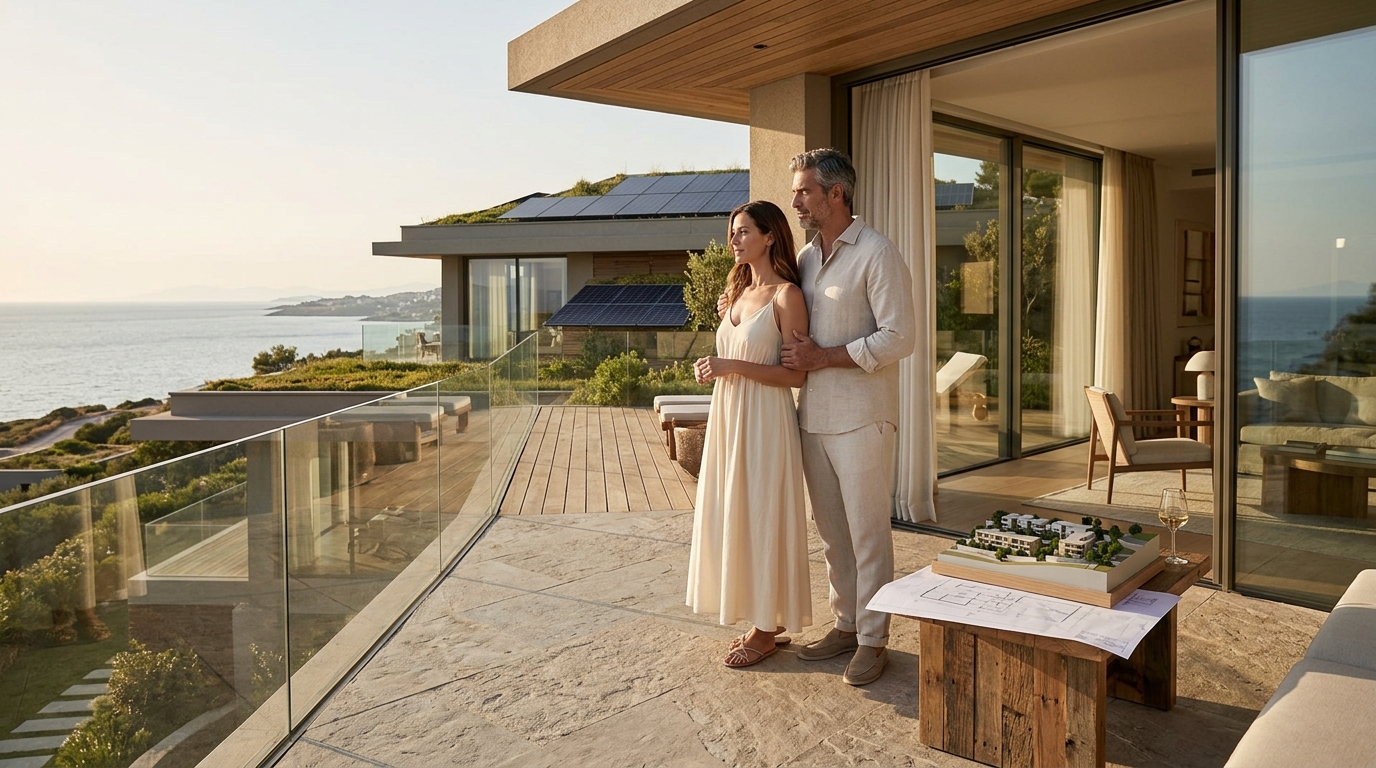
Sustainable Property Investment: Long-Term Benefits That Build Lasting Wealth
Investing in sustainable, eco-friendly property is no longer a niche decision reserved for environmentalists. It is a proven wealth-building strategy backed by hard data, growing market demand, and tightening regulations worldwide. From higher resale values and lower operating costs to regulatory resilience and superior tenant retention, green real estate delivers compounding returns that conventional properties simply cannot match. In this guide, we break down exactly how a sustainable property investment benefits you over the long term and why forward-thinking developers like ECLEDE are leading this shift in luxury real estate.
What Is a Sustainable Property Investment?
A sustainable property investment is a real estate asset designed, built, or retrofitted using environmentally responsible practices that minimize resource consumption while maximizing long-term value. This includes energy-efficient systems, renewable energy integration, water conservation features, and low-impact building materials.
Green building certification is a third-party verification system that measures a property's environmental performance against established benchmarks. Programs like LEED, BREEAM, and Energy Star give investors a standardized way to assess sustainability credentials and compare assets.
A net zero energy building (NZEB) is a structure that produces as much renewable energy as it consumes annually, representing the highest tier of sustainable construction. This is the exact standard that Vassilis Siafaricas and ECLEDE pursue across their luxury developments in Greece.
Higher Property Values and Resale Premiums
The financial case for green property is clear. According to the American Institute of Architects, green buildings can sell for up to 16% more than conventional buildings. Residential properties built to LEED standards have shown an 8% boost in resale value in major U.S. markets.
The U.S. Green Building Council reports that a growing number of building owners are seeing a 10% or greater increase in asset value from upfront green investment. JLL research found that green-credentialed properties achieve rental premiums of over 7% in North America, 10% in Asia Pacific, and more than 11% in London.
The "Brown Discount" Effect
Properties lacking sustainable features face the opposite trend. According to a JLL sustainability report, nearly 50% of RICS survey respondents worldwide reported experiencing a "brown discount" on non-green properties. The value gap between high-performing and underperforming buildings is widening every year.
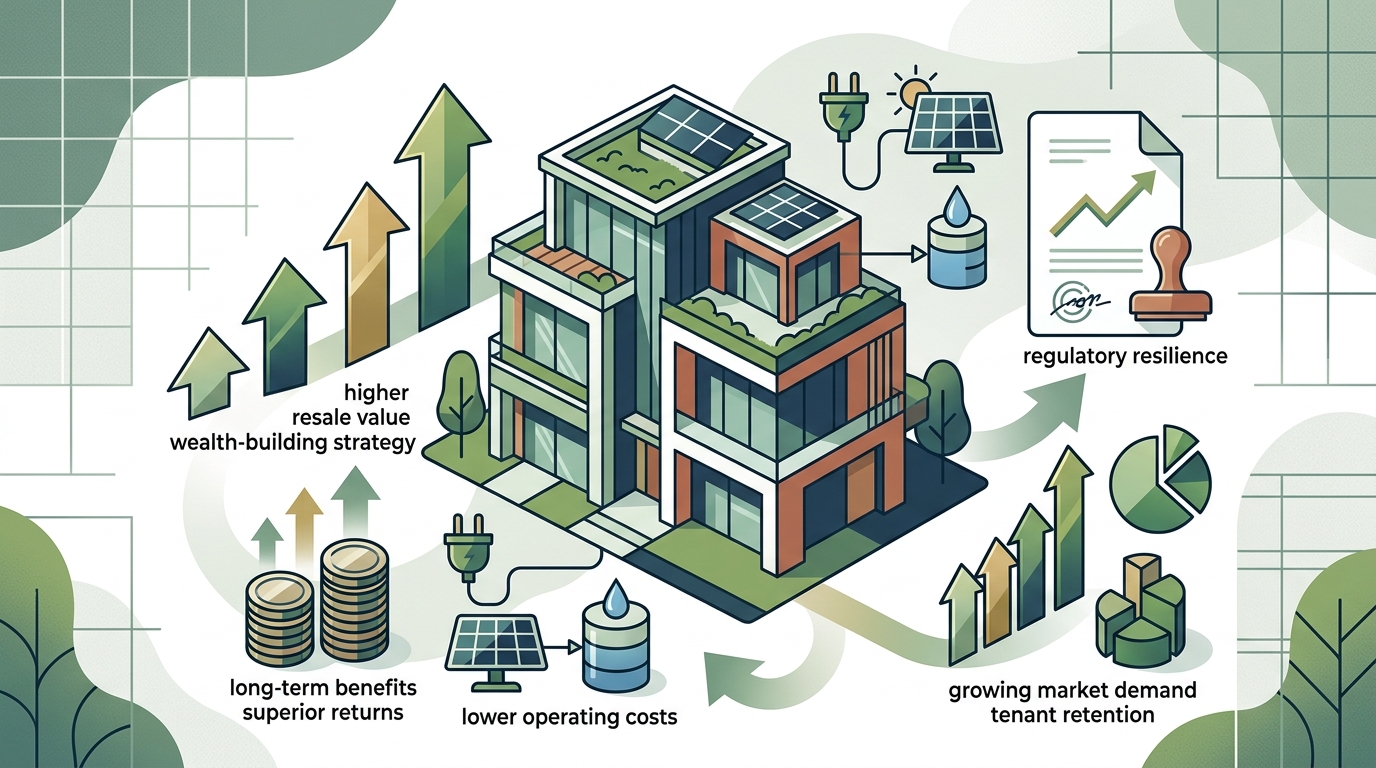
Lower Operating Costs Over Time
Sustainable properties deliver measurable savings from day one. The World Green Building Council estimates energy use reductions ranging from 25% to 30% in green buildings compared to conventional structures. Water savings typically range from 15% to 40%.
LEED buildings report almost 20% lower maintenance costs than typical commercial buildings. Over a five-year period, green buildings see an average operating cost reduction of 16.9%. These savings compound significantly over a property's lifetime, directly boosting net operating income.
Real-World Example
The Empire State Building's sustainability retrofit reduced energy consumption by over 40%, resulting in annual energy savings of $4.4 million. While initial implementation costs may seem high, long-term savings often offset the investment within three to five years.
Regulatory Resilience and Risk Mitigation
Governments worldwide are enforcing stricter environmental regulations on buildings. Investors who already own sustainable properties are ahead of the curve, avoiding costly retrofits, fines, and compliance penalties.
According to the World Economic Forum, the retrofitting rate needs to increase fivefold, from 2.4% to 13.2% annually, to meet decarbonization targets. Properties that already meet these standards hold a significant competitive advantage.
Sustainable buildings are also better equipped to handle extreme weather events and climate-related risks, providing a layer of physical asset protection that conventional properties lack.
Growing Tenant and Buyer Demand
Consumer preferences are shifting fast. NAR's 2025 Residential Sustainability Report found that 86% of home buyers consider energy-efficient windows, doors, and siding as very or somewhat important green features. Nearly half of REALTORS identify financial incentives as the factor that would most increase demand for sustainable homes.
LEED-certified buildings achieve lease-up rates that exceed market averages by 20%, with vacancy rates staying between 1% and 2%. Tenants are 4% more likely to renew leases in certified buildings, driven by better indoor environments and alignment with corporate ESG commitments.
Green vs. Conventional Properties: A Data Comparison
| Metric | Green/Certified Property | Conventional Property |
|---|---|---|
| Resale Value Premium | Up to 16% higher | Baseline |
| Rental Premium (North America) | 7%+ above market | Baseline |
| Energy Consumption | 25-30% lower | Standard usage |
| Maintenance Costs | ~20% lower | Standard costs |
| 5-Year Operating Cost Reduction | 16.9% average | Minimal improvement |
| Vacancy Rates | 1-2% | Higher variability |
| Tenant Retention | 4% more likely to renew | Baseline |
Sources: USGBC, JLL, AIA, NAR 2025 Sustainability Report
How ECLEDE Integrates Sustainability Into Luxury
At ECLEDE, sustainability is not an add-on; it is foundational to every project. Founded by Vassilis Siafaricas, a civil engineer and designer with over two decades in luxury real estate, ECLEDE specializes in net zero energy buildings that blend cutting-edge eco-technology with bespoke architectural design.
The company's portfolio includes award-winning projects like the subterranean Atlas and Pleione villas in Lefkada, Greece, which feature green roofs, minimal architectural footprints, and near-zero energy consumption. Vassilis also led the development of the first LEED Platinum residential project in Greece, setting a new benchmark for sustainable luxury in the region.
Award-Winning Recognition
ECLEDE's work has earned multiple international distinctions, including A' Design Awards across architecture and sustainability categories, a German Design Award in 2026, and an Architizer A+ Awards Special Mention. Explore the full list of awards and recognitions to see how sustainable design and luxury converge in practice.
Key Takeaways
- Green-certified properties can sell for up to 16% more than conventional buildings and command rental premiums of 7-11%.
- Sustainable buildings reduce energy consumption by 25-30% and maintenance costs by nearly 20%.
- Over five years, green buildings achieve an average operating cost reduction of 16.9%.
- Properties without green credentials face growing "brown discounts" in value.
- 86% of buyers in 2025 prioritize practical energy-efficiency features when purchasing a home.
- ECLEDE's net zero energy approach delivers both environmental integrity and long-term investment value.
- Early adoption of sustainability standards protects against future regulatory costs and climate risks.
Frequently Asked Questions
What does sustainable property investment mean?
Sustainable property investment means acquiring or developing real estate that incorporates environmentally responsible design, energy-efficient systems, and low-impact materials to deliver long-term financial and ecological benefits.
Do eco-friendly properties actually cost more upfront?
Green construction typically costs between 1% and 12% more than conventional building. However, long-term savings on energy, water, and maintenance often offset this premium within three to five years.
How much more can a green building sell for?
According to the American Institute of Architects, green buildings can sell for up to 16% more than conventional structures. LEED-certified homes have shown an 8% resale value boost in major markets.
What certifications should I look for?
The most recognized certifications include LEED, BREEAM, Energy Star, and WELL Building Standard. Each evaluates different aspects of sustainability performance, from energy efficiency to occupant health.
Are sustainable properties more resilient to market downturns?
Yes. Sustainable properties benefit from lower vacancy rates, stronger tenant retention, and reduced operating costs, making them more stable investments during economic uncertainty.
How does ECLEDE approach sustainable luxury development?
ECLEDE, founded by Vassilis Siafaricas, focuses on net zero energy buildings with bespoke design. Each project integrates photovoltaics, KNX automation, and eco-friendly materials while maintaining high-end aesthetics. Learn more on the ECLEDE about page.
Is Greece a good market for sustainable property investment?
Greece's growing luxury tourism sector and EU-aligned energy regulations make it an attractive market. ECLEDE has developed sustainable luxury villas in exclusive locations like Athens and Lefkada, including the first LEED Platinum residence in the country.
How do I get started with sustainable real estate investing?
Begin by evaluating properties with recognized green certifications, consulting sustainability experts, and exploring government incentives. For bespoke sustainable luxury projects, contact the ECLEDE team to discuss your vision.
Ready to Invest in Sustainable Luxury?
Whether you are looking for a high-performance residence in Athens or a net zero villa on a Greek island, ECLEDE combines two decades of luxury real estate expertise with an uncompromising commitment to sustainability. Get in touch with ECLEDE today to explore how your next property investment can deliver lasting value for you and the environment.