
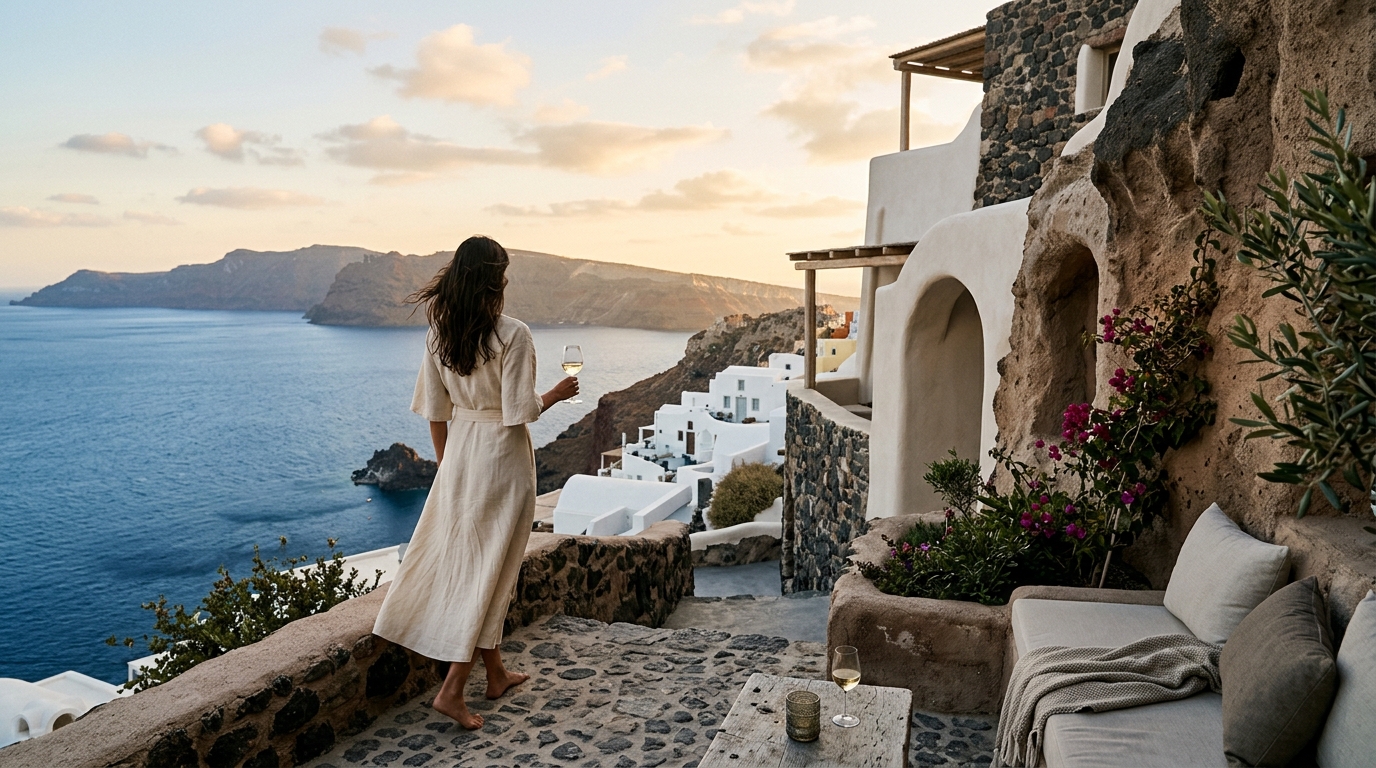
Greece's subterranean luxury villas are among the most architecturally distinctive accommodations on earth. Carved into volcanic cliffs and island hillsides, these underground retreats marry centuries-old building traditions with five-star modern comforts. Whether you are drawn to the caldera drama of Santorini or the raw, undiscovered beauty of Serifos, this guide maps every destination worth booking.
The Origin Story: From Sailors' Shelters to Five-Star Sanctuaries
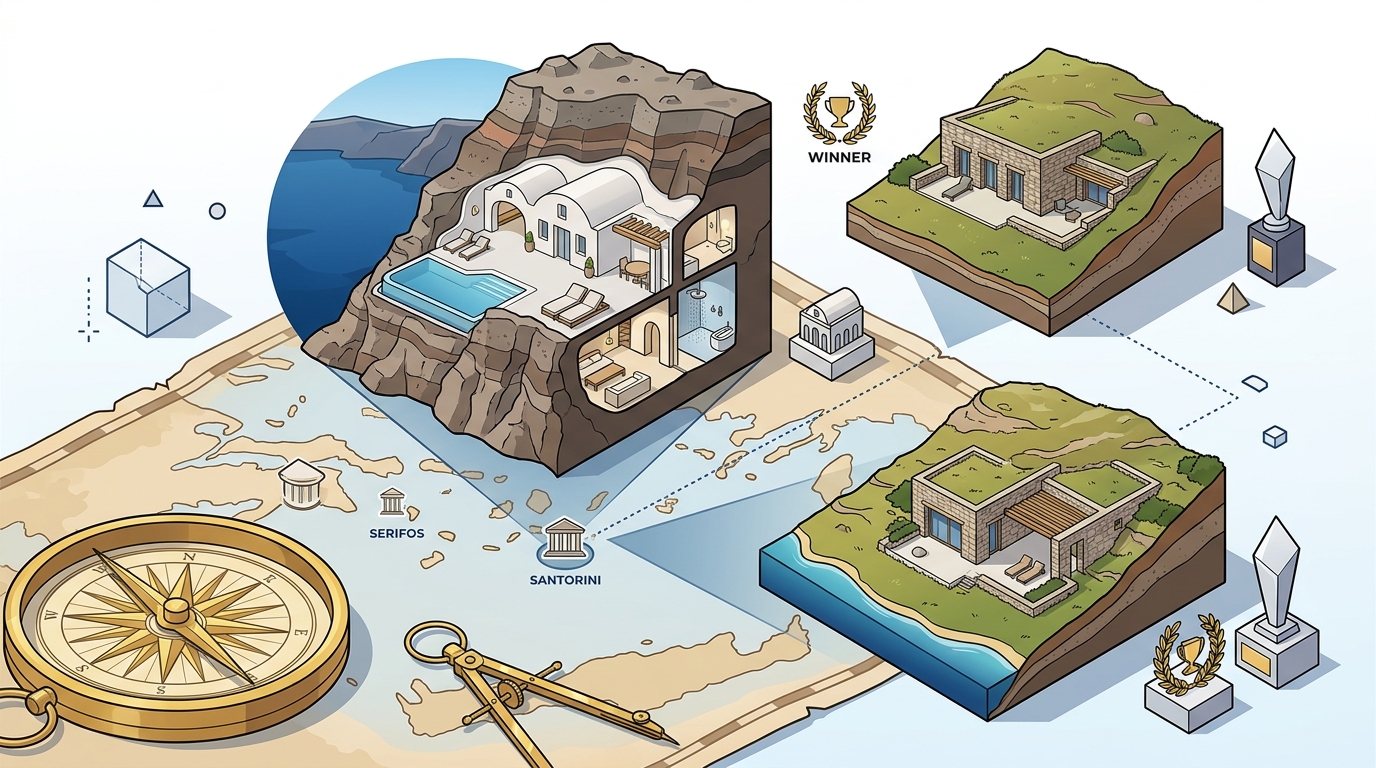
Understanding why Greece excels at subterranean architecture starts with geology and poverty, not luxury. On Santorini, the volcanic terrain allowed inhabitants to carve buildings directly into the earth at minimal cost. These cave houses — called yposkafa, meaning "dug into rock" — were once the smallest, humblest homes on the island.
The traditional dwellings were hand-dug into the soft pumice layer on the caldera's exterior. They feature barrel-shaped ceilings, arched interior doors, small front-facing windows, and narrow façades. Many began life as homes for impoverished sailors, warehouses, wine caves, or even donkey stables. Today, these humble spaces have been lavishly converted into luxury hotels and private villas.
Born out of necessity rather than aesthetics, the cave houses kept seafarers cool in scorching summers and warm during the off-season winds. Many sailors lived in Oia near the old shipping wharf, which is why Oia has the largest number of cave villas on the island.
Santorini's Caldera Edge: Oia, Imerovigli & Fira
All cave hotels in Santorini are located in villages on the caldera's edge — never on the beach side or in the island's interior. The three primary villages each offer a distinct atmosphere for subterranean stays.
Oia — The Iconic Cliffside
Oia is ground zero for luxury cave villas. Properties here range from intimate two-person suites to sprawling multi-room hideaways with private infinity pools overlooking the Aegean.
Perivolas Lifestyle Houses is one of the most celebrated examples. This family-owned property was acquired in 1969 and opened as a hotel in 1983. Each elegant cave house blends traditional architecture with beautifully crafted interiors. The resort features an amphitheatrical design with private terraces providing awe-inspiring caldera views. Suites range from cliff-carved studios to the signature Perivolas Suite with its own private swimming pool, spa area, steam bath, and hydrotherapy facilities.
Andronis Boutique Hotel is another standout, with 27 award-winning suites and villas built in traditional style within Oia's picturesque jigsaw of houses. Private infinity pools, cave pools, and heated jacuzzis punctuate the property.
Armeni Luxury Villas in Oia provide cave suites with private hot tubs or pools, blending traditional architecture with contemporary luxury and commanding views across the caldera.
Imerovigli — The Quieter Caldera Perch
Imerovigli sits higher on the caldera rim and attracts travellers seeking tranquillity without sacrificing views.
Iconic Santorini is an authentic boutique cave hotel set on the rim of Santorini's volcanic cliffs. Situated on a spectacular hillside literally carved from the historic caldera wall, it offers individually unique residences spread across five distinctive levels. Each room features COCO-MAT natural bedding and dedicated terrace seating above the ancient volcano.
Divine Cave Experience is sculpted into the rocks of the caldera, offering a cocooning sanctuary of underground caves with awe-inspiring views toward Oia. An imposing corridor illuminated by natural light creates the sensation of entering a burrow carved into rock.
Fira — The Capital Option
Fira offers the most accessible cave-hotel experience, often at slightly lower price points. The NK Cave House Villa, situated in a 19th-century cave house, holds an exceptional 9.9 rating on Booking.com and provides private rooms with caldera views accommodating up to four guests, complete with private plunge pools.
Beyond Santorini: Serifos and the New Wave of Subterranean Design
The most architecturally ambitious subterranean villas in Greece are no longer on Santorini. The island of Serifos, in the western Cyclades, has become a magnet for design-forward travellers.
Homa Vagia by MOLD Architects
Homa Vagia is a small boutique hotel of 180 square metres on the southern coast of Serifos, consisting of three independent lodgings, each featuring two bedrooms, a living area, and expansive outdoor spaces with private swimming pools. The project is primarily dug into the ground, inspired by remnants of mining constructions scattered across the area.
Designed by Athens-based MOLD Architects — founded in 2011 by Iliana Kerestetzi — the retreat reinterprets traditional Cycladic architecture through a contemporary lens, embedding itself into the landscape rather than imposing upon it. Visitors approach the lodgings from the roof, descending via linear staircases into a concealed subterranean living level.
MOLD Architects have received numerous accolades including the SADAS-PEA (Association of Greek Architects) 2014 Award for Best Greek Project (2009–2013), the DOMES 2014 Award for Best First Building by a Young Architect, and a nomination for the prestigious Mies van der Rohe Award 2015.
nCAVED House — The Private Residence Benchmark
Also on Serifos, MOLD Architects' nCAVED house is an underground private residence embedded into the island's cliffs above a secluded rocky cove. The dwelling exists without an exterior form — instead, it is a series of occupiable volumes subtracted from the earth, using a rectangular grid projected across the slope to generate a three-dimensional chessboard of solids and voids. While not available for nightly rental, it set the architectural benchmark that inspired Homa Vagia and similar projects.
What Makes These Villas Naturally Superior
Subterranean villas in Greece are not merely aesthetic choices — they are bioclimatic buildings with measurable performance advantages:
- Natural thermal regulation: Santorini's pumice and Theraic earth are porous, acting as poor conductors of heat and sound. Cave dwellings stay cool inside even during the hottest July and August days.
- Earthquake resistance: The combination of Theraic earth and limestone plaster solidifies with humidity and becomes harder over time, showing high resistance to seismic activity.
- Privacy by design: Subterranean architecture inherently separates units, reducing noise transfer and line-of-sight intrusion between neighbouring properties.
- Minimal visual impact: Projects like Homa Vagia nearly seamlessly blend into their surroundings, appearing as a continuation of the rocky landscape and horizon.
Key Takeaways for Booking a Subterranean Villa in Greece
- Choose your island by intent. Santorini delivers caldera drama and world-famous sunsets. Serifos offers cutting-edge design, solitude, and rugged Cycladic beauty away from the crowds.
- Prioritise caldera-edge locations on Santorini. Only villages along the caldera rim — Oia, Imerovigli, and Fira — have authentic cave villas. Beach-side and interior properties are conventional builds.
- Book well in advance for peak season. Cave villas with private pools and caldera views in Oia are among the most sought-after accommodations in the Mediterranean. Availability from June through September fills months ahead.
- Look for architectural pedigree. Award-recognised properties like those by MOLD Architects signal a level of design rigour and landscape integration that generic renovations lack.
- Ask about bioclimatic features. Genuine cave-carved villas offer natural cooling without heavy air-conditioning. If a property needs constant AC to stay comfortable, it may not be authentically subterranean.
Destination Comparison: Santorini vs. Serifos
| Factor | Santorini (Oia / Imerovigli) | Serifos (Vagia) |
|---|---|---|
| Architecture style | Restored 19th-century yposkafa with modern interiors | Contemporary subterranean design by award-winning studio |
| Typical capacity | 2–4 guests per suite | 4 guests per two-bedroom lodging |
| Views | Caldera, volcano, sunset | Aegean Sea, Vagia Beach |
| Crowd level | High (especially June–September) | Low — off the mass-tourism circuit |
| Access | Direct flights + ferries from Athens | Ferry from Piraeus (~2.5 hrs by high-speed) |
| Price range | €300–€2,000+ per night | Mid-range to high, varies by season |
Other Greek Islands with Cave-Style Villas
While Santorini and Serifos dominate the subterranean luxury segment, several other islands offer cave-like accommodations worth exploring:
- Crete: More spacious cave-style villas suited to families, particularly along the northern coast.
- Milos: Volcanic geology similar to Santorini, with emerging boutique cave-carved properties.
- Mykonos: A handful of semi-subterranean design villas, though the island is better known for above-ground architecture.
Frequently Asked Questions
What are subterranean luxury villas in Greece?
They are high-end accommodations carved into volcanic rock or integrated into hillsides. On Santorini, they evolved from humble yposkafa — underground buildings once used as homes, churches, wine cellars, and warehouses — into lavish designer retreats with private pools, spas, and panoramic terraces.
Where are the best cave villas in Santorini?
The finest cave villas line the western caldera edge in Oia, Imerovigli, and Fira. Oia has the largest concentration because of its historical connection to the island's seafaring community. The best area overall for uninterrupted views of the volcano, caldera, and sunsets is Santorini's west coast.
Are there award-winning subterranean villas outside Santorini?
Yes. Homa Vagia on Serifos is one of the most critically acclaimed subterranean retreats in the Cyclades. MOLD Architects, the firm behind it, have won the SADAS-PEA 2014 Award and received a nomination for the Mies van der Rohe Award 2015 for their integrated landscape designs on the island.
What makes cave villas naturally comfortable?
The thermal mass of volcanic rock provides natural insulation. Theraic earth contains pumice — a porous igneous rock that is a poor conductor of heat and sound — keeping interiors cool in summer and warm in winter. The plaster, made from Theraic earth mixed with limestone, solidifies with humidity and strengthens over time, also providing high earthquake resistance.
How do I get to Serifos from Athens?
Serifos is reached by ferry from Piraeus port. High-speed ferries take approximately 2.5 hours. Homa Vagia is located about 20 minutes from the Serifos port by car.
Can families stay in cave villas or are they only for couples?
While many Santorini cave hotels are designed with couples in mind, options for families exist. Homa Vagia's two-bedroom lodgings on Serifos comfortably accommodate four guests. Islands like Crete and Milos also offer more spacious cave-style villas better suited to families and groups.